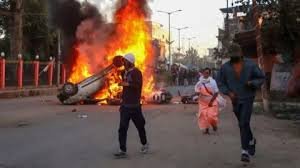
The muted response from Kuki-Zo leaders has begun to create an atmosphere of suspicion and demoralisation among ordinary residents in the hills, with many questioning why their leaders are unwilling—or unable—to speak on their behalf.
By Navin Upadhyay
March 13, 2026: Manipur has once again entered a dangerous phase of tension. In the weeks following the formation of the new state government, a series of violent incidents involving the Kuki-Zo community has unfolded across different districts.
From Kangpokpi to Ukhrul and Churachandpur, houses have been burned, protesters attacked, and lives lost. Yet the political and militant leadership of the community has largely remained silent. They showed little public outrage, made no visible mobilisation to protect their people, Kuki Civil Society organisations did step into hep the families of the victims, but the so-called “leaders” didn’t even visit them..
This prolonged silence is beginning to have consequences beyond the immediate incidents. Among many ordinary people in Manipur’s hill districts, it is creating an atmosphere of unease and suspicion. Communities already shaken by violence are now left wondering why their leaders are unwilling—or unable—to speak on their behalf. Their inaction and apathy have begun to demoralise many who expected stronger advocacy and protection from those who claim to represent them.
Inevitably, such silence fuels speculation. Tongues are wagging across the hills that the leadership, at various levels, may have become “compromised.” Whether fair or not, such perceptions are spreading in the vacuum created by the lack of public engagement. In conflict-prone regions like Manipur, perception can be as powerful as reality, and when communities begin to doubt their own leadership, the sense of insecurity deepens.
The controversy surrounding Nemcha Kipgen’s decision to accept the post of Deputy Chief Minister has also returned to the centre of public discussion. Critics have begun revisiting uncomfortable questions about the relationship between political power and armed groups in the region. After all, Kipgen is married to a prominent leader of an armed Kuki organisation operating under the Suspension of Operations (SoO) agreement with the Government of India.
READ: Mockery of Governance in Manipur: Naga Body Issues Eviction Dictat After Killing of Kuki Men
For many in the hills, these questions are not merely political—they go to the heart of trust and representation at a time when the community is facing a series of troubling and violent developments.
Here is a list of incidents that have taken place since the formation of the new government, during which Kuki-Zo leaders have largely looked the other way.
The Kangpokpi Arson Attack
The chain of incidents began earlier this year on January 26, 2026, when suspected militants torched several houses and farm structures in K. Songlung-II village in Kangpokpi district.
According to officials, three residential houses belonging to Kuki-Zo families and a vehicle were set ablaze during the afternoon attack. Though no casualties were reported, the arson spread panic in the village and triggered tension in the surrounding hill areas.
A faction of the Zeliangrong United Front (ZUF) later claimed responsibility, alleging that the operation was directed against illegal poppy cultivation in the area. Kuki-Zo organisations rejected the claim, insisting that the structures destroyed were legitimate homes and farm buildings.
The incident sparked anger among local Kuki civil society groups, which demanded swift arrests and warned of protests if the perpetrators were not brought to justice. Yet even at this early stage, there was little visible intervention from Kuki militant groups operating under the Suspension of Operations agreement with the Government of India, groups that often portray themselves as defenders of the community.
Litan: A Village in Flames
Tensions escalated further in Litan Sareikhong village in Ukhrul district, where clashes between communities erupted in February.
What began as a local altercation quickly spiraled into violence. Houses were set on fire, gunshots were reported, and security forces were rushed to the area to restore order. Over the course of several days, dozens of houses were damaged or destroyed in arson attacks, forcing families to flee.
For residents who watched their homes burn, the violence raised urgent questions about security and leadership. Yet once again, there was no strong public response from Kuki armed groups under the SoO arrangement, nor a sustained intervention from political representatives.
Protesters Attacked in Churachandpur
Around the same time, unrest broke out in Churachandpur, a major Kuki-Zo population center.
Women protesters gathered outside the residence of LM Khaute, voicing anger over political developments and leadership decisions affecting the community. The protest turned violent when demonstrators were reportedly attacked during the gathering, leaving several injured and further inflaming tensions in the district.
The incident shocked many residents. In a society where women have historically been t the forefront of community protest movements, the sight of women protesters being attacked was deeply unsettling.
Yet even this episode failed to draw strong public condemnation from many of the community’s political and militant leaders.
Two Men Killed
The situation took an even darker turn when yesterday ( March 12) two Kuki men were found brutally killed in Ukhrul district after going missing. Their bodies were recovered in the hill areas, sparking anger and fear in nearby villages.
The killings raised the specter of renewed ethnic violence in a region already scarred by conflict. Families and community members demanded justice and protection.
But once again, the response from leadership remained limited.
Rising Tension and Ultimatums
As tensions continued to simmer, a Naga youth organisation reportedly issued an ultimatum on March 12 to Kuki villagers in certain areas, asking them to vacate villages following recent clashes.
Such ultimatums have historically been dangerous signals in Manipur’s fragile ethnic landscape. They carry the potential to trigger displacement, retaliation, and a widening spiral of violence.
Yet even as the atmosphere became increasingly volatile, the leadership that claims to represent the Kuki-Zo community largely remained silent.
The Silence of the Leadership
Perhaps the most striking silence has come from armed Kuki militant groups operating under the SoO agreement with the Government of India. These groups have long justified their existence as protectors of the Kuki-Zo people. But during this series of incidents—from Kangpokpi to Ukhrul—their voices have been largely absent.
Deputy Chief Minister Nemcha Kipgen has neither condemned nor expressed condolences over the killing of the two Kuki men in Ukhrul, nor has she visited their families or announced any relief measures for them.
In times of crisis, leadership is often measured not only by political power but by empathy and presence. Visiting victims, offering condolences, and demanding accountability are basic expectations in democratic politics.
Manipur’s hills have long been shaped by complex ethnic relations and political rivalries. But moments of crisis demand clarity, courage, and compassion from those who claim to lead.
The burning of houses in K. Songlung-II village in Kangpokpi, the violence in Litan, the attack on women protesters in Churachandpur, and the killing of two Kuki men in Ukhrul district are not isolated incidents. Together they form a pattern of instability that threatens to deepen mistrust between communities.
In such circumstances, silence can be dangerous.
Communities facing violence look to their leaders not only for protection but also for moral guidance and solidarity. When leaders fail to speak, fail to visit victims, and fail to demand justice, that silence becomes louder than any speech.
For many in Manipur’s hill districts today, the question is no longer just who committed these acts of violence. It is why those who claim to represent the Kuki-Zo people have chosen to remain silent.