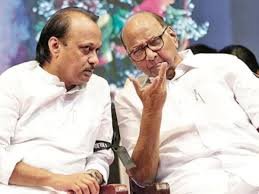
The sudden death of Ajit Pawar has disrupted advanced reunification talks with the NCP’S Sharad pawar faction , throwing Maharashtra’s political equations into fresh uncertainty.
BY PC Bureau
January 30, 2026: In the fluid and often unpredictable landscape of Maharashtra politics, where alliances shift rapidly, the sudden death of Nationalist Congress Party (NCP) leader Ajit Pawar on January 28, 2026, in a tragic plane crash has disrupted what appeared to be a carefully orchestrated reunification of the party’s fractured factions.
Ajit Pawar’s demise not only marks the loss of a formidable political strategist but also casts uncertainty over the future direction of the Sharad Pawar-led NCP (Sharadchandra Pawar), or NCP (SP), particularly its potential realignment with the ruling BJP-led Mahayuti coalition.
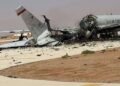
The 66-year-old deputy chief minister was killed along with four others when his chartered Learjet 45 crashed during a landing attempt at Baramati airport. His death has created a leadership vacuum in the NCP faction that split from the parent party in 2023 and joined the Mahayuti alliance, comprising the Bharatiya Janata Party (BJP) and the Eknath Shinde-led Shiv Sena.
Reunification Talks Disrupted
Before the tragedy, merger negotiations between the two NCP factions had reached an advanced stage, with a formal announcement scheduled for February 8, following the zilla parishad election results. Sources said Ajit Pawar was the key architect of the reconciliation, personally bridging the divide and leading negotiations while Sharad Pawar remained politically active.
Late on January 28, senior leaders from both factions rushed to Baramati and held a closed-door meeting, underlining the urgency of navigating the rapidly altered political scenario.
Party insiders indicated that reunification was expected to pave the way for Sharad Pawar’s faction joining the Mahayuti, a move that would have dramatically reshaped Maharashtra’s political equations and weakened the opposition Maha Vikas Aghadi (MVA), which includes the Shiv Sena (UBT) and Congress.
A History of Rift and Reconciliation
The NCP split in July 2023, when Ajit Pawar led a rebellion and joined the Mahayuti government, citing frustration with internal party dynamics. His faction secured the party name and the iconic ‘clock’ symbol, leaving Sharad Pawar’s camp to function as NCP (SP) within the MVA.
The division was deeply acrimonious, straining family and political ties. Ajit Pawar even fielded his wife, Sunetra Pawar, against Sharad Pawar’s daughter Supriya Sule in the Baramati Lok Sabha seat — a move he later described as a mistake.
However, the hostility gradually softened. Momentum toward reconciliation built after both factions jointly contested the Pune and Pimpri-Chinchwad civic polls, a strategic gesture that signaled rapprochement. Ajit Pawar openly dismissed critics, remarking at rallies, “Why does it bother some people if we come together?”
Senior NCP (SP) leaders Jayant Patil and Shashikant Shinde confirmed that discussions had intensified in recent weeks, with multiple meetings, including one at Patil’s residence on January 16 and another at Sharad Pawar’s home the following day.
READ: ‘I Am Killing Your Sister’: Chilling Call Before SWAT Commando’s Murder
READ: NIA Charges NSCN(IM) Cadre in Rs 18 cr Manipur Bank Heist
Strategic Calculations and Political Stakes
Analysts view the reunification push as a product of pragmatic politics. A united NCP would consolidate its formidable rural base in western Maharashtra and significantly strengthen its bargaining power.
For Ajit Pawar’s faction, reunion offered access to Sharad Pawar’s enduring organisational strength and political legacy. For Sharad Pawar, absorbing the splinter group could restore party unity and potentially reposition the NCP within the ruling dispensation for greater influence and governance control.
Sources suggest that a united NCP was likely to align with Mahayuti, bolstering the ruling coalition’s stability ahead of crucial local body and Assembly elections. Such a move would deal a severe blow to the already fragile MVA and could marginalise the opposition bloc.
However, Ajit Pawar’s death has introduced new uncertainties. His faction now faces a leadership vacuum, with speculation centring on Sunetra Pawar or Jay Pawar stepping into key roles. Meanwhile, Sharad Pawar, at 85, may seek to consolidate the fractured party under his leadership — though lingering family and political resentments could complicate negotiations.
Conflicting signals have emerged. While Shiv Sena (UBT) leader Sanjay Raut claimed Ajit Pawar was inclined to return to the MVA fold, leaders of Ajit Pawar’s faction, including Praful Patel, have reaffirmed loyalty to the Mahayuti.
A Political Crossroads
As Maharashtra mourns Ajit Pawar — a leader widely credited with shaping the state’s irrigation policies and rural development — the NCP stands at a historic crossroads.
Whether Sharad Pawar’s faction ultimately joins the Mahayuti, fulfilling what many see as Ajit Pawar’s political legacy, or remains within the opposition framework will redefine the balance of power in Maharashtra.
With zilla parishad polls now emerging as a critical political barometer, the coming weeks will determine whether reunification and realignment materialise — and in which direction the Pawar legacy ultimately tilts.