What Rahul Gandhi Tried to Quote in Parliament: Inside Gen MM Naravane’s Explosive Account of the 2020 Ladakh Crisis
BY PC Bureau
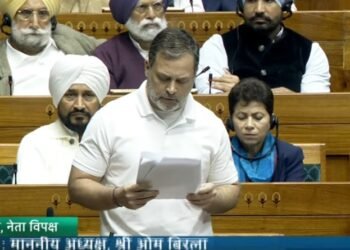
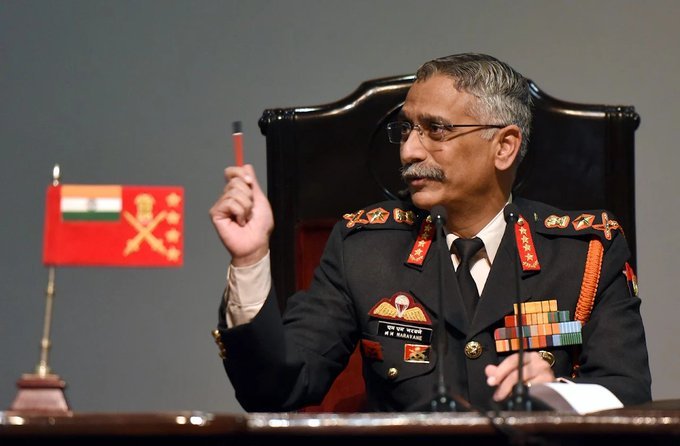
New Delhi, February 2, 2026: The dramatic uproar in the Lok Sabha on Monday was triggered by Leader of Opposition Rahul Gandhi’s attempt to quote from explosive excerpts of former Army chief General Manoj Mukund Naravane’s unpublished memoir, Four Stars of Destiny, published by The Caravan. The excerpts provide one of the most detailed insider accounts yet of how India and China came perilously close to a shooting war during the eastern Ladakh crisis of 2020.
“The Situation Was Deteriorating Dramatically”
Naravane recounts that at 8:15 pm on August 31, 2020, Lieutenant General Yogesh Joshi, then commander of Northern Command, informed him that four Chinese tanks supported by infantry were advancing toward Rechin La, barely hours after Indian troops had seized the strategically vital Kailash Range heights.
“The situation was deteriorating dramatically and demanded clarity,” Naravane writes.
With Chinese armour approaching within a few hundred metres, Indian troops fired illuminating rounds as warning shots — but the PLA column continued advancing.
READ: Rahul Sparks Uproar in LS by Quoting Unreleased Army Chief Memoir
Repeated Appeals for Orders, None Given
Naravane describes frantic calls to Defence Minister Rajnath Singh, NSA Ajit Doval, Chief of Defence Staff Bipin Rawat, and External Affairs Minister S Jaishankar.
“To each and every one my question was, ‘What are my orders?’” he writes.
Despite the rapidly worsening situation, no explicit instructions were given. Army protocol barred opening fire without top political clearance, placing the Army chief in a perilous command vacuum.
At 9:25 pm, the Chinese tanks were less than one kilometre from the pass.
Artillery Ready, War Imminent
By 10 pm, Joshi warned Naravane that only medium artillery fire could stop the Chinese advance — artillery units were fully primed and awaiting orders.
Naravane notes that on the Pakistan front, divisional commanders routinely fired hundreds of shells daily without political clearance, but with China, escalation risks were far higher.
“An artillery duel with the PLA could spiral into something far larger,” Naravane writes.
The entire Northern Front was placed on high alert, with troops monitoring multiple flashpoints across eastern Ladakh.
Cover Story | It is precisely because #Galwan and its aftermath were so thoroughly obscured by official messaging, amplified by a largely unquestioning media, that General Naravane’s memoir matters. It sheds light on Chinese aggression, the decisions that led to the loss of… pic.twitter.com/5cASmf1Ikw
— The Caravan (@thecaravanindia) February 1, 2026
Chinese Offer Talks — But Tanks Keep Advancing
A temporary diplomatic opening emerged when a message arrived from PLA commander Major General Liu Lin, proposing both sides halt movement and hold commander-level talks the next morning.
But the relief was short-lived.
Just minutes later, Northern Command reported the Chinese tanks had not stopped and were now only 500 metres away from Indian positions.
READ: Rahul Sparks Uproar in LS by Quoting Unreleased Army Chief Memoir
Modi’s Message: A Single Sentence
After repeated unanswered calls, Rajnath Singh finally rang Naravane back at 10:30 pm.
“He had spoken to Prime Minister Narendra Modi,” Naravane writes.
Modi’s instruction consisted of one stark sentence:
“Jo uchit samjho, woh karo” — Do whatever you deem appropriate.
Naravane writes that the decision was now “purely a military call”, with the burden of escalation resting entirely on him.
“With this carte blanche, the onus was now totally on me. I had been handed a hot potato,” he recalls.
“We Were Minutes Away From War”
Naravane describes the moment as the closest brush with a full-scale India–China shooting conflict in decades.
Artillery guns were aimed, troops were dug in, and surveillance tracked every metre of the Chinese advance.
“Each minute was a minute closer to Chinese tanks reaching the top,” he writes.
Eventually, the PLA forces halted and later disengaged, pulling back — a move Naravane describes as China “blinking first”.
Galwan Clash: “One of the Saddest Days of My Career”
Elsewhere in the memoir, Naravane reflects on the Galwan Valley clash of June 15, 2020, calling it “one of the saddest days of my professional life.”
He writes that Indian troops inflicted significant casualties on Chinese forces, contradicting Beijing’s claims of minimal losses.
However, he also describes the immense emotional toll of losing 20 Indian soldiers in brutal hand-to-hand combat, marking the first fatalities along the LAC in 45 years.
Why These Excerpts Alarmed Parliament
Rahul Gandhi sought to quote these passages to challenge the government’s claim that no serious military crisis occurred and no territory was lost.
Treasury benches objected strongly, arguing that unpublished memoirs and magazine excerpts cannot be cited in Parliament, especially on sensitive national security matters.
The Speaker upheld the objection, leading to repeated disruptions and adjournment of the Lok Sabha.
The excerpts raise uncomfortable questions:
- Why were clear political orders missing at a moment of extreme crisis?
- Why was full military authority delayed despite imminent threat?
- Did the government downplay the gravity of the Ladakh standoff?
The controversy has reopened debate over civil-military decision-making, crisis management, transparency, and parliamentary accountability — with political temperatures set to rise further when Prime Minister Modi responds later this week.