The Supreme Court suspended UGC’s new rules, saying the changes could have far-reaching consequences for India’s higher education ecosystem.
New Delhi | January 29, 2026
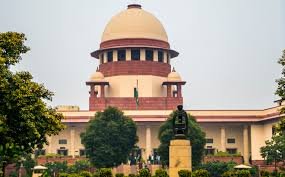
The Supreme Court on Thursday put on hold the implementation of the University Grants Commission’s (UGC) newly notified regulations, taking cognisance of widespread protests by students, teachers, and academic bodies across the country. The apex court said the concerns raised regarding the new framework warranted careful judicial scrutiny, and directed that the status quo be maintained until further orders.
A Bench headed by Chief Justice of India passed the interim order while hearing multiple petitions challenging the validity, legality, and potential impact of the revised UGC regulations. The court observed that the changes could have far-reaching consequences for higher education, and hence required detailed examination before being enforced.
The petitions were filed by Mritunjay Tiwari, Advocate Vineet Jindal and Rahul Dewan. The Court issued notice to the Union and the University Grants Commission on the petitions, returnable on March 19. Till then, the 2026 Regulations are kept in abeyance. The Court further ordered that the 2012 UGC Regulations will operate in the meantime.
Background of the Dispute
The UGC recently introduced a fresh set of regulations aimed at restructuring academic appointments, faculty workload, eligibility norms, institutional autonomy, and governance mechanisms in universities and colleges. The move, according to the government and the regulator, was intended to modernise higher education, improve academic standards, and align Indian universities with global benchmarks.
However, the regulations triggered widespread opposition, with teachers’ associations, student unions, and academic councils alleging that the changes were introduced without adequate consultation and could undermine academic autonomy, job security, and inclusive access to education.
Several state governments, public universities, and teachers’ bodies also approached the Supreme Court, arguing that the new framework encroaches upon states’ powers in education, violates existing service rules, and threatens the stability of the public higher education system.
Key Concerns Raised by Petitioners
The petitioners contended that:
-
The regulations centralise control over universities, weakening institutional autonomy.
-
Revised eligibility and recruitment norms may disadvantage experienced teachers and researchers.
-
Changes in workload and service conditions could increase pressure on faculty and reduce teaching quality.
-
Lack of stakeholder consultation violates principles of natural justice and federal balance.
They further argued that immediate enforcement could lead to administrative chaos, legal uncertainty, and academic disruption, especially in the middle of the academic calendar.
Supreme Court’s Observations
During the hearing, the Bench noted that education policy reforms must balance efficiency, equity, and autonomy, and said abrupt implementation without consensus could destabilise the sector.
“The issues raised affect not only teachers and institutions but the future of millions of students. Such reforms require wide consultation and cautious execution,” the court observed, while ordering a temporary suspension of the regulations.
The apex court also sought detailed responses from the Union Ministry of Education and the UGC, directing them to file their counter-affidavits within a stipulated timeframe.
Government and UGC Response
The UGC and the Union government defended the regulations, stating that the changes were aimed at standardising quality across institutions, promoting merit-based appointments, encouraging research output, and improving global competitiveness of Indian universities.
They argued that uniform regulatory standards are essential to curb academic inconsistencies and ensure transparency. However, following the Supreme Court’s order, officials said they would comply with the interim stay and present their case before the court.
READ: Economic Survey 2026: Domestic Demand Powers Growth; GDP Seen at 6.8–7.2% for FY27
READ: Gold Crosses ₹1.75 Lakh, Silver Tops ₹4 Lakh Amid Global Turmoil
Protests Across Campuses
The announcement of the new rules sparked protests across university campuses nationwide, with demonstrations reported from Delhi, Mumbai, Kolkata, Chennai, Hyderabad, Bengaluru, Patna, and several state universities.
Teachers’ associations staged sit-ins, boycotts, and strikes, while students organised marches, class boycotts, and public campaigns demanding a rollback. Many protesters accused the UGC of undermining democratic decision-making in academia.
With the Supreme Court’s intervention, the implementation of the new UGC regulations will remain suspended until further judicial review. The matter is expected to return for detailed hearing after the Centre and the UGC submit their formal responses.
The case is likely to have significant implications for the future structure, governance, and autonomy of India’s higher education system, as well as for Centre–state relations in education policymaking.