The Supreme Court has extended the tenure of the Justice Gita Mittal–led committee overseeing relief and rehabilitation for Manipur violence victims till July 31, 2026, reinforcing continued judicial monitoring of the humanitarian crisis.
BY PC Bureau
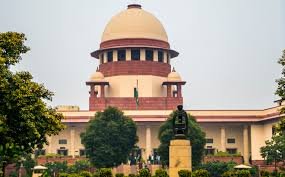
January 28, 2026: The Supreme Court of India on Wednesday extended the tenure of the Justice Gita Mittal–led committee overseeing relief, rehabilitation, and compensation for victims of ethnic violence in Manipur until July 31, 2026. The extension was granted after the court noted that the committee’s formal mandate had expired in July 2025, even though it had continued functioning without an official renewal.
The bench, comprising Chief Justice Surya Kant and Justice Joymalya Bagchi, regularised the panel’s continuation, underscoring the apex court’s sustained supervision of the humanitarian crisis in the violence-hit state.
The three-member committee was constituted by the Supreme Court on August 7, 2023, following nationwide outrage over a viral video showing two Kuki-Zo women being paraded naked on Manipur streets bya mob of Meiteis—an incident the court termed “deeply disturbing.”
READ: Analysis — Manipur: ZUF (K) Bites Off More Than It Can Chew
READ:Trump’s Alzheimer’s Pause Rekindles Debate Over President’s Cognitive Health
Headed by former Jammu and Kashmir High Court Chief Justice Gita Mittal, the all-women panel also includes retired Justices Shalini P. Joshi (Bombay High Court) and Asha Menon (Delhi High Court). In parallel, former Maharashtra Director General of Police Dattatray Padsalgikar was appointed to monitor investigations into criminal cases linked to the violence.
The committee’s mandate includes supervising relief and rehabilitation measures, assessing compensation frameworks, monitoring conditions in relief camps, addressing crimes against women and children, and facilitating the reconstruction of essential documents such as identity papers destroyed during arson and clashes. It reports directly to the Supreme Court, which retains overarching control over related proceedings and compliance by the state and central governments.
The panel was envisioned as a “healing touch” mechanism to restore public confidence in the rule of law while addressing humanitarian fallout from a conflict that has fractured Manipur along ethnic lines.
What Has the Panel Done So Far?
Since its formation, the Justice Gita Mittal committee has submitted 42 reports to the Supreme Court, reflecting sustained engagement in an exceptionally complex and sensitive environment. These reports have covered a wide range of concerns, including:
-
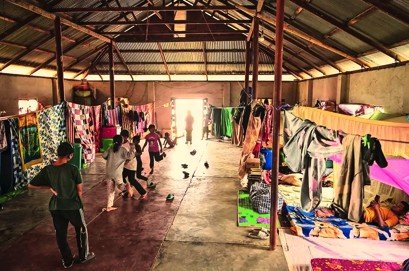
Relief Camp Conditions: The committee has documented gaps in food supply, healthcare, sanitation, and shelter. In January 2026, the Supreme Court directed it to submit a focused report on conditions in 14 relief camps in Churachandpur district within two months.
-
Compensation and Rehabilitation: Early findings highlighted shortcomings in the Manipur Victim Compensation Scheme and stressed the urgent need for re-issuance of lost documents to enable displaced persons to access welfare benefits and rebuild livelihoods.
-
Gender and Humanitarian Issues: The panel has monitored cases of violence against women, examined property restitution claims, and issued directions for the settlement of compensation related to damaged movable and immovable assets.
-
Judicial Oversight: Its periodic updates have informed key Supreme Court interventions, including the transfer of select cases to the CBI and the establishment of special courts for expeditious trials.
While many reports remain sealed or part of court records, they have shaped multiple judicial directives aimed at improving relief delivery and administrative accountability.
Has the Committee Failed?
While the committee cannot be described as a complete failure, its limitations remain evident. Ethnic tensions continue, displacement persists, and relief camps remain overcrowded well into 2026. Civil society organisations, including the People’s Union for Civil Liberties (PUCL), have argued that the committee’s mandate is constrained by limited resources and that implementation of its recommendations ultimately depends on state action, which has been uneven.
The Supreme Court’s repeated extensions—first in 2024, then 2025, and now 2026—reflect recognition of the committee’s continued relevance rather than its redundancy. By formally extending its tenure, the apex court has reaffirmed the panel’s role as a critical bridge between judicial oversight and humanitarian relief.
As the committee moves forward, the latest extension offers an opportunity to accelerate rehabilitation efforts and push for measurable improvements on the ground. In a state scarred by prolonged conflict, its success will ultimately be judged not by the number of reports submitted, but by whether displaced families can safely return home, rebuild their lives, and regain faith in governance and justice.