Trump insisted he does not suffer from Alzheimer’s and described his health as “perfect,” even as the White House moved to downplay renewed concerns.
BY PC Bureau
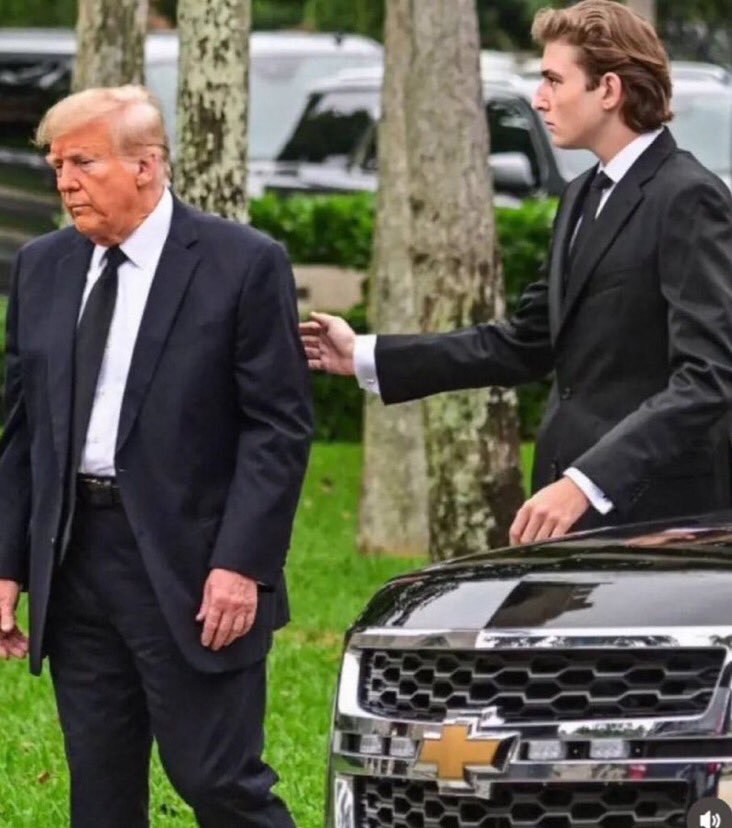
January 28, 2026: A brief but noticeable pause by US President Donald Trump during a recent interview has once again sparked debate over his health and cognitive sharpness. The 79-year-old appeared to momentarily struggle to recall the word “Alzheimer’s” while speaking about his late father’s medical condition.
In an interview with New York Magazine, conducted in December 2025 and published on January 26, 2026, Trump spoke extemporaneously about his family’s health history. Referring to his father, Fred Trump—a prominent New York real estate developer who died in 1999 at the age of 93—he said his father had remained robust for most of his life, with a strong heart and few health problems until old age.
“At a certain age, about 86, 87, he started getting, what do they call it?” Trump said, pointing to his forehead and turning to White House Press Secretary Karoline Leavitt. Leavitt supplied the word “Alzheimer’s,” prompting Trump to add, “Like an Alzheimer’s thing. Well, I don’t have it.”
Fred Trump was diagnosed with Alzheimer’s disease in the early 1990s and lived with the progressive neurological condition for several years before his death.
When asked whether his father’s diagnosis raised concerns about hereditary risk, Trump dismissed the idea. “No, I don’t think about it at all,” he said, adding that his outlook on life shapes how he approaches such issues. He reiterated that his own health is “perfect” and claimed he feels “the same as I did 40 years ago.”
After reading this quote from trump about the possibility of him having Alzheimer’s like his dad, him not even remembering the name of the disease, and him saying he wouldn’t care if he had it, I believe trump knows he has it pic.twitter.com/Xx7tNmt1wM
— katherine ✌🏻❤️🎸🌎🧚🌺🌼💔🆒 (@katherineOma) January 26, 2026
Video clips and excerpts from the interview quickly circulated across social media and news platforms, drawing sharply divided reactions. Critics pointed to the irony of briefly forgetting the name of a memory-related disease while rejecting concerns about cognitive decline. Supporters, however, described the pause as a minor and common verbal slip during unscripted conversation.
READ: Shocking Video Captures Ajit Pawar’s Plane Engulfed in Flames After Crash
The episode comes amid heightened scrutiny of Trump’s fitness for office, as he is now the oldest person to serve a second, non-consecutive term as president. Public attention in recent months has focused on several incidents, including:
-
Apparent fatigue or dozing during public events and meetings
-
Visible bruising on his hands, noted again during his January 2026 visit to Davos for the World Economic Forum
-
Occasional stumbles and signs such as ankle swelling
-
Repeated references by Trump himself to cognitive testing
The White House has consistently pushed back against speculation. In early January 2026, Trump posted on Truth Social that White House doctors had declared him in “PERFECT HEALTH” and that he had “ACED” his cognitive examination for the third consecutive time, claiming a 100 per cent score. He has also advocated mandatory cognitive testing for presidential and vice-presidential candidates, arguing that the country cannot be led by “stupid” or incompetent individuals.
White House officials, including Communications Director Steven Cheung and Press Secretary Leavitt, have emphasized Trump’s demanding work schedule, noting that he frequently works late into the night. Allies, including Secretary of State Marco Rubio, have publicly affirmed the President’s sharpness and stamina.
Trump has taken the Montreal Cognitive Assessment (MoCA) multiple times, including in 2018 during his first term and at least twice in 2025 during his second. While he has reported perfect scores, medical experts note that the MoCA is a screening tool that does not fully evaluate complex reasoning, judgment, or long-term cognitive competence. Detailed medical records have not been publicly released.
The episode highlights a broader national debate over age, health, and leadership in high-stakes political roles. Polls, including a January 2026 YouGov survey, suggest that roughly half of Americans express concern about Trump’s age and potential cognitive decline. Trump and his team continue to frame such scrutiny as politically motivated, while insisting he remains fully capable of leading.