BY PC Bureau
New Delhi, December 28, 2025 — Delhi’s air pollution crisis has claimed an unprecedented professional casualty. Rajkumar Bafna, President (Finance) of pharmaceutical major Akums Drugs and Pharmaceuticals Ltd, has resigned from his post, citing the capital’s toxic air as the sole reason for stepping down—an extraordinary move that underscores how hazardous pollution levels are no longer just a public health concern, but a decisive factor shaping careers and corporate leadership choices.
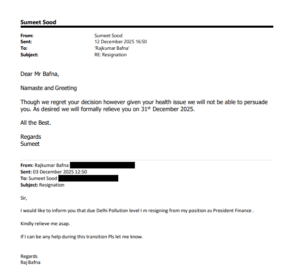
Bafna, who joined the company in August 2025, submitted his resignation through an internal email dated December 3 addressed to Chief Financial Officer Sumeet Sood. “I would like to inform you that due to Delhi pollution level I am resigning from my position as President Finance. Kindly relieve me asap,” the email stated, as disclosed in regulatory filings to the BSE and NSE.
Akums accepted the resignation and relieved Bafna with effect from December 31, 2025, though the company formally cited “personal reasons” in its public disclosures. CFO Sood, in his response, acknowledged Bafna’s health concerns, noting that while the management regretted his decision, it was unable to persuade him to continue.
The episode is among the first publicly documented cases of a senior executive at a listed Indian company stepping down primarily due to environmental conditions, underscoring how Delhi’s worsening winter smog is increasingly shaping professional and personal decisions.
READ: Myanmar Junta Holds First Post-Coup Election Amid War, Boycotts and Global Doubts
A city choking on smog
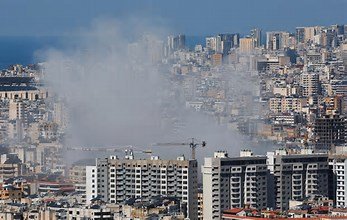
Delhi’s air quality has deteriorated sharply this winter, with the Air Quality Index (AQI) frequently entering the “severe” (301–400) and “hazardous” (above 400) categories. On December 28, real-time monitoring stations recorded AQI levels ranging between 350 and 500 across several parts of the city. The spike has been attributed to a combination of low wind speeds, vehicular emissions, industrial pollution, and stubble burning in neighbouring states.
At its peak, PM2.5 concentrations crossed 500 micrograms per cubic metre—more than 30 times the World Health Organization’s recommended annual average limit of 15 µg/m³. In response, authorities enforced Stage IV of the Graded Response Action Plan (GRAP), halting construction activity, restricting non-essential vehicles, and mandating work-from-home for many offices.
Health experts warn that prolonged exposure to such fine particulate matter can penetrate deep into the lungs and bloodstream, aggravating respiratory and cardiovascular diseases. Studies, including those by the University of Chicago’s Energy Policy Institute, estimate that long-term exposure could reduce life expectancy in the region by up to 12 years.
Part of a growing “smog refugee” trend
Bafna’s resignation reflects a wider pattern of what many now describe as a “pollution exodus” from Delhi-NCR. Surveys suggest that 30–35% of residents—particularly young professionals and families with children—are considering relocating to cities with cleaner air such as Bengaluru, Hyderabad, or even overseas.
In recent months, high-profile cases have drawn attention to the trend. In November, a UPSC topper reportedly resigned from a coveted government post to safeguard her child’s health. Professionals in the tech and corporate sectors have spoken of cutting short visits to Delhi or permanently shifting bases due to persistent respiratory issues, eye irritation, and fatigue. Several companies, including multinational firms, have reinstated work-from-home arrangements during peak pollution periods.
While relocation remains an option largely available to the affluent, millions of lower-income residents—street vendors, daily wage workers, and construction labourers—continue to endure the worst effects of toxic air with little choice or protection.
Corporate and policy implications
Akums, one of India’s leading contract drug manufacturers, has not yet announced a successor to Bafna. His departure raises broader questions about talent retention in heavily polluted urban centres and the potential long-term economic consequences if senior professionals increasingly opt out of such cities.
Politically, responsibility for Delhi’s pollution crisis continues to be contested between the Centre, the Delhi government, and neighbouring states. Environment Minister Manjinder Singh Sirsa recently apologised for the severity of the situation, while also pointing to years of systemic neglect and calling for coordinated, long-term solutions rather than seasonal firefighting.
As Delhi heads into another smog-choked New Year, Bafna’s resignation stands as a stark reminder that air pollution is no longer just a public health statistic or an annual inconvenience—it is forcing life-altering decisions. For many residents quietly reassessing their future in the capital, the question is becoming increasingly unavoidable: is staying worth the cost?