Myanmar opened polling in parts of the country for its first post-coup election, but violence, boycotts, and the exclusion of opposition parties have cast doubt on its credibility.
BY PC Bureau
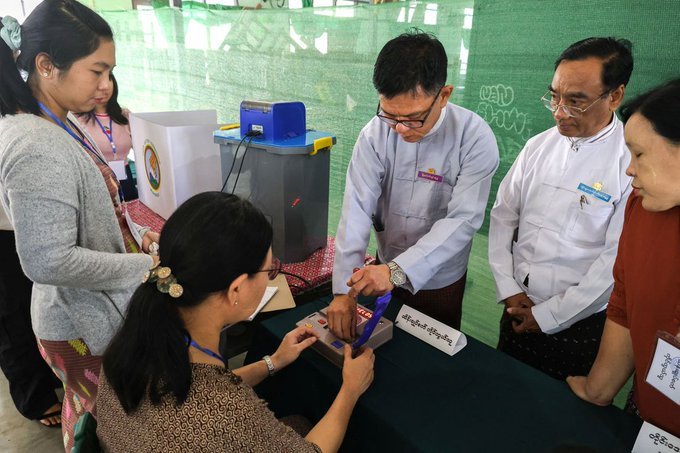
December 28, 2025: Polling stations opened in parts of Myanmar on Sunday for the first phase of a general election, the country’s first since the military seized power in a 2021 coup that plunged the nation into protracted civil war, economic collapse, and international isolation.
The vote, organised by the military-appointed State Administration Council (SAC), is being conducted in three phases—December 28, January 11, and January 25—but is overshadowed by ongoing violence, widespread boycotts, and allegations that the process is designed to entrench the junta’s rule rather than restore democracy.
The election comes nearly five years after the army overthrew the elected government of Aung San Suu Kyi, alleging fraud in the 2020 polls—claims that were never substantiated. Suu Kyi, a Nobel Peace Prize laureate, remains imprisoned, while her National League for Democracy (NLD) has been dissolved along with dozens of opposition parties, effectively eliminating any credible challenge to the military-backed Union Solidarity and Development Party (USDP).
Low Turnout Amid Fear and Insecurity
Early reports indicated subdued voter participation, with sparse crowds at polling stations in cities including Yangon. Residents described a climate of fear rather than civic enthusiasm, with some saying they voted under pressure rather than conviction.
Independent media reported low turnout on the first day, attributing it to intimidation, displacement, and the worsening humanitarian crisis. Explosions were reported near polling sites in Pyay, while drone attacks targeted USDP offices in Myawaddy, underscoring the fragile security situation.
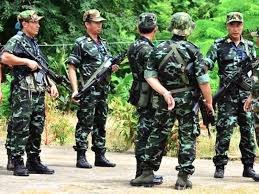
Voting is not taking place in up to half of the country due to active fighting between junta forces, ethnic armed organisations, and pro-democracy resistance groups. Millions of people—particularly in conflict-hit regions such as Sagaing and Rakhine—are effectively excluded, even as airstrikes and artillery attacks continue.
While junta officials say the phased approach allows voting to proceed in “secure areas,” analysts argue it creates opportunities to manipulate results between rounds.
Since I didn’t obtain press accreditation from the Ministry of Information, I wasn’t allowed inside the polling stations. Six countries have sent observers to ‘monitor’ the elections—all of them with close ties to Myanmar’s junta. There’s also an @AP team based at my hotel,… pic.twitter.com/O4ZRyyAZmu
— Huazong (@realhuazong) December 28, 2025
Crackdown on Dissent
State media has aired images of orderly queues and framed the election as evidence of public support. However, independent observers describe coerced participation and a heavily controlled environment.
A new “election protection” law has led to more than 200 arrests since July for criticising the vote, including for social media posts and even online reactions, further suppressing dissent and contributing to the muted public response.
Divided International Response
The election has drawn sharp international criticism. The United Nations’ special rapporteur on Myanmar said the process was “anything but free and fair” and warned it could deepen the conflict rather than resolve it.
Western governments, including the United States and members of the European Union, have dismissed the vote as a sham aimed at manufacturing legitimacy for military rule. Human rights organisations have urged countries to reject the results, citing ongoing atrocities against civilians.
In contrast, China and Russia have offered tacit or open support, portraying the election as a step toward stability that safeguards their strategic and economic interests. India has taken a more cautious stance, stopping short of outright condemnation. ASEAN has called for restraint but has not boycotted the process, with some member states sending observers.
READ: Osman Hadi Murder: Prime Suspects Fled to India via Meghalaya Border
Junta-Backed Party Expected to Win
With major opposition forces excluded and the electoral commission under military control, the USDP is widely expected to secure a dominant victory. Analysts say the outcome could pave the way for junta chief Min Aung Hlaing to assume a civilian leadership role, though he has publicly downplayed such ambitions.
Smaller ethnic and regional parties may win limited seats in relatively calm areas, but the military’s constitutionally guaranteed 25% share of parliamentary seats ensures it retains veto power over any reform. The dissolution of more than 40 parties and imprisonment of political leaders all but guarantees continuity of military dominance.
A Bid for Legitimacy Amid Collapse
The junta has portrayed the election as a return to multiparty democracy, but critics have dismissed it as a hollow exercise conducted amid intensifying military operations. The vote is taking place against a backdrop of economic distress, with sluggish growth, inflation exceeding 20%, frequent power outages, and widespread poverty.
In some rural constituencies once represented by Suu Kyi, residents have reportedly resorted to extreme measures to survive, underscoring the depth of the crisis.
Resistance groups have vowed to disrupt the electoral process, calling it a distraction from the military’s battlefield setbacks and governance failures. As the first phase concludes, analysts warn the election is more likely to fuel further resistance than bring stability.
For many in Myanmar, the message is clear: ballots cast under the shadow of guns offer little real choice.