India’s recalibrated engagement with Russia and China, showcased at the SCO Summit and during Putin’s Delhi visit, signals a sharper assertion of strategic autonomy
BY Annpurna Nautiyal
December 12, 2025: The rapidly changing global landscape has created an environment where major powers are redefining their roles, recalibrating partnerships, and testing the limits of a shifting international order. Multipolarity is frequently invoked, yet its contours remain fluid and uncertain. Against this backdrop, developments in 2025—from escalating tariff regimes to renewed great-power summits—have exposed growing contradictions in US foreign policy and strategic behaviour.
The September 2025 SCO Summit in Tianjin was a striking reflection of these shifts. The emerging chemistry among India, Russia, and China, especially amid the United States’ 50% trade tariffs on India and new sanctions on Moscow and Beijing, unsettled Washington. The Trump administration viewed Prime Minister Modi’s engagement with the leaders of the world’s two most powerful authoritarian states with visible discomfort.
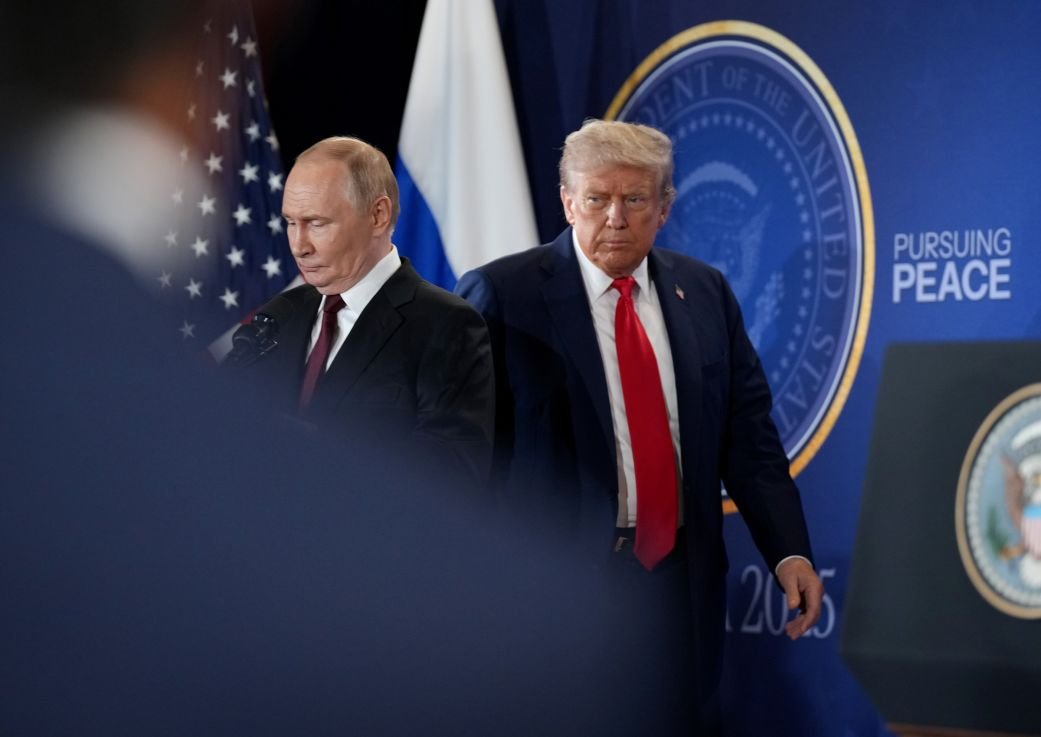
The harshest retaliatory tariff due to Russian oil imports and the US charge of fuelling the Russian war machine was a shock for India. Therefore, Modi met both leaders to send a message to the US about India’s declining trust in the US strategic partnership, and to show that India is using its strategic autonomy to be a part of a multipolar world. But the same US President Donald Trump did not hesitate to host Russian President Putin in Alaska for a summit on August 15, 2025, which concluded without any deal.
Putin neither shifted from his stand on NATO’s departure from Eastern Europe, Ukraine’s non-entry into NATO, nor acceptance of a truce until Russia’s security goals of capturing the Donbas region are fulfilled and a fair balance in Europe is restored. The recently issued US security strategy for 2025 also seems diagonally opposite to his 2017 strategy, which focussed on the US worry about the return of superpower rivalry, as China and Russia were bent upon disturbing American security, prosperity, and interests.
The 2025 strategy’s focus has shifted to how European allies should act to end mass migration, elect “patriotic” parties to evade civilizational removal, take responsibility for their own security, and stop being freeloaders. NATO seems to have taken a backseat, as Trump has indicated that the US will not ensure the security of a weak Europe. In 2017, he threatened to use “fire and fury” against North Korea, but now, when these countries have more nuclear weapons, limitless partnerships, and growing aggression and influence, the US seems comfortable cultivating good relations with them.
It indicates Trump’s policy of selective isolation—to make America great and ensure it remains the strongest, richest, most powerful and successful country by controlling surrounding waters and land. The 2025 strategy also avoids mentioning cyberspace attacks by Chinese state-sponsored hackers and long-lasting competition between the world’s two largest economies. Commercial interests, rather than strategic and military competition in the Indo-Pacific, are now guiding US policy. India, seen in 2017 as an important part of the Indo-Pacific strategy, is no longer a priority.
These changes show that every country aspires to protect its national interests and strategic autonomy. Therefore, if India is seeking the same right of independent trajectory and cultivating friendly relations with like-minded countries, why are the US and European countries finding it difficult to accept? Why is the December 4–5, 2025 visit of Russian President Putin being scrutinised with so much suspicion and mistrust?
The three ambassadors of Germany, the UK and France in India—just before Putin’s visit—published a joint article indirectly attacking India and criticising Russia for not being serious about ending the war or restoring peace in Ukraine. India termed this an “unusual and unacceptable diplomatic practice,” dishonouring an important visiting dignitary. Putin also signalled that Russia was not at all worried about any reaction from the US or Europe regarding their ceasefire ultimatum.
Interestingly, despite criticising and imposing severe sanctions on Russia, neither the US nor Europe has stopped its trade or oil imports from Russia. Although Europe buys less Russian oil than before, it receives products and oil through countries like Hungary and Slovakia, which continue to get Russian pipeline supplies, and from India through refined products of Russian crude.
On December 3, 2025, European Commission President Ursula von der Leyen confirmed an agreement for Europe’s energy independence from Russia, promising to permanently stop imports by 31 December 2026 and pipeline gas by 30 September 2027 to show EU unity with Ukraine. Ironically, the Trump administration, despite imposing direct sanctions on Rosneft and Lukoil, has not broken ties with Russia, demonstrating that Russia cannot be isolated over the Ukraine war.
Recently, while advising Ukraine’s President Zelensky to read the peace proposal again, Trump suggested that because Russia is much larger than Ukraine, its victory is certain. Hence, the US could be a neutral negotiator to reduce tensions between Russia and Europe—another indicator of uncertainties in US policies and its desire to keep the US isolated from European conflicts.
Putin’s travel to China, the US and India indicates that they have understood manipulative US policies and are challenging US supremacy. In view of this, India’s questions about the double standards of Europe and the US are genuine. India’s foreign minister has made it clear that Putin’s visit will not affect ties with the US or Europe, as India has always stood on the side of peace. Putin also stated that India is no longer the India of the 60s or 70s but a new India that knows how to traverse a confused world and will not bow under pressure.
Thus, heightened uncertainties, China’s aggressive surge in border areas, economic issues, terrorist attacks from Pakistan-sponsored groups, Trump’s pro-Pakistan policies, and Russia’s long-running war in Ukraine made Putin’s visit to India for the annual summit on December 4–5, 2025 quite important. India’s relationship with Russia has always been strong—who can forget Russia’s stand during the 1971 Indo-Pakistan war in the face of the Pakistan-China-America triangle against India?
READ: Indian Artefacts Among 600 Items Stolen in UK Museum Heist
READ: Thai Authorities to Hand Over Luthra Duo to Indian Officials
Putin received a warm welcome in Delhi. Despite a trade imbalance, both countries aim to achieve $100 billion in trade before 2030. Putin also highlighted the “limitless” relationship with China and left it to India to take similar steps. Understanding India’s precarious situation due to US tariffs and its balancing act with the US through ongoing trade talks, Russia not only offered uninterrupted oil supplies but also advocated strengthening long-standing defence and political ties.
Russia also assured the removal of non-tariff barriers to boost Indian exports, labour mobility, hiring skilled and semi-skilled Indian workers in construction, engineering and IT, fertiliser supply, training Indian seafarers in polar waters, cooperation in shipbuilding, and finalising a second site in India for a Russia-backed nuclear power plant. Modi compared India-Russia friendship to a “Dhruv Tara”—steady despite global upheavals.
Although India has diversified its oil sourcing due to tariffs and limited its imports from Russia, how patient can India remain under Trump’s constantly shifting policies based more on optics and ego clashes? The latest US tariff target could be Indian rice exports, following complaints from US farmers facing intense competition from India, Vietnam and Thailand. A $12 billion support package has been launched for American farmers.
The decision to exempt 200 products—coffee, tea, fruits, juices, cocoa, spices, bananas, tomatoes, beef and certain fertilisers—from the April 2, 2025 tariff list indicates how tariffs have made American life tough. Whether this exemption benefits India remains to be seen. The vagueness around tariff percentages and fear of competition from Vietnam and Latin America could make India uncomfortable. The hastiness of Trump’s policies suggests they are governed more by MAGA rhetoric and vengeance than by ground reality.
Trump’s tariff-centric approach is failing, as seen in China’s trade surplus of $111.68 billion in November 2025 and an accumulated surplus of $1.08 trillion. China has reduced purchases of US soybeans and shifted assembly lines to Southeast Asia, Mexico and Africa—allowing finished products to reach the US without tariffs. China’s weak currency makes goods cheaper in China than in the US or Europe.
American Bitcoin—promoted by Trump’s family—also saw its largest drop in 2025, drawing criticism for risky digital ventures. The real beneficiary appears to be China, which remains unfazed by US tariffs and has gained trust through chip-making, semiconductors, military equipment, manufacturing and loans. US weakness in confronting China reflects Trump’s underestimation of Beijing.
To counter Chinese aggression, the US needs a complete strategic makeover and must increase its outreach to India—another emerging global power.
(Former Vice Chancellor and Professor of Political Science, of the HNB Garhwal (Central)
University, Srinagar, Garhwal, Uttarakhand)