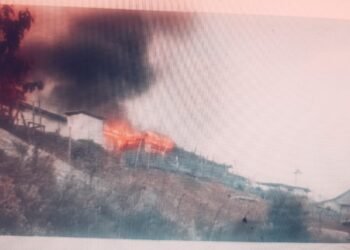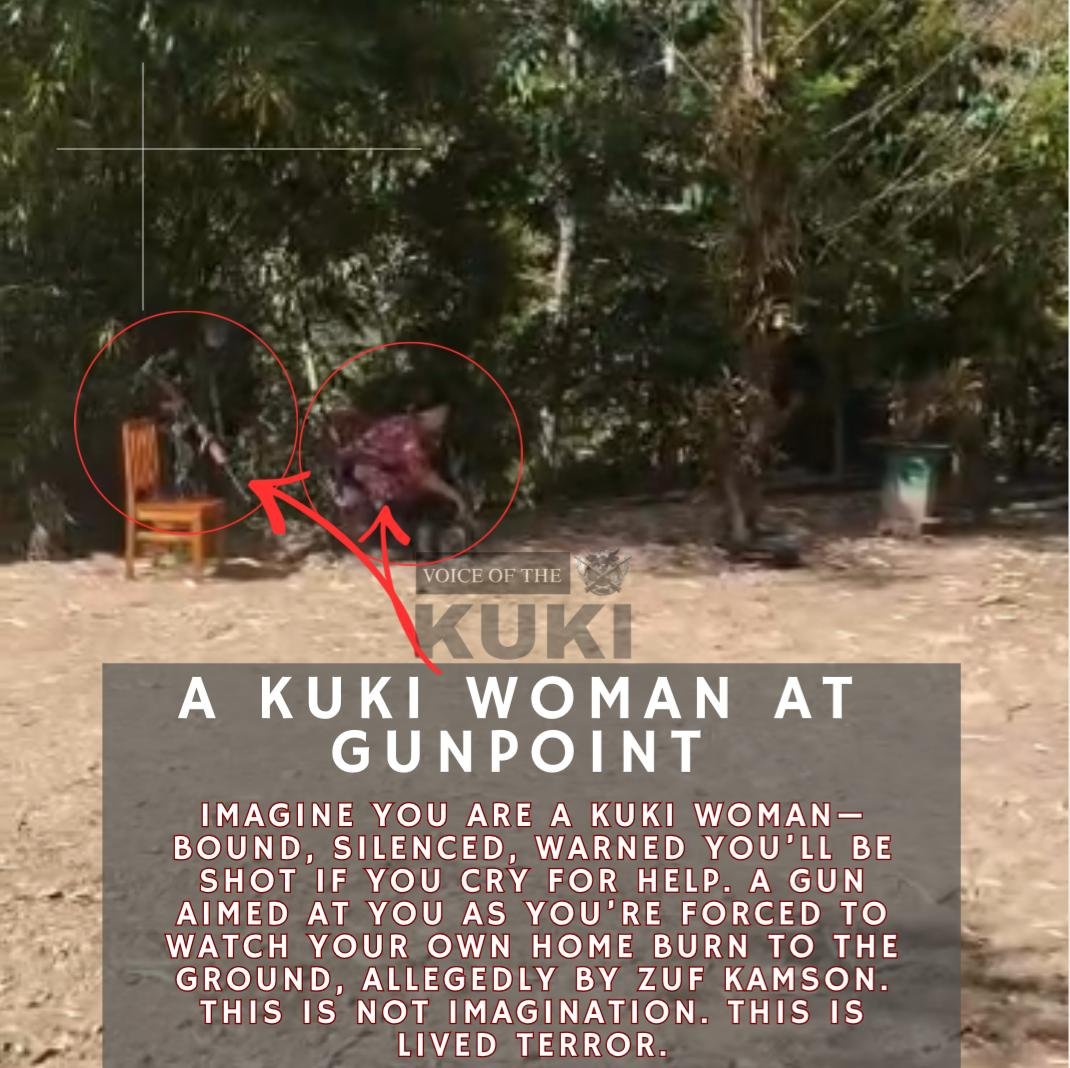
UPF and KNO, the Kuki-Zo armed group under suspension of operation agreement with the Centre, described the burning of civilian homes on Republic Day as a cowardly act, accusing ZUF (K) of using the pretext of anti-poppy operations to target a defenceless Kuki-Zo farming community.
BY PC Bureau
January 26, 2026: Kuki armed groups under Suspension of Operations (SoO) with the Centre — the United People’s Front (UPF) and the Kuki National Organisation (KNO) — on Monday strongly condemned the alleged arson attack carried out by the Zeliangrong United Front (ZUF), Kamson faction, on K. Songlung village in Manipur’s Kangpokpi district.
In a joint statement, the UPF and KNO described ZUF (Kamson) as a “rogue organisation” acting at the behest of “vile elements pursuing vested interests at the cost of hill tribal communities.” The groups termed the burning of houses in the Kuki-Zo village at around 12:30 pm on Republic Day as “abominable” and said the act targeted a “defenceless, ordinary farming community” under the pretext of destroying alleged poppy cultivation.
“The setting ablaze of K. Songlung, an honest and down-to-earth Kuki-Zo hamlet, reflects the petty, selfish and mean-minded nature of the actors involved, whose actions are incompatible with peaceful human coexistence,” the statement said.
The SoO groups further alleged that ZUF (Kamson) maintains links with “actors from the Imphal valley” and accused them of using the rhetoric of poppy eradication as a cover to raze Kuki-Zo settlements. According to the statement, ZUF’s continued existence depends on “unholy linkages” that undermine not only neighbouring tribes but also its own Zeliangrong community.
Even under President’s Rule, a Kuki Zo village burnt down by minions of the orchestrator of Manipur’s ethnic cleansing. UT for the Kuki Zo alone will usher in safety to Kuki Zo people. @LokBhavManipur @PMOIndia @HMOIndia @the_hindu pic.twitter.com/RhBL0dNlJD
— Paolienlal Haokip (@paolienlal) January 26, 2026
READ: Kuki Armed Group Asks NSCN-IM to Shed “Illusion of Supremacy” After Arson Attack
Warning of consequences, the UPF and KNO said ZUF (Kamson) would be “solely responsible” for any violence arising from the arson attack and added, “ZUF (K) will reap what it sows.” The statement concluded with an appeal to “divine justice” and urged mercy for what it called a betrayal of tribal neighbours.
(Sd/- Information & Publicity, UPF & KNO)
Earlier, the United Kuki National Army (UKNA) also issued a strongly worded condemnation, accusing ZUF (Kamson) of functioning as a proxy force for the NSCN-IM. The UKNA said the attack followed a broader pattern of intimidation and territorial coercion disguised as local enforcement actions.
Describing the burning of civilian structures as a “cowardly act,” the UKNA warned that proxy violence erodes any claim to political legitimacy and risks triggering retaliatory cycles in Manipur’s already fragile hill districts.
“The substitution of dialogue with intimidation and political reasoning with violence is neither new nor credible,” the statement said, adding that arson and coercion cannot manufacture authority or advance constitutional negotiations.
The condemnation comes amid ZUF’s counter-claim that the incident was part of an anti-poppy cultivation drive — a justification Kuki-Zo groups view with deep scepticism. Critics argue that such campaigns have increasingly become tools of territorial assertion rather than genuine anti-narcotics efforts, particularly in contested hill regions.
Kuki civil bodies echoed these concerns. The Committee on Tribal Unity (COTU) issued a 24-hour ultimatum to the Manipur government, demanding visible action against those responsible and warning of intensified protests, shutdowns and possible economic blockades if accountability is not enforced. The Sadar Hills Chiefs’ Association also called on ZUF to acknowledge responsibility and de-escalate tensions.
Despite heightened security patrols, the absence of arrests or official statements has fuelled perceptions of official inertia, reinforcing fears that selective enforcement could embolden armed actors across communities.