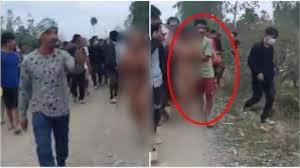
While procedural loopholes favored the accused, the survivors of the Manipur’s naked parade case involving two hapless Kuki-Zo women remain without closure, reflecting a system that often prioritizes process over justice.
BY Navin Upadhyay
NEW DELHI, March 25, 2026 — Nearly three years after two Kuki‑Zo women were stripped, gang‑raped and paraded naked by a mob during the ethnic violence in Manipur — an act that shocked the conscience of the nation — their pursuit of justice remains uncertain. The case has spotlighted deep flaws in India’s criminal justice system, where procedural technicalities can sometimes work to the benefit of the accused, even in the most heinous crimes, while victims linger without closure.
On May 4, 2023, during clashes between the Meitei majority and Kuki minority communities, a group of men allegedly abducted two women from safety, sexually assaulted them and paraded them naked in Kangpokpi district. The disturbing incident came to national attention only in July when a video went viral, triggering public outcry and outrage across India.
Despite its gravity, the wheels of justice have turned slowly. The Central Bureau of Investigation (CBI) — directed by the Supreme Court to take over the case and transfer the trial out of Manipur for fairness — filed charges only in January 2026, nearly two and a half years after the crime.
Bail Granted Amid Delays
In September 2025, the Gauhati High Court granted bail to two men accused of being part of the mob that assaulted the women, despite the serious nature of the charges including gang‑rape and public humiliation.
The court’s reasoning hinged on a significant trial delay, much of which was attributed to lapses in the prosecution’s handling of the case — including the slow pace of investigation and delayed filing of charges. The court noted that keeping the accused in custody indefinitely, when the trial had barely moved forward, would violate principles of fairness and the right to a speedy trial.
This technical focus on procedural delay — rather than the severity of the crime — has become the defining issue in the bail decision, leaving victims and civil society critics outraged.
CBI Moves SC to Revoke Bail in Manipur Naked Parade Case https://t.co/CoKDJVevPa #ManipurViolence #SupremeCourt #CBI #ManipurNews #IndianJudiciary #BreakingNews
— POWER CORRIDORS (@power_corridors) March 24, 2026
Contrast With Other High‑Profile Cases
India’s justice system has long been criticized for its uneven handling of bail and trial proceedings. In cases like the 2020 Delhi riots, many accused spent five years or more in jail without bail as their trials slogged through congested courts — a stark contrast to the bail granted in the Manipur naked parade case. Analysts view this as a symptom of systemic imbalance in how bail is adjudicated, often influenced by differences in how effectively prosecutions move trials forward.
Moreover, in many rape and sexual violence cases, police and prosecutors have been slow to act initially. In the Manipur incident, even after an FIR was filed in May 2023, no significant arrests or charges followed until the video emerged publicly, after a media‑imposed delay of more than two months and a subsequent Supreme Court intervention.
READ: ran Refuses Talks with ‘Israel’s Agents,’ Open to JD Vance as Negotiator
READ: Ladakh LG Launches “Civilizational” Indus River Green Corridor Project in Leh
Legal experts, activists and victims’ advocates point to several prosecution and systemic failures:
- Delay in evidence‑gathering and charges: Despite the viral video and a clear case file, the prosecution did not frame criminal charges promptly, delaying the formal start of the trial.
- Coordination challenges: The trial was moved to Assam to ensure neutrality, but witnesses, evidence and procedural activity moved slowly, extending the pre‑trial phase.
- Undertrial focus overshadowing victim welfare: While attention has focused on bail technicalities, survivors have struggled for legal representation and support. Only recently did the Supreme Court direct the appointment of legal aid counsel for them.
The CBI has approached the Supreme Court seeking cancellation of the bail, arguing that the gravity of the offence — involving gang‑rape and public degradation of women — outweighs the procedural delays cited by the High Court.
A bench led by Chief Justice Surya Kant has issued notices to the two accused and will hear arguments on revoking bail. The Supreme Court’s decision in this appeal could be a key moment for justice — not just for the survivors in Manipur, but for how the Indian judicial system balances procedure and substantive justice in extreme cases.
Three years on, however, questions remain: Will the two women ever see justice? And does India’s legal system do enough to ensure that the most vulnerable victims are protected, rather than advantaging offenders through procedural loopholes?
Critics argue that unless prosecutions are swift, diligent and victim‑centred from the outset, similar injustices — where perpetrators walk free while victims await years for closure — will continue to occur. The naked parade case is more than a legal battle; it is a test of whether India’s justice system can balance the letter of the law with the deeper imperative of justice itself.