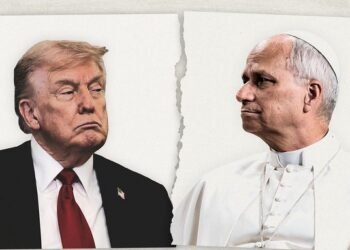
Trump’s post, shared soon after his criticism of Pope Leo XIV, has raised concerns about tone and messaging at a sensitive geopolitical moment.
BY PC Bureau
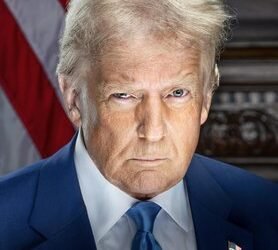
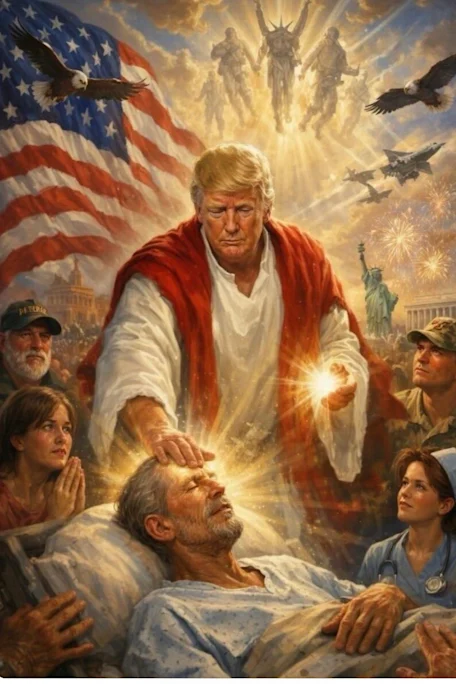
April 13 — U.S. President Donald Trump on Sunday night posted an AI-generated image portraying himself in a biblical robe, extending a glowing hand to heal a sick man—imagery widely interpreted as evoking Jesus Christ—shortly after launching a sharp public attack on Pope Leo XIV.
The post comes amid escalating tensions between the White House and the Vatican over the ongoing U.S.-led military campaign in Iran, now in its seventh week. Pope Leo XIV, the first American-born pontiff, has repeatedly criticised the conflict as unjust and called for an immediate ceasefire, warning that “God does not bless any conflict” and that followers of Christ cannot support violence.
Earlier in the evening, Trump had taken to Truth Social with a lengthy message criticising the Pope as “weak on crime” and “terrible for foreign policy.” He also questioned the circumstances of Leo XIV’s election, suggesting it was politically influenced, and later told reporters he was “not a big fan” of the pontiff.
The juxtaposition of a deeply personal attack on the head of the Catholic Church followed by imagery associated with Christ has drawn strong reactions across political and religious circles. Critics—including some of Trump’s own supporters—described the move as inappropriate and reflective of excessive self-projection.
After attacking the Head of the Catholic Church, Pope Leo XIV, in a rambling post earlier tonight for his criticisms of the ongoing conflict in the Middle East, President Trump posted this AI image to TruthSocial, portraying himself as Jesus Christ. pic.twitter.com/vHoFF2Baww
— OSINTdefender (@sentdefender) April 13, 2026
Civilian toll and growing scrutiny
The controversy unfolds against the backdrop of mounting civilian casualties in the conflict. One of the most widely reported incidents occurred on February 28, when a strike hit a girls’ elementary school in Minab in southern Iran, killing scores of civilians, including children and teachers. Independent investigations and satellite analysis indicated the site was struck during school hours, intensifying international concern over the conduct of the war.
While the Trump administration initially deflected responsibility, subsequent assessments by officials suggested the strike may have involved U.S. weapons systems. No formal apology has been issued.
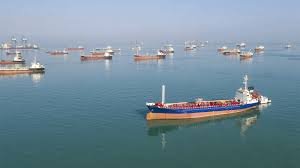
The Minab incident is among several that have highlighted the human cost of the campaign, which has included strikes on infrastructure, ports and military installations. Humanitarian organisations have warned of worsening conditions, including shortages of food and medicine, as the conflict continues.
READ: Explained: Why Trump Wants to Block the Strait of Hormuz
Vatican stance and diplomatic strain
Pope Leo XIV has maintained a consistent stance against the war, urging restraint and dialogue. In recent weeks, he has appealed directly for an end to hostilities, arguing that the conflict risks deepening suffering without delivering lasting solutions.
The Vatican’s position has placed it increasingly at odds with the Trump administration. Reports suggest relations have cooled significantly, with the possibility of high-level engagements—including a papal visit to the United States—now uncertain.
Optics and leadership questions
The timing of Trump’s AI-generated image has intensified debate over the symbolism and messaging from the White House. For a president overseeing an active military campaign, the use of Christ-like imagery—especially in close proximity to criticism of a religious leader calling for peace—has prompted broader questions about tone, judgment and leadership.
Supporters argue Trump is projecting strength and conviction in the face of international criticism. Detractors, however, say the episode reflects a troubling conflation of political authority with moral or spiritual symbolism, particularly during a conflict marked by significant civilian suffering.
As tensions persist in the region and the Strait of Hormuz remains a focal point of strategic contestation, the episode underscores how geopolitical conflict is increasingly intersecting with questions of morality, religion and global leadership.