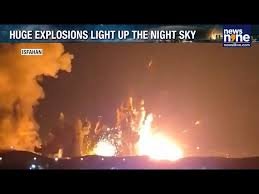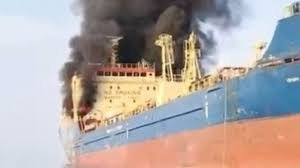
. Iraqi rescue teams evacuated dozens of sailors from burning vessels, while maritime security monitors including the UK Maritime Trade Operations reported multiple attacks on ships in the region within 24 hours.
BY PC Bureau
March 12, 2026 – Maritime security in the Persian Gulf and the Strait of Hormuz deteriorated sharply overnight after a U.S.-owned product tanker came under attack in Iraqi territorial waters, sparking fires on multiple vessels and leaving at least one seafarer dead.
The tanker SafeSea Vishnu, sailing under the Marshall Islands flag and beneficially owned by the U.S.-based Safesea Transport Group, was struck late Wednesday near Iraq’s southern oil export hub of Basra in the northern Persian Gulf. The incident occurred roughly 50 kilometers off the Iraqi coast, close to key export terminals at Khor al-Zubair and Al-Faw.
Iraqi port officials said the tanker had recently loaded refined petroleum products including fuel oil and naphtha when it was hit by what security sources described as either naval drones or explosive-laden boats. The blast ignited intense fires and oil slicks visible from the shoreline.
Another vessel nearby—the Maltese-flagged tanker Zefyros, owned by a Greek company—was also damaged in the incident.
🚨 HUGE! US-Owned tanker ‘SafeSea Vishnu’ BLASTED by suspected #Iran strike
ERUPTS in FLAMES in Persian Gulf off Basrah 🤯
Loaded with UP TO 400,000 BARRELS of Iraqi oil, war madness ESCALATING wildly 😳 pic.twitter.com/TNpFIOnZdr
— The Analyzer (News Updates🗞️) (@Indian_Analyzer) March 12, 2026
Rescue teams supported by Iraqi port security evacuated 38 crew members from the burning vessels. At least one seafarer was later recovered dead from the water, while authorities continued searching for any additional missing personnel.
READ: US Trade Probe Targets India, China, EU After Tariff Ruling
Iranian state media later claimed responsibility for the strike, describing it as retaliation in the escalating confrontation involving Iran, Israel, and the United States, and as part of efforts to disrupt energy flows through the region.
The attack marks a significant escalation because it directly targeted a U.S.-owned commercial tanker, raising concerns about wider economic repercussions and the safety of neutral shipping.
Second Attack in 24 Hours
The strike came less than a day after another vessel was hit while transiting the Strait of Hormuz.
On March 11, the Thai-flagged bulk carrier Mayuree Naree, owned by Thailand’s Precious Shipping, was struck by two projectiles near its stern while sailing toward Kandla Port in India.
The vessel, which had departed Khalifa Port in the United Arab Emirates, carried a crew of 23 Thai nationals. The impact triggered a fire in the engine room, forcing most of the crew to abandon ship.
READ: India-Bound Thai Cargo Carrier Attacked in Strait of Hormuz
The Royal Navy of Oman rescued 20 crew members, bringing them ashore safely in Khasab, Oman. However, three crew members remain missing, and authorities fear they may be trapped in the damaged engine compartment.
The Islamic Revolutionary Guard Corps later claimed responsibility for that attack as well, stating through state-affiliated outlets that the vessel had ignored warnings to avoid the strait.
Maritime security monitors, including the UK Maritime Trade Operations, reported that at least three vessels were struck by projectiles in the Strait of Hormuz that day, underscoring a sharp rise in hostilities.
Growing Threat to Global Shipping
These back-to-back incidents highlight mounting risks for merchant shipping in one of the world’s most critical energy corridors. Roughly one-fifth of global seaborne oil passes through the Strait of Hormuz each day.
Since the conflict escalated in late February, more than a dozen vessels have reportedly been targeted, with confirmed casualties mounting.
The U.S. Embassy in Baghdad had previously warned of threats from Iranian-linked groups against U.S.-connected assets in Iraq. As of Thursday morning, neither the White House nor the U.S. Department of Defense had issued formal statements on the SafeSea Vishnu attack.
Oil markets—already volatile amid the widening conflict—are expected to face renewed upward pressure, with the International Energy Agency reportedly considering contingency releases from strategic reserves.
India’s Ministry of External Affairs condemned the earlier strike on the Mayuree Naree, calling attacks on civilian merchant vessels “unacceptable” and urging protection of international shipping lanes.
Investigations into both incidents are underway, involving regional authorities, international maritime agencies, and satellite and forensic analysis. Merchant vessels operating in the Persian Gulf and Strait of Hormuz have been advised to exercise maximum caution as the situation continues to evolve.
This is a developing story. Updates will follow as rescue operations and investigations progress.