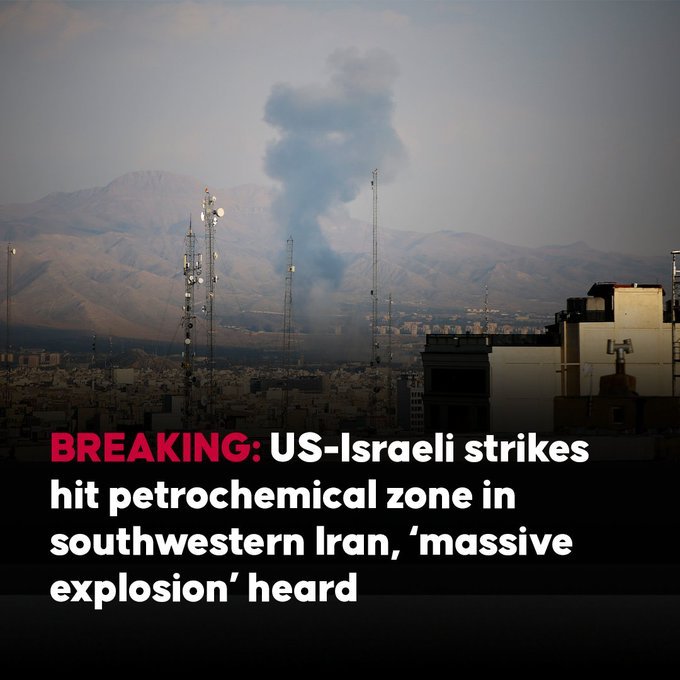
Iranian officials said at least three companies were hit, with several people injured, though the full extent of damage remains unclear. The attack comes amid intensifying exchanges between Iran and Israel, raising concerns over a broader and more prolonged conflict.
BY PC Bureau
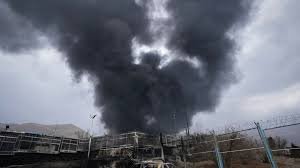
April 4, 2026: US-Israeli airstrikes targeted major petrochemical facilities in southwest Iran on Saturday, according to both Israeli and Iranian media, signalling a widening phase in the conflict as Israel shifts toward hitting critical economic infrastructure.
Media reprots said the UD and Israeli Air Force carried out the operation, though no formal statement was immediately issued by the military. Iranian outlets, including Fars and Tasnim, reported that multiple sites inside the Mahshahr Petrochemical Special Zone in Khuzestan Province were struck.
The Mahshahr zone is one of Iran’s most important industrial clusters, serving as a central hub for petrochemical production and exports. Facilities there process and manufacture chemicals, plastics and other derivatives that are vital to Iran’s economy, particularly under sanctions that have increased reliance on non-crude oil exports.
READ: US Special Forces Enter Iran in Mission to Rescue Pilot
Khuzestan Deputy Governor Valiollah Hayati said at least three companies were hit in the strikes. He added that the full extent of the damage was still unclear, with emergency teams assessing the impact across the complex.
Initial reports indicated that at least five people were wounded. Authorities did not immediately confirm any fatalities, and details about the condition of the injured or the specific facilities affected remained limited.
Shift toward economic targets
The strike appears to align with a broader strategic shift by Israel. According to recent reports, Israeli leadership has directed the military to expand its target list beyond purely military assets to include Iran’s economic infrastructure. The objective is to increase financial pressure on Tehran after earlier waves of strikes focused heavily on air defences, missile systems and weapons production sites.
Targeting petrochemical facilities marks a significant escalation, as such infrastructure is not only economically vital but also more deeply integrated into civilian industry. Damage to these sites could disrupt production, reduce export revenues and strain Iran’s ability to sustain prolonged military operations.
A petrochemical complex in the city of Mahshahr in SW Iran was hit in 3 US-Israeli strikes at around 0717GMT on Saturday, an Iranian official said
A ‘massive explosion’ occurred in the Mahshahr special petrochemical zone, Khuzestan deputy governor for security said, the… pic.twitter.com/k8qg7AOUUt
— Anadolu English (@anadoluagency) April 4, 2026
Strategic importance of Khuzestan
Khuzestan Province is one of Iran’s most strategically important regions, rich in oil and gas reserves and home to a large share of the country’s energy infrastructure. The Mahshahr industrial zone, located along the Persian Gulf coast, plays a crucial role in processing and shipping petrochemical products to international markets.
Strikes in this region could have ripple effects beyond immediate damage, potentially impacting global energy and chemical supply chains, depending on the scale of disruption.
Ongoing exchanges
The latest strikes come amid continued tit-for-tat attacks between Israel and Iran. Earlier on Saturday, Israeli aircraft reportedly struck air defence systems and missile-related targets in Tehran.
In response, Iran launched missile barrages toward Israel, some reportedly carrying cluster munitions. These strikes caused property damage and minor injuries in central areas, including partial structural damage in Ramat Gan and power outages in Rosh Ha’ayin. In northern Israel, a projectile hit Kiryat Shmona without triggering warning sirens, though no injuries were reported.
Unclear damage, rising stakes
Iranian officials have yet to provide a comprehensive assessment of the damage at Mahshahr, and there has been no official response from Tehran beyond initial casualty figures. The Israeli military has also not publicly commented on the operation.
However, the targeting of economic infrastructure suggests a deepening and potentially more prolonged phase of the conflict, with both sides expanding the scope and intensity of their operations.