Iran’s central command, Khatam al-Anbiya, signaled a shift from proxy warfare to the possibility of more direct confrontation with both the United States and Israel.
BY PC Bureau
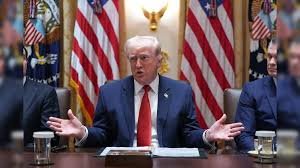
April 2, 2026: In a sharp escalation that has pushed the Middle East closer to open regional conflict, US President Donald Trump has warned of “extremely hard” strikes that could send Iran “back into the Stone Age,” prompting an immediate and uncompromising response from Tehran. Iranian military commanders have vowed operations that would be “more crushing, broader, and more destructive,” signaling no intention of backing down until achieving what they describe as the enemy’s “humiliation, disgrace, and surrender.”
The exchange marks a turning point, transforming a long-running shadow conflict into an increasingly direct confrontation, with military activity already intensifying across the Gulf and the Levant.
The latest cycle began with Trump’s remarks, delivered amid ongoing hostilities, framing continued Iranian aggression as grounds for overwhelming US force. Within hours, Iran’s central military command, Khatam al-Anbiya, issued a televised response. Its language suggested a clear shift: Tehran is no longer relying solely on calibrated proxy warfare but is openly threatening broader, more direct action against both the United States and Israel.
Direct hit at the moment of targeting Tel Aviv with fission missiles, immediately after Trump delivered his speech claiming he had “finished off Iran.” Iran responded via Khorramshahr and ballistic missiles with 1-ton warheads. pic.twitter.com/NWbVFl7irv
— GBX (@GBX_Press) April 2, 2026
READ: Vile, Horrifying: Trump Faces Democratic Fury Over Iran War Speech
READ: Trump Speech Triggers Market Rout Across Asia, India Hit Hard
On the ground, the threat has moved from speculative to immediate. The US Embassy in Baghdad issued an urgent alert warning of likely attacks by Iran-aligned militias within 24 to 48 hours, urging American citizens to leave Iraq. The warning reflects Washington’s assessment that Tehran’s regional proxy network is being readied for rapid escalation.
At the same time, Israel has faced one of its most intense barrages in recent memory. Multiple waves of Iranian missiles were launched toward its territory, with air defence systems intercepting most of them. However, the scale of the attack marks a significant escalation. The Hezbollah has also claimed drone and rocket strikes in northern Israel, effectively opening another front and stretching Israeli defences.
Analysts point to a dangerous pattern: both sides are now reacting as much to rhetoric as to actions. Trump’s blunt warnings—reminiscent of his earlier “maximum pressure” stance—appear aimed at deterrence through intimidation. Yet, in the current climate, they risk hardening positions in Tehran, where projecting strength is increasingly seen as essential amid economic strain and political isolation.
The stakes are high. The Gulf remains a critical global energy corridor, and any sustained escalation could threaten oil infrastructure in countries like Saudi Arabia or the United Arab Emirates, or disrupt shipping through the Strait of Hormuz—with immediate consequences for global markets. Meanwhile, Iraq risks once again becoming a battleground for proxy warfare, and Israel faces the possibility of a wider, multi-front conflict involving groups across the region.
Diplomatic options appear limited. Traditional backchannels and mediation efforts have so far failed to gain traction, while both Washington and Tehran are framing the confrontation in increasingly uncompromising terms.
What began as indirect clashes has now evolved into a direct triangle of tensions involving the United States, Iran, and Israel. The speed at which rhetoric has translated into military alerts and missile exchanges underscores how fragile the region’s balance has become. Without swift de-escalation, the conflict risks spiraling into a broader war with far-reaching global consequences.