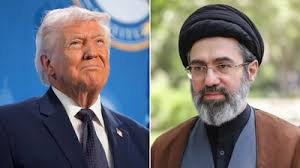
Trump has hinted at a broader bargain involving oil, gas and the Strait of Hormuz, while Iran insists no real talks are taking place and demands major concessions first.
BY PC Bureau
March 25, 2026 — President Donald Trump said Monday that the United States is engaged in “very good and productive” talks with Iranian representatives to end the three-week-old war, claiming Tehran has agreed it will never develop a nuclear weapon and is eager to reach a deal.
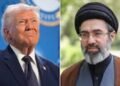
Speaking to reporters in the Oval Office and in other appearances, Trump said his administration was “talking to the right people” in Iran, including what he described as a “respected” Iranian figure. He said Iran “want[s] to make a deal so badly” and added that Vice President JD Vance and Secretary of State Marco Rubio were involved in the effort, alongside envoys including Steve Witkoff and Jared Kushner.
Trump said preventing Iran from acquiring a nuclear weapon remained Washington’s overriding objective. “That’s number one, two and three. They will never have a nuclear weapon,” he said, adding that Iran had agreed to that condition. He also asserted that any eventual deal would require Tehran to hand over its stockpile of enriched uranium to the United States.
The president portrayed the military campaign as a major success, saying U.S. and Israeli operations had “wiped out the leadership” in successive phases and suggesting that regime change in Iran was already taking shape.
He also hinted at a broader economic and strategic bargain, referring to what he described as a major Iranian concession involving oil, gas and the Strait of Hormuz. Trump suggested that a successful agreement could include some form of joint U.S.-Iranian arrangement over the critical waterway. He further said he was extending an earlier 48-hour ultimatum by announcing a five-day pause in strikes on Iranian energy infrastructure and power plants, citing the improved “tenor and tone” of the talks.
Iran, however, swiftly rejected Trump’s account. Iranian Parliament Speaker Mohammad Bagher Ghalibaf dismissed the president’s statements as “fake news” aimed at influencing oil and financial markets. The Iranian Foreign Ministry and other officials similarly denied that any direct or indirect negotiations were underway, describing the U.S. pause not as diplomacy but as a retreat forced by Iranian resistance.
Tehran has instead insisted on a series of preconditions for any talks, including an end to hostilities, security guarantees, compensation for war damage and new arrangements governing the Strait of Hormuz. Iranian officials have also rejected any restrictions on the country’s ballistic missile program.
The conflicting claims have added fresh volatility to global energy markets. Brent crude rose above $104 a barrel on Tuesday as traders weighed the risk of prolonged disruption in the Strait of Hormuz, which normally carries about one-fifth of the world’s oil and liquefied natural gas shipments. Analysts have warned that prices could rise significantly higher, potentially into the $110 to $135 range, if shipping routes remain blocked.
At the same time, the U.S. military buildup in the region has continued. Reports indicate the Pentagon is deploying thousands of additional Marines, including another 2,500 troops with the 11th Marine Expeditionary Unit aboard the USS Boxer and accompanying warships, adding to the roughly 50,000 American personnel already in the region. The forces could potentially be used to help secure or reopen the Strait of Hormuz, though Trump did not directly address the possibility of ground troop deployments during his remarks. The White House has said any formal announcement on troop movements will come from defense officials.
READ: Iran Issues Grim “A Head for an Eye” Ultimatum to US
Pakistan has offered to host talks, while other regional actors are quietly encouraging diplomacy. But no formal agreement has emerged, and there has been no independent verification of Trump’s claims about Iran’s acceptance of permanent nuclear restrictions. Israel has meanwhile continued strikes on Iranian targets, further complicating the path to de-escalation.
As of Tuesday evening, the situation remained highly fluid. Trump’s optimistic rhetoric stood in sharp contrast to Tehran’s outright denials, U.S. forces were continuing to reinforce their presence, and global energy markets remained on edge. A breakthrough this week, as Trump suggested, would mark a dramatic easing of tensions. For now, however, public positions on both sides remain far apart, and the prospects for a near-term peace deal are still uncertain.