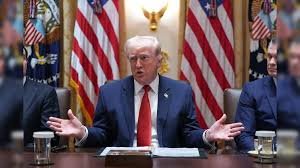
Trump’s face save? Despite significant battlefield gains, analysts warn Iran’s dispersed infrastructure and history of resilience could enable a faster-than-expected recovery.
BY PC Bureau
April 1, 2026: At a White House event on Tuesday, Donald Trump signaled that US military operations in Iran—dubbed Operation Epic Fury—are approaching their end. He suggested a withdrawal could come “very soon,” possibly within two to three weeks, and made clear that this timeline is not dependent on securing a deal with Tehran. The mission, as framed by the administration, was never about regime change or long-term occupation, but about inflicting enough damage on Iran’s nuclear and military infrastructure to make rapid recovery difficult.
That framing is important—because by its own definition, the operation may well qualify as a tactical success. But whether it rises to the level of a strategic one is far more contested.
Tactical Gains: Real, Measurable, and Immediate
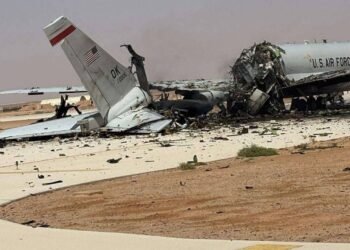
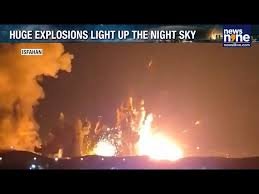
By most military accounts, the campaign has delivered substantial blows. US strikes have reportedly destroyed large portions of Iran’s naval fleet, neutralized hundreds of missile launch systems, and disrupted key nodes in its drone and ballistic missile programs. According to Defense Secretary Pete Hegseth, attacks on US personnel have dropped sharply—by as much as 90 percent—since the start of operations.
Iran’s capacity to project power, particularly through asymmetric tools like proxy militias and maritime disruption, has been curtailed in the short term. Its nuclear infrastructure—already degraded in earlier strikes—has faced renewed setbacks, slowing enrichment activity and complicating any near-term push toward weapons-grade capability.
For an administration that has emphasized speed, deterrence, and avoiding prolonged entanglement, these outcomes align closely with stated objectives. The idea was not to eliminate Iran’s capabilities entirely—a near-impossible task—but to push them far enough back to buy time.
🇺🇸 𝗧𝗿𝘂𝗺𝗽 𝗦𝗶𝗴𝗻𝗮𝗹𝘀 𝗙𝗮𝘀𝘁 𝗘𝘅𝗶𝘁 𝗙𝗿𝗼𝗺 𝗜𝗿𝗮𝗻 𝗪𝗮𝗿 🚨
US could withdraw in 2–3 weeks, even without fully securing the region.
He says other countries may take over protecting the Strait of Hormuz.
If the US steps back from the world’s most critical oil… pic.twitter.com/xbeEanscer
— Open4profit (@open4profit) April 1, 2026
And in that narrow window, time itself is the currency of success.
READ: Tech Giant Oracle Lays Off 12,000 Employees in India
The Hidden Fragility of “Success”
Yet even these gains carry an embedded fragility.
Iran’s military doctrine has long relied on redundancy, dispersion, and deniability. Its assets are not concentrated in easily targetable clusters but spread across underground facilities, proxy networks, and dual-use civilian infrastructure. This means that while visible capabilities may be degraded, latent capacity often survives.
More crucially, Iran’s nuclear program has never been a single-site endeavor. Stockpiles of enriched uranium, technical expertise, and clandestine facilities create a resilience that airstrikes alone struggle to erase. Even optimistic assessments concede that the program has likely been delayed—not dismantled.
In other words, the operation may have hit hard—but not deep enough to be decisive.
The Human Cost: Immediate and Irreversible
If the military gains are measurable, the human toll is undeniable.
Thousands have reportedly been killed or injured in Iran, with casualties spanning both military personnel and civilians. Infrastructure damage has compounded humanitarian strain, affecting hospitals, energy grids, and supply chains. US and allied forces have also suffered losses, though on a smaller scale.
Unlike missile systems or naval assets, these losses are not recoverable. They linger—not just in statistics, but in political memory, public anger, and the narratives that shape future conflict.
And those narratives matter. They shape recruitment, resistance, and the long-term posture of states under pressure.
Economic Shockwaves: A Global Ripple Effect
The economic consequences have extended far beyond the battlefield.
Iran’s disruption of the Strait of Hormuz—through which roughly 20% of the world’s oil supply flows—triggered a historic shock to global energy markets. Oil prices surged dramatically, pushing up fuel costs, straining supply chains, and reigniting inflationary pressures across major economies.
For the United States, the impact has been somewhat cushioned by its position as a leading oil producer. But for import-dependent regions—particularly in Europe and Asia—the shock has been severe. Higher energy costs have cascaded into agriculture, manufacturing, and transportation, amplifying economic stress globally.
Institutions like the IMF have already warned of measurable drag on global growth if elevated prices persist.
Trump’s response has been characteristically blunt: allies, he argues, should secure their own energy routes rather than rely on US intervention. But that stance, while politically consistent, has deepened unease among partners accustomed to American security guarantees.
Fractured Alliances, Shifting Power
The conflict has exposed—and accelerated—fractures within traditional alliances.
Many NATO members have resisted direct involvement, prioritizing de-escalation over military engagement. Public criticism from Trump, including dismissals of allied commitments, has further strained transatlantic relations.
In the Gulf, the picture is more complex. Countries like Saudi Arabia and the UAE share US concerns about Iran’s regional influence, yet remain wary of prolonged instability that could threaten their own infrastructure. Their support is cautious, conditional, and far from enthusiastic.
Meanwhile, global rivals have found opportunity in disruption. Russia benefits from elevated oil prices that bolster its war economy, while China gains from both energy dynamics and shifting geopolitical alignments. Neither has intervened directly, but both have helped blunt Iran’s isolation through economic and diplomatic channels.
The result is a more fragmented, less predictable geopolitical landscape—one where US actions have not fully translated into unified global alignment.
Iran’s Resilience: The Long Game
Perhaps the most consequential question is not what Iran has lost—but what it can rebuild.
History suggests the answer is: quite a lot.
Despite sanctions, Iran retains vast energy resources, a technically skilled workforce, and established networks for evading economic restrictions. After previous rounds of strikes, it has demonstrated an ability to restore critical capabilities within months.
There is also a psychological dimension. Analysts warn that rather than deterring nuclear ambition, the strikes may reinforce it—transforming Iran’s program from a strategic option into a perceived necessity.
Unaccounted stockpiles of enriched uranium, dispersed infrastructure, and proxy networks all provide a foundation for recovery. External support—whether direct or indirect—from partners like Russia and China further strengthens that outlook.
A short US campaign, no matter how intense, may ultimately slow Iran—but not stop it.
A Pyrrhic Equation?
So what, in the end, has been achieved?
If the benchmark is immediate disruption—crippling key assets, reducing active threats, and demonstrating military resolve—then Operation Epic Fury delivers. It shows that the US can act quickly, decisively, and without long-term entanglement.
But if the standard is more ambitious—lasting strategic advantage, stable energy markets, strengthened alliances, and a permanently weakened adversary—the picture shifts.
The costs are immense: lives lost, economies shaken, alliances strained, and a geopolitical environment arguably more volatile than before.
That does not negate the gains. But it complicates them.
As US forces prepare to leave, the true measure of success will not lie in what has been destroyed—but in what endures. If Iran rebuilds quickly, resumes its nuclear trajectory, and emerges more hardened than before, then the operation may come to be seen not as a decisive victory—but as a costly pause between conflicts.
For now, the region stands reshaped by force. Whether it has been stabilized—or merely unsettled in a new way—remains an open question.