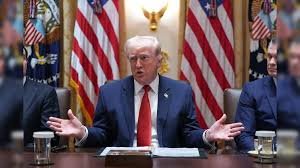
Speaking to Reuters, Trump declined to define a clear end date for the conflict but maintained that Washington’s primary objective had already been secured.
BY PC Bureau
April 1, 2026:
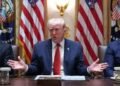
US President Donald Trump on Wednesday signalled a potentially rapid end to American military involvement in Iran, saying the United States would be “out of Iran pretty quickly” — while leaving the door open for future limited strikes if required.
In an interview with Reuters, Trump declined to provide a definitive timeline for the end of the conflict. “I can’t tell you exactly,” he said, before reiterating, “we’re going to be out pretty quickly.”
The president framed the US campaign as having already achieved its core objective: preventing Iran from acquiring nuclear weapons. “They won’t have a nuclear weapon because they are incapable of that now,” Trump asserted. He added that once this objective is secured, US forces would withdraw entirely. However, he emphasised that Washington retained the option of returning for targeted operations. “I’ll leave, and I’ll take everybody with me, and if we have to, we’ll come back to do spot hits,” he said.
Trump’s remarks came just hours ahead of a scheduled national address on the state of the war, where he is expected to outline the administration’s strategy and next steps. Earlier in the day, he also struck a cautiously optimistic note on diplomacy, describing Iran’s current president as “much less radicalised” and “far more intelligent” than previous leaders, and suggesting that Tehran is seeking a ceasefire.
According to Trump, any ceasefire arrangement would hinge on the status of the strategically vital Strait of Hormuz — a key global oil transit route. He insisted that the waterway must be “open, free, clear” before hostilities can end.
Meanwhile, Iran has projected a far more defiant stance. Iranian Foreign Minister Abbas Araghchi stated that the Strait of Hormuz lies within the territorial waters of Iran and Oman and could be restricted for adversaries during wartime. “Only for the ships of those who are at war with us, this strait is closed. That is normal during war,” he said in an interview with Press TV, adding that Iran could not allow hostile nations to use its waters for commercial purposes.
READ: Amid War Misery, Trump’s $400M Ballroom Dream Gets Court’s No
Araghchi also noted that several countries have entered negotiations with Tehran regarding access to the strait, while others have voluntarily avoided the route due to soaring insurance costs and heightened security risks.
In a separate interview with Al Jazeera, the Iranian minister signalled that Tehran is prepared for a prolonged confrontation. “You cannot speak to the people of Iran in the language of threats and deadlines,” he said. “We do not set any deadline for defending ourselves.”
The conflict, which began on February 28, has been marked by shifting signals from Washington. Trump has repeatedly suggested that the war could end soon, even as he has warned of possible escalation. At the same time, the US has moved thousands of additional troops into the Middle East, fuelling speculation about whether the deployment is intended to stabilise the situation — or prepare for a broader military campaign.