As Meitei civil society pushes for displaced families to reclaim their former homes, Kuki-Zo groups warn that any breach of buffer zones could trigger renewed violence.
BY PC Bureau
December 1, 2025: More than a year after Manipur was torn apart by the 2023 ethnic clashes, the state remains trapped in a cycle of distrust, militarisation, and political paralysis. What began as a dispute over reservations and identity hardened into full-scale ethnic conflict, displacing nearly 70,000 people and redrawing the social map of the state. Today, as the Meitei internally displaced persons (IDPs) intensify their demand to return to their original homes in the foothills and peripheral villages, Manipur finds itself pushed to the brink of a new and potentially explosive phase of confrontation.
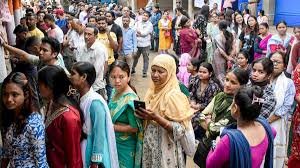
At the centre of the rising tension are Meitei civil society organisations, especially COCOMI, which have sharpened their rhetoric and mobilised large numbers of displaced families. These groups argue that the continued displacement of thousands of Meiteis—many of whom lost homes, land, and documents during the violence—is a humanitarian crisis being allowed to fester. They insist that the displaced have both a constitutional right and a moral claim to return to their original villages, rebuild their homes, and reclaim their previous lives. For the IDPs, still living in cramped camps and relief shelters across the Imphal Valley, the return is not merely symbolic but essential to recovering dignity and stability.
This assertive push to go back, however, is directly colliding with fierce opposition from Kuki-Zo organisations and village bodies. The Kukis argue that any movement of Meiteis toward the buffer zones—or worse, across them—would be perceived as an act of intrusion, a threat to security, and a violation of the fragile system that has prevented large-scale violence in recent months. They maintain that the buffer zones were created precisely to keep the two communities apart after unprecedented ethnic bloodshed; breaching them, they warn, risks dismantling the only mechanism that has ensured relative calm.
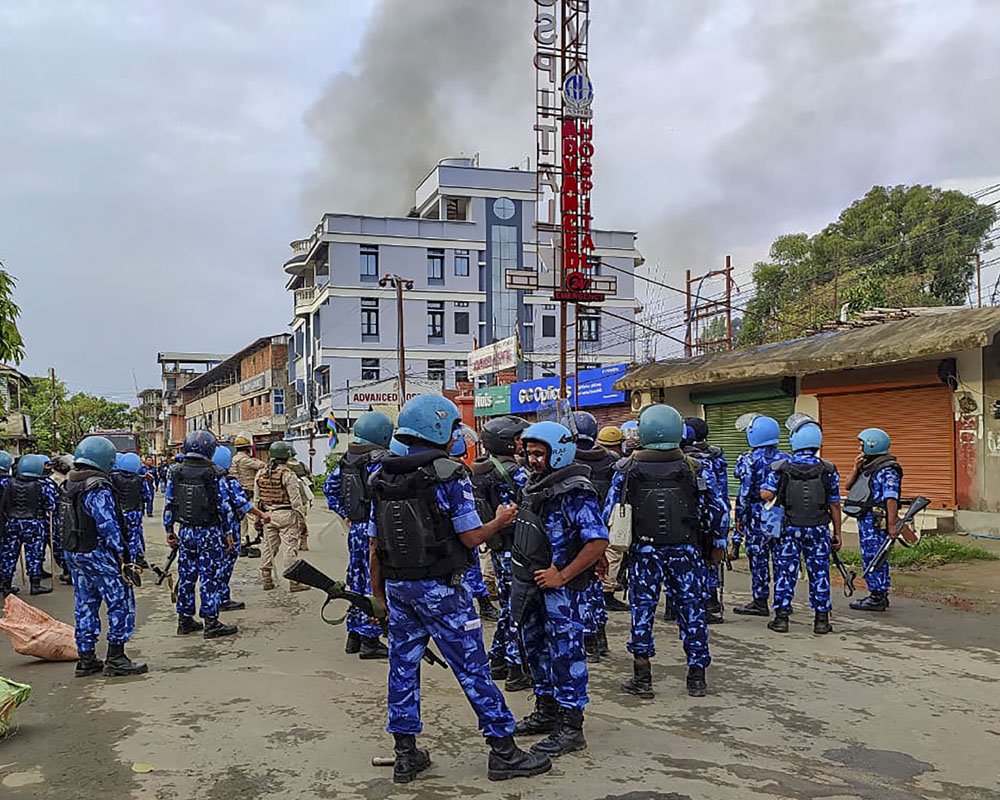
Security forces, including the Assam Rifles and central paramilitary units, are caught in a difficult position. The buffer zones they enforce were never designed to be permanent, but they have become the last remaining line preventing direct confrontation. Every attempt by Meitei groups to march towards their former villages—sometimes as symbolic protests, other times as determined advances—has forced the forces to intervene physically. These confrontations have often strained relations between the public and security forces, feeding accusations of bias from both sides.
The political establishment, meanwhile, has failed to offer a roadmap. The state government, dominated by Meiteis, faces intense pressure from IDPs and civil society to deliver on rehabilitation promises. But any unilateral move that facilitates Meitei return risks detonating anger in the hills. The Centre, on the other hand, appears focused primarily on preventing further clashes rather than resolving the underlying crisis of displacement, territorial anxieties, and administrative mistrust.
COCOMI announces next phase of agitation — demanding IDP return before December ends pic.twitter.com/KXu1ibh8Gn
— Poknapham / The People’s Chronicle (@PoknaphamNews) November 30, 2025
Behind the current flashpoint lies the deeper story of the reordering of Manipur’s geography since May 2023. What was once a mixed demographic mosaic has hardened into segregated zones—Imphal Valley largely Meitei, and the hills and foothills predominantly Kuki-Zo. The old interwoven settlements that formed the social fabric of the state have disappeared. The return of IDPs, therefore, is not simply a matter of humanitarian rehabilitation; it carries immense psychological, territorial, and political implications. For Kukis, allowing Meitei families to return to the foothills is seen as reopening the gates to the very geography of conflict. For Meiteis, preventing return is seen as legitimising permanent displacement and surrendering ancestral spaces.
The narratives that frame the issue have also sharpened. Meitei groups emphasise historic settlement rights, citing records, land documents, and emotional ties to ancestral villages. Kuki groups respond with fears of demographic encroachment, arguing that the foothills—lying between the valley and hill districts—have been the most militarised and contested spaces. Both communities carry memories of loss and trauma that make compromise increasingly elusive.
READ: Elon Musk Reveals Indian Connection of Wife, Son
At the heart of the matter is the absence of political trust. Committees formed to explore return pathways remain stalled. Rehabilitation packages announced in earlier months remain incomplete. Multiple attempts to bring stakeholders to the negotiation table have failed, often collapsing under the weight of mutual suspicion. Even neutral spaces such as administrative review meetings are now arenas of competing narratives rather than collaboration.
As things stand, the IDP return demand has become the most dangerous flashpoint in Manipur since the original outbreak of violence. If handled with insensitivity or political opportunism, it could undo months of fragile calm. The situation requires a calibrated approach: a transparent rehabilitation plan, security guarantees for both communities, phased return protocols, and most importantly, sustained dialogue facilitated by neutral mediators.
Manipur cannot afford another eruption. The memories of May 2023 are still raw, the wounds unhealed. The displaced families deserve a path to dignity, and the hill communities deserve protection from threats—real or perceived. A responsible political process can bridge these needs; indifference or unilateralism will only widen the divide.
Unless the government steps forward with clarity and courage, the IDP return question will not just be a humanitarian concern—it may become the spark that ignites a new cycle of conflict in a state already stretched to its limits.
The Way Out — Or a Slide Further In
Neutral observers — retired Army generals, former chief secretaries, and human-rights experts — agree on three essential conditions for safe and sustainable return:
Joint confidence-building visits: Mixed teams of Meitei and Kuki elders escorted by the Army.
Transparent, time-bound rehabilitation: Permanent housing, not one-time cash and temporary shelters.
Structured political dialogue: Even preliminary discussions on administrative boundaries or power-sharing.
Not one of these steps has begun.
As Manipur enters December, the tear-gas drifting across buffer zones does more than disperse crowds — it masks a deeper failure: the inability to transform military containment into political healing. Until that transformation begins, every promise of “return by December” will ring hollow, sounding less like hope and more like another postponement of the inevitable.