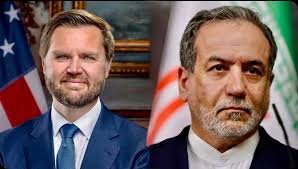
High-level US-Iran talks in Pakistan collapsed after marathon negotiations, dealing a major setback to efforts aimed at sustaining the fragile West Asian ceasefire.
Annpurna Nautiyal
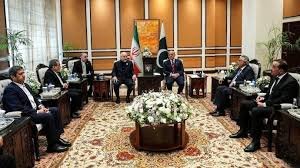
April 12, 2026: The high-level talks between the United States and Iran collapsed after marathon negotiations in Pakistan, dealing a major blow to efforts aimed at stabilising the fragile West Asian ceasefire. The talks began on the afternoon of April 11 in Islamabad and continued overnight, lasting more than 20 hours, before US Vice President JD Vance emerged to announce the “bad news” that no agreement had been reached
The US delegation, led by Vance, along with Middle East envoy Steve Witkoff and Trump’s son-in-law Jared Kushner, met the Iranian side headed by Parliament Speaker Mohammad Bagher Qalibaf and Foreign Minister Abbas Araghchi. However, as anticipated, the talks failed due to the rigid positions adopted by both sides.
Iran’s ten-point agenda included complete stoppage of all attacks, US military withdrawal from region, recognition of Iran’s right to nuclear enrichment, lifting of all primary and secondary sanctions, termination of all UN resolutions including International Atomic Energy Agency’s, non-aggression guarantees, recognition to control Strait of Hormuz, payment of war damages etc.
After the failed talks Vance stated that Iranian delegation refused to accept the American terms for ending war despite marathon face to face talks and disagreement on control of the Strait of Hormuz and Iran’s uranium stockpiles failed the talks.
READ: From “Piya Tu” to “Dum Maaro Dum”: Asha Bhosle’s Timeless Legacy
READ: US Intelligence Flags Possible China Arms Transfer to Iran
Though, through talks mediated under the leadership of Pakistan’s Prime Minister Shehbaz Sharif with the support of China, Saudia Arabia and Egypt a two-week temporary ceasefire between US-Israel and Iran in West Asia was announced on April 8, 2026 but as it did not cover Lebanon where attacks by Israeli armed forces remained unabated.
As a large number of missile launchers of Iran could not be destroyed by the latest war therefore, even after the so-called ceasefire five Gulf Arab Nations had reported missile and Drone attacks by Iran whereas Lebanon was being bombed by Israel.
Iran had also threatened to withdraw from the cease-fire and close the Strait of Hormuz because of the ongoing Israeli strikes.
To make US withdrawal from a purposeless war though, Trump had asked Netanyahu to scale down its attacks on Lebanon as the US would be hosting talks between Israel and Hezbollah next week but Israel refused to honour it.
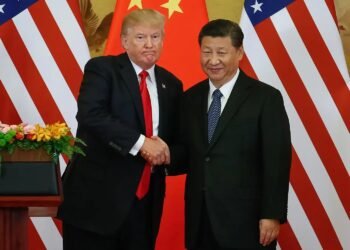
China’s interest in taking centre stage from back channel is vested in engaging in a high-level meeting with Trump in Beijing next month as well as its interests in keeping the Strait of Hormuz open for supplies of gas and oil shipped from Gulf nations.
While on grounds China not only wanted to make its global presence felt by bringing both parties to negotiating table at Pakistan but interestingly it neither stopped supplying weapons to Iran nor buying oil from Iran or Russia, thus kept on increasing its huge natural gas stock.
Now no one knows what will happen to the temporary ceasefire.
Pakistan had named these talks as make-or-break option but Iranian sides’ statement about control of the Strait of Hormuz, sanctions relief and clear assurances for regional security indicated that it has no faith on US intentions due to past experiences of the US deceptions and policy of blind support to Israel.
But the entire world was waiting for the end of this war named as Epic Fury, which has no purposive clarity.
US -Israeli joint attack on Iran on February 28, 2026, has raised many unanswered questions about risk assessment, economic and human cost of war, extent of expansion, timing, US desperation to declare victory without meeting objectives of proper regime change in Iran, NATO’s non participation in war, unexplained strategic silence and non-activism of Russia, India, BRICS, G-20, Global South or middle powers, engagement of Pakistan in mediation with China playing a major role in convincing Iran for a temporary ceasefire of two weeks between US-Iran and Israel.
There are no clear responses from any side on the above issues but it strengthens the theory that US President Trump has full faith in Carl Von Clausewitz’s concept that war is a continuation of foreign policy in another form which has led to the closure of the Strait of Hormuz, a lifeline for 90 % global supplies of oil, gas and petroleum products leading to unexplained chaos, claims and counter claims, falsehoods, disorder, uncertainty, anxiety, and insecurity in the world.
This war has also exposed the game of personal ego, authoritarian tendencies and bombastic attitude of Trump of which many of his secretaries are not supportive.
The Secretary of State Mark Rubio very recently had opined that until the clerical regime changes; the problem will not be resolved.
Trump’s top counterterrorism Director Joe Kent resigned over the war in Iran as in his opinion Iran posed no imminent threat to the US and war began on the insistence of Israel and its powerful American lobby.
Even the Vice President JD Vance who led US delegation to Pakistan for peace in West Asia was reported to be skeptical, opposed, worried about the success of the war as well as naming US bombing of the Houthis last year as a mistake in private, but his balancing act of supporting Trump in public while voicing concern in private has made it difficult for his inner circle to firm up any opinion.
European countries like Spain, France and Britain also made it clear that they would not be party to an unethical war and refused to provide any support in guarding the Strait of Hormuz for safe passage of ships.
What allowed President Trump to start this intense war without NATO allies support is still not clear as he started the war on the pretext of defending the American people by eliminating imminent threats from the Iranian regime which no one believed as there was no indication of an overbearing threat to the US interests.
During the course of war also the US goals kept on changing from destruction and total elimination of Iran’s missiles and its industry, annihilation of Iran’s navy, ensuring elimination of the area’s terrorist for deterring them from destabilizing the region or world or attacking US forces by their I.E.D.s, or roadside bombs, ensuring that Iran does not obtain a nuclear weapon to ensuring Iranians to taking back their country after regime change.
However, none of the objectives could be fully attained as US did destroy many of Iran’s ballistic missiles and launchers but it could not destroy all of these thus enabling Iran to take revenge of the losses by attacking the civil facilities of neighbouring Gulf Countries and creating war related panic.
US submarine also torpedoed the Iranian warship IRIS Dena in the Indian Ocean, killing more than 150 crew members.
But Trump’s call to Iranians to taking back their country, government and freedom was not received by Iranians rather they formed a human chain around the power plants to save these from US-Israeli bombing.
Despite Iran’s willingness to participate in talks with the US after June 2025 attacks, the Trump administration convinced by Israel about Iran’s weak condition and assumption that Iran has stored highly rich Uranium after the US roll back from a nuclear deal of 2018 preferred to launch a joint attack on it which has so far proved futile.
Iran has shown that even without the nuclear or enough ballistic missiles, it can choke the world economy by just controlling trade through Strait of Hormuz, earn money by charging fees to pass through it and opening it only for friendly countries, hence the talks were destined to fail.
India’s role was limited to talking to all the Gulf countries, and Israel and advocating resolution of dispute through talks, value of peace and stability in the region as well as ensuring safe passage for its commercial ships transporting oil and gas supplies from Strait of Hormuz which is necessary for India’s economy and people.
As the talks hosted by Pakistan has failed therefore India due to its relationship with all parties should try to restore world order through its immense potential and good will.
(The Author is Former Vice Chancellor and Professor of Political Science, HNB Garhwal, (Central) University, Srinagar, Garhwal, Uttarakhand)