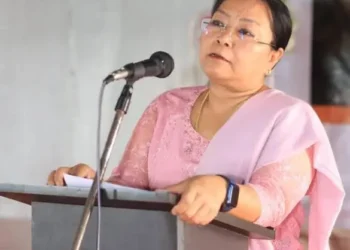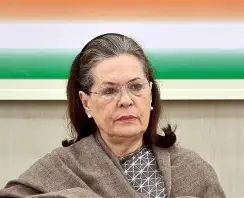
In a column for The Indian Express, Sonia Gandhi argued that failing to defend sovereignty and international law after Khamenei’s killing raises serious concerns about the direction of India’s foreign policy under Narendra Modi.
BY PC Bureau
March 2, 2026: Senior Congress leader Sonia Gandhi has sharply questioned the Union government’s silence following the killing of Iran’s Supreme Leader Ayatollah Ali Khamenei, arguing that such silence cannot be described as neutrality but instead amounts to an “abdication” of moral and diplomatic responsibility.
Writing in The Indian Express, Gandhi said the assassination of a sitting head of state during an ongoing diplomatic process represents a “grave rupture” in contemporary international relations. She noted that on March 1, Iran confirmed that Khamenei had been killed in targeted strikes allegedly carried out a day earlier by the United States and Israel. The killing, she argued, was not only a dramatic escalation in regional tensions but also a direct challenge to established international norms governing sovereignty and state conduct.
“When the targeted killing of a foreign leader draws no clear defence of sovereignty or international law from our country, and impartiality is abandoned, it raises serious doubts about the direction and credibility of our foreign policy. Silence, in this instance, is not… pic.twitter.com/LJECs5jPHR
— Rahul Gandhi (@RahulGandhi) March 3, 2026
Despite the magnitude of the event, Gandhi pointed out, New Delhi has not issued a specific statement condemning or commenting directly on the assassination. Instead, the government has called for restraint and de-escalation in the Middle East. Government sources have defended this approach as measured and consistent with the responses of other major global powers, saying India’s diplomatic posture is guided primarily by national interest.
READ: Iran Declares Strait of Hormuz Closed, Will Strike at Ships
READ: Drone Strike Hits US Embassy in Riyadh Amid Escalating Conflict
However, Gandhi contended that India’s response stands out for its lack of clarity. She criticised Prime Minister Narendra Modi for initially condemning Iran’s retaliatory strike on the UAE without addressing the sequence of events that preceded it. She said that later expressions of “deep concern” and calls for “dialogue and diplomacy” failed to acknowledge that diplomatic negotiations were already underway before the strikes occurred.
“When the targeted killing of a foreign leader draws no clear defence of sovereignty or international law from our country,” she wrote, “it raises serious doubts about the direction and credibility of our foreign policy.” In her view, neutrality in such circumstances does not amount to balance; rather, it risks being interpreted as indifference or tacit acceptance.
Gandhi emphasised that the assassination was carried out without a formal declaration of war and at a time when negotiations were ongoing. If such actions pass without principled objection — particularly from the world’s largest democracy — she warned, the erosion of international norms could become easier to normalise. She framed the issue not merely as a regional crisis but as a test of the global order and the principles that underpin it.
She also drew attention to the timing of the killing. Just 48 hours before the assassination, Modi had concluded a visit to Israel, where he reiterated strong support for the government of Benjamin Netanyahu. This came amid continuing international criticism over civilian casualties in Gaza. Gandhi suggested that the proximity of these events could raise questions about India’s perceived impartiality in the region.
Beyond the immediate crisis, Gandhi reminded the government of the depth and history of India’s ties with Iran. She described the relationship as both civilisational and strategic, rooted in centuries of cultural exchange as well as contemporary geopolitical cooperation. She recalled that in 1994, when elements within the Organisation of Islamic Cooperation sought to advance a resolution against India at the UN Commission on Human Rights over Kashmir, Tehran played a key role in blocking the move. That intervention, she argued, helped prevent the internationalisation of the Kashmir issue at a delicate moment in India’s economic trajectory.
She also highlighted Iran’s support in enabling India’s diplomatic presence in Zahedan near the Pakistan border. According to Gandhi, this presence has strategic value as a counter-balance to the development of Gwadar port and the China-Pakistan Economic Corridor, both seen as enhancing Beijing and Islamabad’s regional footprint.
Recalling historical precedent, Gandhi cited former Prime Minister Atal Bihari Vajpayee, who during a 2001 visit to Tehran reaffirmed India’s deep civilisational and contemporary ties with Iran. She implied that the current government appears to have moved away from that balanced articulation of India’s regional relationships.
At the same time, Gandhi acknowledged that India’s relations with Israel have significantly expanded in recent years across defence, agriculture and technology. She did not argue against engagement with Tel Aviv; instead, she maintained that India’s ability to maintain ties with both Tehran and Tel Aviv gives it unique diplomatic space to urge restraint and de-escalation. However, she stressed that such space depends on credibility — and credibility, in turn, depends on the perception that India speaks from principle rather than expediency.
Finally, Gandhi framed the issue as one of strategic necessity. Nearly 10 million Indians live and work across the Gulf region, making stability in West Asia directly relevant to India’s economic and security interests. In past crises — from the Gulf War to conflicts in Yemen, Iraq and Syria — India’s ability to safeguard its citizens has rested on its reputation as an independent and balanced actor. That reputation, she cautioned, could be weakened if India is seen as abandoning principle at critical moments.
In sum, Gandhi’s column presents the government’s silence not as a tactical choice but as a defining moment for India’s foreign policy — one that, she argues, will shape perceptions of the country’s credibility, independence and commitment to international law in an increasingly volatile world.