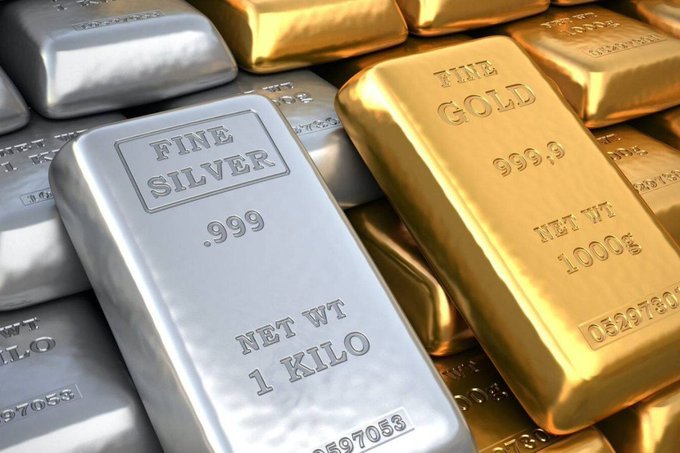
Gold and silver ETFs sink up to 14%, reflecting panic-driven selling and heightened risk aversion across commodity markets. Analysts warn of sustained volatility, advising investors to remain cautious as global cues, US monetary policy, and geopolitical signals drive price action.
BY PC Bureau
January 30, 2026: A brutal sell-off tore through India’s bullion markets on Friday, sending silver crashing to its lower circuit of 15% and gold tumbling nearly 10%, triggering extreme volatility across the commodities complex on the Multi Commodity Exchange of India (MCX).
The steep decline followed an extended rally in precious metals that had propelled prices to historic highs just a day earlier. Intense profit-booking, shifting global cues, and mounting uncertainty over US monetary policy combined to spark one of the sharpest single-session corrections seen in recent years.
Silver futures plunged as much as 15% intraday, hitting the exchange-mandated lower circuit, while gold contracts nosedived close to 10%, erasing a significant portion of their recent gains. The dramatic reversal sent shockwaves across the broader commodity space, with heavy selling also visible in base metals and energy contracts.
Market participants described the session as one of the most volatile trading days in recent memory, with violent intraday swings, thin liquidity, and heightened nervousness among traders and investors.
🚨 THE IMPOSSIBLE JUST HAPPENED
Gold collapsed from $5,625 → $5,135
Silver collapsed from $121.75 → $106.72All in one single session.
In commodities, date and time matter.
A 15-minute window erased nearly 10% in Gold
and over 15% in Silver.This wasn’t selling.
This was… pic.twitter.com/lQPfpiRc6F— Adlytick Stock Market Research & Analytics (@ArrushAdityadev) January 29, 2026
Record Highs Trigger Profit-Booking Frenzy
The sell-off came barely 24 hours after bullion prices surged to record levels, with gold crossing Rs 1.75 lakh per 10 grams and silver breaching Rs 4 lakh per kg on the MCX. Analysts said the parabolic rise had left prices deeply overbought, making the market vulnerable to sharp corrections.
“Such a steep rally inevitably attracts aggressive profit-booking,” said commodity analysts, adding that stretched valuations and rising global risk aversion accelerated the downturn.
The fall was further amplified by global market weakness, rising US bond yields, a rebound in the dollar, and speculation over a more hawkish US Federal Reserve leadership.
READ: Bengaluru Realty Tycoon Dies by Suicide During IT Raid
MCX Price Update
Despite heavy early losses, both metals managed a partial recovery toward the end of the session, reflecting ongoing volatility.
As of 4:45 pm, silver was trading at Rs 3,58,900 per kg, down 10% from the previous close, while gold was quoted at Rs 1,63,550 per 10 grams, lower by 3.46% on the MCX.
However, analysts cautioned that volatility remains elevated and sharp price swings could persist in the near term.
What Triggered the Bullion Crash?
According to market experts, the sell-off was triggered by a combination of global profit-taking, risk-off sentiment, and political developments in the United States.
Kaynat Chainwala, Assistant Vice-President (Commodity Research) at Kotak Securities, said bullion prices witnessed a sharp reversal driven by global profit-booking and broader market weakness.
“Bullion prices saw a sharp reversal, with gold sliding toward $5,100 per ounce and silver toward $108 per ounce on profit-taking, compounded by a broader sell-off across global markets,” she said.
Chainwala added that the trading session remained highly volatile, with both metals rebounding from intraday lows before renewed selling pressure emerged.
In the subsequent session, gold slipped below $5,100 per ounce while silver dipped under $105 per ounce, as markets reacted to reports of US President Donald Trump’s imminent nomination of inflation hawk Kevin Warsh as the next Federal Reserve chair.
“The prospect of a less dovish Fed chair has strengthened the US dollar and weighed heavily on safe-haven assets,” she said.
Fed Speculation, Political Stability Dent Safe-Haven Demand
Market sentiment was also hit after Trump and Senate Democrats reached a tentative deal to avoid a US government shutdown, easing political uncertainty and further dampening safe-haven demand for gold and silver.
“So, a potentially less dovish Fed chairman pick, a rebound in the dollar, and overbought market conditions have all contributed to the sharp decline in bullion prices,” Reuters quoted Tim Waterer, Chief Market Analyst at KCM Trade, as saying.
Matt Simpson, Senior Analyst at StoneX, added that “rumours surrounding Kevin Warsh’s appointment as Fed Chair have weighed heavily on gold during Asian trading hours.”
ETFs See Deeper Cuts
The sell-off was even sharper in exchange-traded funds (ETFs), where gold and silver ETFs plunged as much as 14%, reflecting panic-driven selling and forced liquidations.
Manav Modi, Commodities Analyst at Motilal Oswal Financial Services, said both metals hit lower circuit levels across all MCX formats, including mega and mini contracts.
“This is strong profit-booking from elevated levels, and ETF prices have fallen even more sharply than futures,” he said.
What Should Investors Do?
Market experts advised investors to avoid panic-selling and adopt a cautious, long-term approach amid ongoing volatility.
Nikunj Saraf, CEO of Choice Wealth, said the crash was a classic case of profit-taking after record highs.
“The 14% plunge in gold and silver ETFs isn’t mysterious. It’s classic profit-booking after Thursday’s historic highs — gold at Rs 1,93,096 per 10 grams and silver at Rs 4,20,048 per kg,” Saraf said.
He added that fears of tighter US monetary policy, a stronger dollar, and stretched valuations had triggered the collapse.
“Spot gold fell to around $5,183 per ounce, while silver dropped to $109.55 per ounce. Investors should expect elevated volatility in the near term and maintain disciplined risk management,” he said.
Outlook Remains Volatile
Analysts said bullion prices are likely to remain highly volatile in the coming sessions, with markets closely tracking US Federal Reserve policy signals, global economic data, geopolitical developments, and currency movements.
“While the long-term outlook for precious metals remains constructive, near-term corrections cannot be ruled out,” analysts cautioned, advising investors to stagger fresh entries and avoid leveraged positions.