The issue before the SC is that how could Parliament confer unprecedented protection on the Chief Election Commissioner and Election Commissioners—greater than that available to judges or even the President.
BY PC Bureau
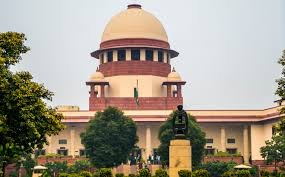
January 12, 2026: The Supreme Court of India has agreed to examine the constitutional validity of a controversial provision granting lifetime immunity from civil and criminal prosecution to the Chief Election Commissioner (CEC) and other Election Commissioners (ECs) for acts performed in the discharge of their official duties.
On January 12, 2026, a bench led by Chief Justice Surya Kant issued notice to the Union government and the Election Commission of India (ECI) in response to a public interest litigation (PIL) challenging the legality of the immunity clause contained in the Chief Election Commissioner and Other Election Commissioners (Appointment, Conditions of Service and Term of Office) Act, 2023.
The petition contends that the provision creates an “unprecedented” and “life-long” shield for election officials—one that, it argues, exceeds even the protections afforded to judges of constitutional courts or the President of India.
READ: From Code to Call Centres: AI’s Quiet Takeover of Indian Jobs
READ: Iran’s Burning Streets and the Children Left Screaming
The Provision Under Challenge
Enacted in late 2023 amid sharp political opposition and passed during the suspension of several Members of Parliament, the 2023 Act restructured the appointment and service conditions of the CEC and ECs. Among its most contentious elements is a clause barring courts from entertaining any civil or criminal proceedings against current or former election commissioners for anything “said, done, or committed” while performing official functions.
The government has defended the provision as a safeguard against vexatious litigation, arguing that election commissioners perform a quasi-judicial role that demands insulation from harassment and political retaliation. Supporters say such protection is essential to ensure fearless and independent decision-making in the conduct of free and fair elections.
However, critics argue the immunity is excessively broad and constitutionally suspect. Petitioners have pointed out that while judges enjoy security of tenure and protection from arbitrary removal, they do not possess absolute immunity from prosecution for official acts. Even the President’s immunity under Article 361 is limited in scope and duration.
As submitted before the court, “Parliament cannot confer life-long and absolute immunity on election commissioners when such protection was never envisaged by the Constitution for other high constitutional functionaries.”
Plea by Lok Prahari challenging immunity granted to CEC and the Election Commission officers
Adv SN Shukla: Lifelong immunity granted to CEC and the election commission which the constitution did not envisage even for the judges or other higher dignitaries. These provisions… pic.twitter.com/4ZuMBbNwnx
— Bar and Bench (@barandbench) January 12, 2026
Why the Court’s Scrutiny Matters
The Supreme Court’s decision to examine the issue—Chief Justice Surya Kant stating, “We would like to examine it. We are issuing notice”—raises fundamental constitutional questions.
First, the case touches upon constitutional supremacy and separation of powers. While Article 324 vests the ECI with authority over elections, it does not explicitly provide for sweeping immunity. The court must assess whether Parliament, through ordinary legislation, can grant protections that potentially dilute the rule of law and the right to judicial remedies.
Second, the issue directly affects electoral accountability. In recent years, the ECI has faced allegations of selective enforcement of the Model Code of Conduct, delays in electoral roll revisions, and decisions perceived as favouring the ruling establishment. While immunity may protect officials from political vendetta, excessive insulation could weaken public confidence if it appears to shield mala fide conduct from scrutiny.
Third, the case raises concerns of parity among constitutional offices. No comparable lifetime immunity exists for judges, governors, or even the President. Petitioners argue that elevating election commissioners above these offices disrupts the constitutional balance.
The challenge also intersects with ongoing litigation over the 2023 Act’s revised appointment mechanism, which replaced the Chief Justice of India on the selection committee—mandated by the Supreme Court in the Anoop Baranwal judgment—with a Union Cabinet minister. Critics view the immunity clause as part of a broader legislative framework that increases executive influence over the Election Commission while simultaneously reducing avenues for accountability.
If the Supreme Court upholds the immunity provision, it would significantly strengthen institutional protections for election commissioners but may raise concerns about diminished oversight. If the provision is struck down or read down, it could restore judicial scrutiny while exposing commissioners to potential political litigation.
As responses from the Centre and the ECI are awaited, the case joins a growing docket of matters in 2026 concerning electoral reforms, institutional independence, and democratic safeguards. Its outcome could redefine the limits of protection available to those entrusted with managing the world’s largest democratic exercise.
In a period marked by declining trust in institutions, the Supreme Court’s intervention signals that no authority—however vital to democracy—remains beyond constitutional examination.