https://www.chessveda.com/ https://www.chessveda.com/
  • Power Corridors Magazines
  • Advertise with us
Tuesday, February 17, 2026
  • Login
Power Corridors
Advertisement
  • News
  • Politics
  • Business
    • Technology
  • Appointments/Transfers
  • Automobile
  • Entertainment
  • Sports
    • IPL 2024
  • Event
  • World
No Result
View All Result
  • News
  • Politics
  • Business
    • Technology
  • Appointments/Transfers
  • Automobile
  • Entertainment
  • Sports
    • IPL 2024
  • Event
  • World
No Result
View All Result
Power Corridors
  • News
  • Politics
  • Business
  • Appointments/Transfers
  • Automobile
  • Entertainment
  • Sports
  • Event
  • World
Home National

SC Rejects Plea Against Missionary Entry into Chhattisgarh Village

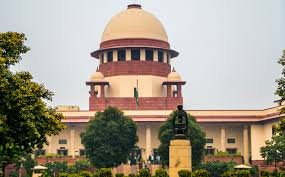
The Supreme Court of India upheld the powers of tribal Gram Sabhas in Chhattisgarh to regulate missionary entry, affirming protections granted under the PESA Act to preserve indigenous culture and social harmony.

PC Bureau by PC Bureau
17 February 2026
in National, News, Politics
6
Supreme Court
6
VIEWS
Share on FacebookShare on TwitterShare on Whatsapp

A bench of Justice Vikram Nath and Justice Sandeep Mehta declined to interfere with the High Court order, advising petitioners to seek remedies through statutory authorities instead.

BY PC Bureau

Februaru 17, 2026: The Supreme Court of India on February 16, 2026, dismissed a plea challenging restrictions on the entry of Christian missionaries and pastors into certain tribal villages in Chhattisgarh, effectively upholding a Chhattisgarh High Court order dated October 28, 2025. The ruling reinforces the authority of Gram Sabhas in Scheduled Areas to take measures aimed at protecting tribal communities from alleged forced religious conversions.

The case, Digbal Tandi vs. State of Chhattisgarh & Ors., arose from resolutions passed by Gram Sabhas in districts such as Kanker, where hoardings and notice boards were installed at village entrances. These notices barred Christian pastors, priests, and individuals who had converted to Christianity from entering, citing concerns over inducement, manipulation, and threats to social harmony and indigenous cultural identity. The restrictions were issued under the Panchayats (Extension to Scheduled Areas) Act, 1996 (PESA), which grants tribal Gram Sabhas the power to safeguard their customs, culture, and community resources.

READ: Parting Shot: Yunus Invokes Northeast, Signals Defiant Shift in Dhaka’s Foreign Policy

A bench comprising Justice Vikram Nath and Justice Sandeep Mehta declined to interfere with the High Court’s ruling. The bench noted that petitioners had already been granted liberty to approach the appropriate statutory authority under the PESA Rules or relevant state regulations to address specific grievances. The apex court also upheld the High Court’s broader observations that missionary work, while historically associated with education and healthcare, has in some instances shifted toward proselytization targeting economically and socially vulnerable tribal populations through promises of assistance, education, or social equality. Such activities, the High Court observed, could lead to social divisions, cultural disruption, and polarization in remote tribal regions.

Senior Advocate Colin Gonsalves, appearing for the petitioners, argued that the restrictions were overly broad and that the High Court had made sweeping generalizations about religious conversions without sufficient evidence. He contended that the prohibitions infringed upon constitutionally guaranteed freedoms. However, the Supreme Court found no grounds for intervention, emphasizing that precautionary or regulatory measures intended to address alleged illegal conversion activities do not automatically violate constitutional protections.

The ruling comes amid heightened tensions in tribal districts such as Bastar, Narayanpur, Kanker, and Kondagaon, where incidents of violence against pastors and Christian converts have been reported. These incidents are often linked to allegations of forced conversions by local groups and vigilantes. Chhattisgarh’s anti-conversion laws, along with protections under PESA, have intensified debates over the balance between religious freedom and safeguards against coercion. Article 25 of the Constitution guarantees the right to freely profess, practice, and propagate religion, but this right remains subject to public order, morality, and health.

The judgment underscores the ongoing tension between missionary outreach and tribal self-governance in Scheduled Areas. Supporters of the restrictions argue they are necessary to preserve indigenous traditions and cultural identity, while critics warn they may enable discrimination and undermine fundamental rights. The case also reflects broader national debates over anti-conversion laws, as similar legal challenges remain pending before the Supreme Court in several states.


Tags: ChhattisgarhChristianMissionariesSupreme Court
Plugin Install : Subscribe Push Notification need OneSignal plugin to be installed.
Previous Post

Parting Shot: Yunus Invokes Northeast, Signals Defiant Shift in Dhaka’s Foreign Policy

Next Post

BMC Blacklists Production House Over ‘Dhurandhar The Revenge’ Violations

Related Posts

yunus
National

Parting Shot: Yunus Invokes Northeast, Signals Defiant Shift in Dhaka’s Foreign Policy

17 February 2026
Rajpal Yadav
National

Rajpal Yadav Gets Interim Bail in Cheque Bounce Case

16 February 2026
Bhupen Borah
National

Assam Congress Crisis Averted as Borah Seeks Time to Reconsider Resignation

16 February 2026
Fire
National

Eight Workers Burnt Alive in Massive Factory Fire in Bhiwadi

16 February 2026
Bhupen Borah
National

Congress Faces Major Blow in Assam as Bhupen Borah Quits

16 February 2026
Sabrimala
National

Nine-Judge Bench to Decide Future of Women’s Entry into Sabarimala Temple

16 February 2026
Next Post
Dhurandhar

BMC Blacklists Production House Over ‘Dhurandhar The Revenge’ Violations

Leave a Reply Cancel reply

Your email address will not be published. Required fields are marked *

POWER CORRIDORS

Former Vice President Venkaiah Naidu commended Power Corridors as a commendable news magazine, affirming that it not only upholds Media Dharma but also fulfills its societal obligations. Power Corridors, as its name implies, delves into realpolitik—examining the essence of influential circles, unraveling the intricacies of political maneuvers, and exploring the pulse of the state’s affairs. However, it transcends mere power dynamics, encompassing a broader spectrum of issues beyond the confines of Delhi’s elite circles.

For PC, which is published by the Interactive Forum on Indian Economy, not only highlights the issues of the day but also throws up what ought to be the subjects that the country should be debating about. It reports about the plans, strategies, and agendas of politicians and others; it also sets the agenda for the nation.

Browse by Category

  • Appointments/Transfers
  • Automobile
  • Aviation
  • Blog
  • Business
  • Crime
  • Education
  • Entertainment
  • Event
  • GMF
  • HEALTH
  • IFIE
  • IPL 2024
  • Law
  • Motorsports
  • National
  • News
  • Politics
  • Science
  • Space
  • Sports
  • Technology
  • Weather
  • WEIGHT LOSS
  • World

Recent News

Dhurandhar

BMC Blacklists Production House Over ‘Dhurandhar The Revenge’ Violations

17 February 2026
Supreme Court

SC Rejects Plea Against Missionary Entry into Chhattisgarh Village

17 February 2026
  • About
  • Advertise With Us
  • Privacy & Policy
  • Contact Us

© 2023 Power Corridors

Welcome Back!

OR

Login to your account below

Forgotten Password?

Retrieve your password

Please enter your username or email address to reset your password.

Log In

Add New Playlist

  • Login
  • Cart
  • News
  • National
  • Politics
  • Business
  • World
  • Entertainment
  • Crime
  • Law
  • Sports
  • Contact Us

© 2023 Power Corridors