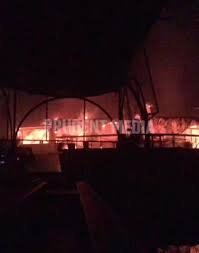
The report identified unauthorised indoor fireworks as the primary cause of the Goa night club blaze and cited poor ventilation, flammable décor and lack of emergency exits as factors that turned the fire into a mass fatality incident.
BY PC Bureau
December 31, 2025 —A magisterial inquiry report released on Tuesday has laid bare sweeping regulatory failures and systemic negligence behind the devastating fire at Birch by Romeo Lane, a nightclub in Arpora village of North Goa, which claimed 25 lives on December 6, 2025, in one of the deadliest nightlife tragedies in the state’s history.
The inquiry, ordered by Chief Minister Pramod Sawant soon after the incident, found that the club was illegally constructed on a protected salt pan, operated without a valid trade licence since March 2024, and lacked mandatory fire safety infrastructure. The report identified the unauthorised use of indoor fireworks as the primary trigger for the blaze that engulfed the packed venue late on a weekend night.
Fire and casualties
The fire broke out around 11.45 pm during a crowded dance event, rapidly spreading across the rooftop deck and ground-floor areas. Of the 25 people who died, 20 were staff members and five were tourists, including a family from Delhi. Most victims succumbed to asphyxiation, as smoke filled the premises within minutes.
The inquiry noted that limited exits, poor ventilation, and highly flammable décor materials, including palm leaves, worsened the disaster. Six others were injured, while rescue operations were delayed as fire tenders had to be parked nearly 400 metres away due to a narrow access road.
READ: Kuki Body Seeks Manipur Govt Clarification on ‘Mislabelled’ Hill Roads
Eyewitnesses told the panel that sparks from indoor fireworks machines ignited the structure, triggering panic and a stampede-like situation as patrons struggled to escape.
#Goa govt dismisses Panchayat Secretary Raghuvir Bagkar from services over serious dereliction of duty while granting permissions to the Birch by Romeo Lane , Govt had suspended the officer on December 7, a day after the fatal fire at the nightclub claimed 25 lives#romeolane… pic.twitter.com/1Svx4fvCtg
— The Goan 🇮🇳 (@thegoanonline) December 31, 2025
Illegal operations and oversight failures
The four-member panel, headed by North Goa District Collector Ankit Yadav, fixed “primary culpability” on the Arpora–Nagoa panchayat for allowing the club to operate despite an expired trade licence and prior demolition notices.
The nightclub, opened in 2024 by Saurabh and Gaurav Luthra, owners of the Romeo Lane chain, had been served a legal notice in November 2024 for construction on an eco-sensitive salt pan in violation of Coastal Regulation Zone (CRZ) norms. Demolition orders issued by the panchayat and the Goa Coastal Zone Management Authority (GCZMA) were stayed after the owners appealed to the Directorate of Panchayats, enabling the club to continue operations.
The report also pulled up multiple departments for lapses, stating that:
- The Goa Pollution Control Board and GCZMA failed to act on repeated complaints about CRZ violations and illegal construction.
- No occupancy certificate was issued, yet multiple No-Objection Certificates for electricity, water and trade were granted without proper verification.
- Fire safety arrangements were grossly inadequate, with no emergency exits on key floors and combustible materials accelerating the spread of flames.
Police findings cited in the report confirmed that fireworks—believed to be from “cold spark” machines near the stage—were used “without proper care and caution”. While other possibilities such as a short circuit were examined, the panel said preliminary forensic inputs pointed to fireworks as the most likely cause, with final reports awaited.
Arrests, bans and crackdown
In the aftermath, eight people, including government officials, have been arrested under the Bharatiya Nyaya Sanhita on charges of negligence and forgery. The Luthra brothers, who reportedly fled to Thailand hours after the fire, were later deported and taken into custody. The local sarpanch was also arrested for allegedly issuing questionable clearances.
The North Goa district administration has since banned the use of pyrotechnics, fireworks and sparklers in all tourist establishments, including nightclubs, hotels and beach shacks. Statewide inspections have led to the closure of several venues, including the iconic Curlies shack in Anjuna for CRZ violations, and the demolition of other illegal structures.
The government announced ex gratia compensation of ₹7 lakh for the families of each deceased victim—₹2 lakh from the Centre and ₹5 lakh from the state—along with financial assistance for the injured. Three senior officials have been suspended for permitting the club to operate in 2023 despite known irregularities.
Impact on tourism and governance
The tragedy has cast a shadow over Goa’s tourism industry, which draws millions of visitors annually for its beaches and nightlife. Opposition parties, including the Congress, termed the incident a “man-made tragedy” rooted in governance failures, while civil society groups demanded stricter enforcement of safety and environmental norms.
The magisterial report has made over 60 recommendations, calling for tighter monitoring of eco-sensitive zones, compulsory fire safety audits for entertainment venues, and clearer accountability mechanisms. Authorities have promised surprise inspections and “zero tolerance” for violations as the peak tourist season continues.
The report concludes that the disaster reflects the dangerous consequences of unchecked commercialisation, regulatory complacency and high-risk entertainment activities in fragile coastal ecosystems—warning that without structural reforms, such tragedies could recur.