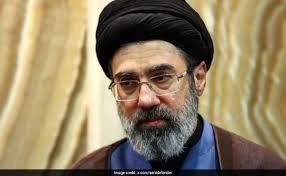
The powerful Assembly of Experts announced the decision after a decisive vote, placing the mid-ranking cleric—long seen as influential within Iran’s security and economic networks—at the top of the Islamic Republic’s power structure.
BY PC Bureau
March 8, 2026:
Iran on Monday announced that Mojtaba Khamenei will succeed his father, Ali Khamenei, as the country’s Supreme Leader, a move that signals the continued dominance of hardline forces in Tehran as the conflict with the United States and Israel enters its second week.
Mojtaba, a mid-ranking cleric widely believed to wield significant influence within Iran’s security establishment and the vast financial networks built during his father’s rule, had long been viewed as a leading contender ahead of the vote by the Assembly of Experts—the powerful 88-member clerical body responsible for appointing the country’s supreme leader.
“By a decisive vote, the Assembly of Experts has appointed Ayatollah Seyyed Mojtaba Hosseini Khamenei as the third Leader of the sacred system of the Islamic Republic of Iran,” the body said in a statement released shortly after midnight in Tehran. The post gives Mojtaba ultimate authority over Iran’s political, military and religious institutions.
Iran has announced Seyed Mojtaba Khamenei as the new Supreme Leader of Iran in Tehran
It is the right time for Trump & Israel to initiate negotiations & end this war instead of spreading it more in ego
No one is going to be benefitted from this war 🙌
— Veena Jain (@Vtxt21) March 9, 2026
His elevation could further inflame tensions with Donald Trump, who said on Sunday that Washington should have a role in determining Iran’s leadership. “If he doesn’t get approval from us, he’s not going to last long,” the US president told ABC News. Israeli officials had also warned ahead of the announcement that whoever was chosen could become a potential target.
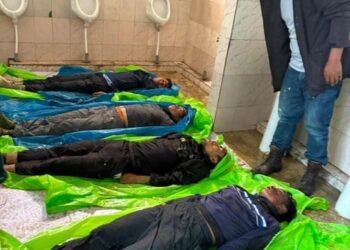
The leadership transition comes after Ali Khamenei was killed in one of the early strikes carried out against Iran more than a week ago. The conflict has since intensified, with the United States reporting that a seventh American service member died from wounds sustained during Iran’s initial retaliatory attacks. A day earlier, Trump attended the return of the remains of six other US personnel killed in the confrontation.
According to Iran’s ambassador to the United Nations, the US-Israeli strikes have killed at least 1,332 Iranian civilians and wounded thousands more. Despite growing casualties, Iran’s parliamentary speaker Mohammad Bagher Qalibaf said Tehran was not seeking a ceasefire and vowed that the country would punish those responsible for the attacks.
Israel has continued targeting senior Iranian officials. Among those reportedly killed was Abolqasem Babaian, the recently appointed head of the military office of the supreme leader, who Israeli authorities said died in a strike on Saturday.
Meanwhile, residents in Tehran reported thick plumes of black smoke hanging over the capital after Israeli attacks on fuel depots lit up the night sky with massive orange flames. Iran’s foreign ministry spokesman Esmaeil Baghaei described the strikes as a “dangerous new phase” of the war and accused Israel of committing a war crime by targeting infrastructure that could release toxic substances into the air.
READ: Ruthless India Hammer New Zealand To Clinch T20 World Cup
Israeli military spokesman Nadav Shoshani defended the operation, saying the depots were supplying Iran’s war effort, including the production and storage of propellant for ballistic missiles, and therefore constituted legitimate military targets.
Israeli Prime Minister Benjamin Netanyahu said the campaign against Iran would intensify, pledging that Israel would strike the country’s leadership “without mercy.” He added that the government had prepared an organized plan with “many surprises” aimed at destabilizing the regime.
As the fighting escalates, US special envoy Steve Witkoff and Trump’s son-in-law Jared Kushner are expected to travel to Israel this week, according to reports. Speaking aboard Air Force One, Trump indicated he was not currently seeking negotiations to end the conflict, saying the situation could reach a point where “there may be nobody left to say, ‘We surrender.’”