Critics warn that Trump’s approach revives Cold War–era doctrines that legitimise intervention and regime change. From Latin America to Eastern Europe and the Indo-Pacific, Trump’s policies are altering global power equations.
By Annpurna Nautiyal
January 7, 2026: With US President Donald J. Trump’s actions in his second presidency, it is increasingly evident that Washington is reverting to an old doctrine that prioritises regional spheres of influence over state sovereignty. The use of force to preserve dominance or remove unfriendly regimes is being normalised, despite clear prohibitions under international law and the rules-based global order. This shift marks a return to raw power politics, eroding principles of justice, equity and freedom of movement across international domains.
Following the old US dictum known as the Monroe Doctrine of selective isolation—now rechristened by some as the “Donroe Doctrine” after Donald Trump—in a shocking development on January 3, 2026, US forces, under the direction of the so-called “peace president” who claims to have stopped multiple wars, carried out what was described as a “large-scale kinetic strike” to abduct Venezuelan President Nicolas Maduro and his wife at midnight and bring them to the United States in handcuffs. Maduro was presented in a US court to face trial like a criminal or persona non grata. Appearing alongside his wife, he pleaded not guilty.
Even before this dramatic episode, President Trump had deployed aircraft carriers, warships and military assets in the Caribbean to threaten Venezuela, including bombing and destroying small boats allegedly linked to drug trafficking, narco-terrorism, fentanyl and cocaine smuggling, and activities deemed harmful to US peace and security. Although Latin and South America are not part of the US, Washington has long treated the region as its sphere of influence, responsible for safeguarding waters and preventing illegal activities.
Under the Donroe Doctrine, the focus is on ensuring America’s strength, wealth, power and success. Limiting migration and drugs implies that not every region merits US attention—only the Western Hemisphere and surrounding waters as a sphere of dominance. Consequently, Chinese or Russian involvement in the Western Hemisphere has always been discouraged by the US.
The repercussions of the 1961 Bay of Pigs invasion and the subsequent Soviet-backed Cuban Missile Crisis of 1962—when the world stood on the brink of nuclear war until the withdrawal of advanced Soviet weapons from Cuba—are well remembered. Against this historical backdrop, the timing and use of this doctrine to effect regime change in Venezuela has shocked the international community and drawn condemnation. Every nation has a natural right to protect its sovereignty, territory and people from external threats. But if the head of a state can be abducted in this manner, what country can guarantee the safety of its leadership should differences with the US remain unresolved?
While Maduro, as the leader of a repressive and autocratic regime, is accused of killings, torture, arbitrary detention of political opponents and manipulation of the 2014 elections, this method of regime change cannot be justified from any legal standpoint. Such actions could embolden Trump’s earlier ambition to acquire Greenland from Denmark, a claim he has revived on national security grounds, citing alleged Chinese and Russian activity in the region.
Emboldened by the Venezuela episode—carried out without military resistance from Venezuelan forces—Trump declared within 48 hours that the US had rights over Venezuela’s oil reserves, estimated at about 303 billion barrels, the largest in the world. He also issued warnings to Colombia, Mexico and Cuba to be prepared for a similar fate, asserting that “American dominance will never be questioned again.” Trump further stated that the US would run Venezuela’s government for now, though Secretary of State Marco Rubio later framed this as compelling cooperation from new leadership in Caracas. The acting Venezuelan leader has appealed for peace and dialogue, but Trump appears determined to gain full access to Venezuelan oil, claiming it would cover the costs of military action and fund reconstruction using American oil companies to extract “tremendous wealth out of the ground.”
Trump’s mindset of revenge and retribution is also reflected domestically. Proposals to rename the US Department of Defense as the Department of War, the renaming of cultural institutions such as the Kennedy Center and the United States Institute of Peace after himself, along with plans to remodel the White House with gold embellishments or alter historical records, reflect an outlook of resetting or replacing anything he dislikes. Countries adept at sycophancy may feel safe, but those unwilling to fall in line could face harsher tariffs or boycotts.
Various theories surround the ease with which a sitting head of state was abducted without resistance. Some suggest a covert deal with Maduro, while others point to an understanding allegedly reached during an Alaska summit with Vladimir Putin, granting the US free rein in the Western Hemisphere in exchange for Russian latitude in Ukraine. This is echoed in Trump’s statements urging Ukrainian President Volodymyr Zelensky to sign a deal quickly, suggesting that Russia’s size would ensure victory. China, meanwhile, has criticised the US, stating that no country should act as the world’s judge or police.
Despite past failures to establish stable governments through regime change in Afghanistan, Libya and Iraq, and earlier efforts to destabilise Chile, Cuba, Guatemala and Nicaragua, Trump appears to have ignored these lessons by once again embracing aggression and occupation.
US actions may provide justification for other expansionist powers such as China and Russia. China views the Indo-Pacific as its sphere of influence, claims most of the South China Sea under the Nine-Dash Line, including the Spratly and Paracel Islands, and asserts sovereignty over Taiwan. It also claims Indian territories such as Arunachal Pradesh, Aksai Chin and parts of Uttarakhand, Himachal Pradesh and Ladakh, along with areas in eastern Bhutan, contributing to Himalayan border tensions. China’s disputes with Japan over the Senkaku/Diaoyu Islands and its opposition to QUAD naval exercises reflect its desire to dominate regional sea routes and resources. The US action could embolden China to use force to annex Taiwan or seize disputed islands.
Russia, too, claims control over parts of eastern and southern Ukraine, including Crimea and regions of Donetsk, Luhansk, Zaporizhzhia and Kherson—claims widely rejected by the international community. As of late 2025, Russia controls roughly 18–20% of Ukraine after intense fighting. With US reluctance to engage directly and selective isolation from Europe, questions remain over whether Russia might adopt similar regime-change tactics.
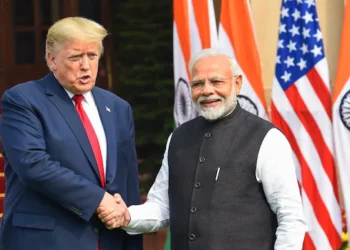
Although BRICS countries have criticised US actions, Russia and India have responded more cautiously, watching Trump’s next moves. India is already affected by steep US tariffs, and a bilateral trade deal remains unsigned, making the future of Indo-US relations under the Donroe Doctrine uncertain.
The abduction of Maduro has become a major source of regional instability, upheaval and tension, clearly signalling the emergence of a new world disorder
(The writer is former Vice Chancellor and Professor of Political Science, HNB Garhwal (Central) University, Srinagar, Garhwal, Uttarakhand.)