By PC Bureau
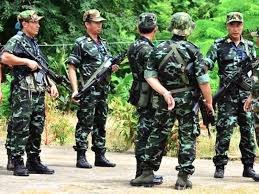
March 15, 2026: A purported notice attributed to the NSCN (I-M) has surfaced online, imposing a ₹5,000 “goods tax” on vehicles transporting supplies along several key highways in Manipur. The document, dated January 31, 2026, and allegedly issued from the group’s “Mt. Horeb Camp, Eastern Flank,” has sparked widespread anger among transporters, traders, and residents, who say it amounts to organised extortion that threatens the state’s fragile economy and security situation.
The notice, addressed to transport companies, agencies, and individual vehicle operators, claims the levy will apply to goods carriers travelling along National Highway 2, National Highway 102A and National Highway 37. It states that the “tax” would take effect seven days after the notification and calls for cooperation “for the welfare of the Naga national cause.” The document is reportedly signed by an individual identified as “Brigadier (Retd) Ngachonmi,” described as the group’s “In-Charge, Southern Nagaland.”
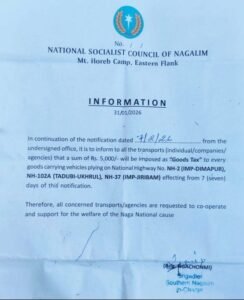
Images of the alleged notification circulating on social media have drawn sharp reactions. Critics have labelled the demand outright extortion, arguing that such levies deepen inflationary pressures and disrupt supply chains in the region, particularly affecting the flow of essential goods to the Imphal Valley.
Highway extortion has long been a concern in Manipur, where national highways serve as critical lifelines for the movement of goods from neighbouring states. Transporters have frequently reported being forced to pay “taxes” at informal checkpoints in hill districts, often attributed to insurgent groups including factions of the NSCN. The amounts demanded typically vary depending on vehicle type, route and cargo, ranging from a few hundred rupees to several thousand per trip — costs that are often passed on to consumers.
READ: Fresh Iranian Strikes Rock Dubai, Kuwait Airport
READ: ran Vows To Kill Netanyahu As Online Rumours Swirl
observers note that the language and format of the document resemble earlier communications issued by the NSCN-IM regarding its so-called “taxation” system.
Despite periodic crackdowns and arrests linked to highway extortion — including cases reported along National Highway 102 — such practices have persisted. Transporters’ associations have repeatedly urged authorities to strengthen convoy protection measures and ensure stricter enforcement of security protocols along vulnerable stretches.
The controversy comes amid continuing ethnic tensions and logistical challenges in Manipur. Discussions in the state assembly and public appeals by the Chief Minister have recently focused on improving infrastructure, controlling rising prices and restoring normalcy. Yet security along highway corridors remains a major concern for businesses and residents alike.
Analysts say these unofficial “taxes” function as a parallel revenue stream for armed groups operating in the region, in some cases rivaling formal state collections along certain trade routes. While calls for stronger enforcement and negotiations continue, officials have not yet issued a public response to the circulating document.
Transporters and civil society groups are now urging urgent intervention to ensure safe and unrestricted movement along Manipur’s highways, warning that unchecked extortion could further destabilise the state’s economy and public welfare.