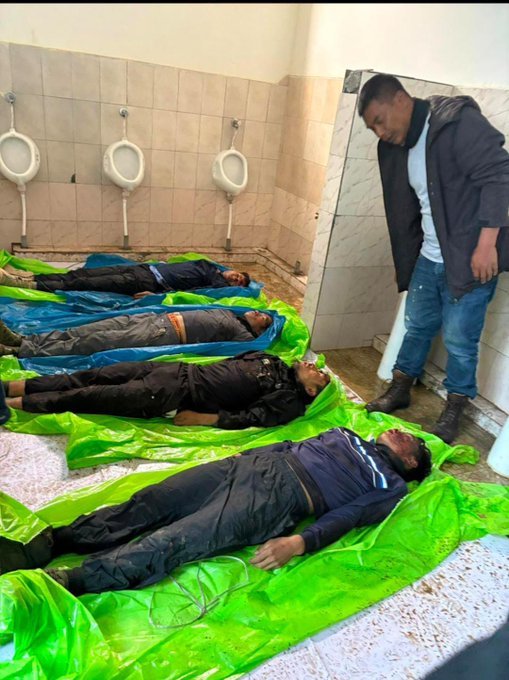
The ambush in Kamjong district appears linked to disputes within the NSCN over profits from logging and smuggling, highlighting how economic interests often drive factional violence.
BY PC Bureau
March, 29, 2026: — A press release by the Eastern Flank of the National Socialist Council of Nagalim (NSCN) appears to provide rare insight into what may have triggered a deadly fratricidal ambush in Manipur’s Kamjong district on Saturday night. The statement, which confirmed that four of its own cadres were killed by fellow members, referred to the victims being “deployed to monitor timber and commercial operations along the border.”
While couched in official language, analysts suggest the line is a thinly veiled reference to the NSCN’s control over timber trade and related revenue streams in the Indo-Myanmar border region—activities that have long been linked to illegal logging and smuggling. Timber in these forested border areas is highly valuable, and NSCN factions have historically exerted authority over extraction, transport, and taxation of wood, sometimes profiting from cross-border smuggling.
CROSS-BORDER MOVEMENT BY NSCN EASTERN FLANK based in Burma.
NSCN Eastern Flank through their PR admitted to crossing into Ukhrul dist Manipur India. It begs the question-how could a Burmese terrorist group cross over and engage in firefight with NSCN IM terrorists in India? pic.twitter.com/r5SfZ9emxJ
— TPKZ (@KukiZo1437) March 29, 2026
The Eastern Flank release details that the ambush was carefully planned, noting that the patrol crossed paths with another unit earlier in the day in what appeared to be routine friendly interaction. Hours later, the same unit reportedly opened fire on the returning patrol, killing four cadres instantly. The statement explicitly blamed “high-level orders” from senior leadership for the attack.
Experts say disputes over timber revenue and commercial operations have been a recurrent trigger for internal NSCN clashes. In regions like Kamjong and Ukhrul, where dense forests meet porous borders with Myanmar, control over timber operations is both strategically and financially significant. Factions often levy fees on traders or oversee cross-border movement of timber, making disagreements over profit distribution or authority highly contentious.
“The press release itself inadvertently acknowledges the economic dimension behind the violence,” said a security analyst familiar with insurgent dynamics in Northeast India. “When it mentions ‘timber and commercial operations,’ it’s likely referring to revenue streams from logging and possibly smuggling. Intra-factional competition over these resources has repeatedly led to deadly outcomes.”
READ: NSCN Claims Senior Command Ordered Killing of Four Cadres
READ: Four NSCN Cadres Killed in Factional Ambush in Manipur’s Kamjong
The ambush, which killed Major Sochipem Phungshok, Sergeant Major Zairay Vasah, Sergeant Bahnle Ahlahpya, and Sergeant Thansomi Washi, illustrates that even as NSCN factions publicly frame their struggle around ideology and the Naga national principle, internal disputes over money and commercial control remain a potent and deadly force.
Two other cadres survived the attack, and authorities are expected to investigate further, though the press release implies that the killing was a premeditated act tied to internal control over lucrative operations.
As the Eastern Flank mourns its dead and warns that the Naga nation is “on the verge of annihilation,” this incident raises uncomfortable questions about how economic interests intersect with insurgent ideology in one of India’s most complex conflict zones.