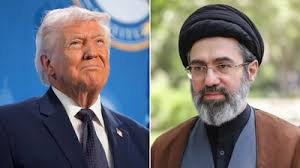
Trump said the United States would work with new Iranian leadership to remove what he called “nuclear dust,” referring to residual enriched uranium and radioactive material left after strikes on nuclear facilities.
BY PC Bureau
April 8, 2026 — U.S. President Donald Trump has outlined a hardline post-conflict stance on Iran’s nuclear program, declaring that there will be “no enrichment” of uranium permitted and that Washington will work with a new Iranian leadership to remove what he described as “nuclear dust” — remnants of the country’s damaged nuclear infrastructure.
Speaking after announcing a two-week ceasefire in the ongoing conflict, Trump detailed his vision for engagement with a post-regime-change Iran, while also warning countries against supplying arms to Tehran.
In a post on his Truth Social platform, Trump said the United States would, in coordination with Iran, “dig up and remove all of the deeply buried… nuclear dust,” referring to highly enriched uranium and radioactive remnants believed to remain after major U.S. and allied strikes on Iranian nuclear facilities in June 2025. He reiterated his position emphatically: “There will be no enrichment of uranium.”
🚨 HISTORIC BREAKING 🇺🇸🇮🇷🇵🇰🔥
Trump announces:
✔️ US will work WITH Iran
✔️ “Very productive Regime Change”
✔️ No uranium enrichment
✔️ Tariff AND sanctions relief for Iran
✔️ “Many of the 15 points already agreed to”The 15 points America passed THROUGH PAKISTAN.
Let that… pic.twitter.com/aeDrz129LG
— Pakistan & Middle East (@dastoorpk71908) April 8, 2026
Ceasefire and Nuclear Cleanup
The two-week ceasefire, announced late on April 7, is conditional on Iran ensuring the complete, immediate, and safe reopening of the Strait of Hormuz — a critical global oil transit route that had been disrupted during the escalation.
Trump has framed the pause as an opportunity to push toward a long-term settlement, asserting that U.S. military objectives have already been “met and exceeded.” Previous strikes reportedly caused severe damage to Iran’s nuclear infrastructure, with assessments suggesting key enrichment sites may take years to rebuild.
READ: Netanyahu Under Fire as Opposition Blasts Iran Truce Outcome
The proposed removal of “nuclear dust” appears to point to concerns over residual enriched uranium stockpiles believed to be buried at underground facilities, including areas near Isfahan. While the idea of physically extracting such material has been discussed, no formal operation has been publicly confirmed.
Engagement with New Iranian Leadership
Trump indicated that the U.S. is preparing to engage with what he described as a “much less radicalized and far more intelligent” Iranian leadership following significant political changes. Discussions could include tariff adjustments and sanctions relief as part of broader negotiations aimed at stabilizing the region.
Warning to Arms Suppliers
In the same statement, Trump issued a strong economic warning to countries continuing to supply weapons to Iran. He announced that any such nation would face a 50% tariff on all goods exported to the United States, with “no exclusions or exemptions.”
This threat builds on earlier measures designed to economically isolate Iran and restrict its access to military resources.
The remarks come amid heightened tensions following months of military exchanges involving U.S. and Israeli strikes on Iranian targets, retaliatory actions by Tehran, and disruptions to shipping through the Strait of Hormuz. Trump had previously issued stark warnings, including threats to target key Iranian infrastructure, before agreeing to the temporary ceasefire—reportedly facilitated in part through Pakistani mediation.
Analysts caution that while the ceasefire offers a window for diplomacy, major challenges remain. These include verifying the dismantling of Iran’s nuclear capabilities, accounting for remaining enriched uranium, and determining whether a new Iranian leadership will agree to denuclearization in exchange for sanctions relief.
Trump’s latest position signals a dual-track approach: offering a pathway to normalized relations and economic incentives if Iran complies, while maintaining maximum pressure through military readiness and sweeping economic penalties on third-party supporters.