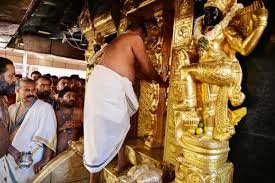
The court’s earlier decision allowed women of all ages to enter the Sabarimala Sree Ayyappa Temple, declaring the ban unconstitutional. The upcoming review could affirm, modify, or overturn that landmark judgment.
BY PC Bureau
February 16, 2026: The Supreme Court of India has scheduled hearings in the long-pending Sabarimala review petitions before a nine-judge Constitution Bench beginning April 7, 2026, marking a decisive moment in one of the country’s most consequential constitutional disputes. At its core, the case tests the constitutional balance between religious freedom and essential religious practices on one hand, and gender equality and non-discrimination on the other.
The controversy originates from the court’s landmark September 2018 judgment in Indian Young Lawyers Association v. State of Kerala, in which a 4:1 majority struck down the centuries-old custom at the Sabarimala Sree Ayyappa Temple that barred women aged 10 to 50 from entry. The court held that the exclusion violated fundamental rights guaranteed under Articles 14 (equality), 15 (non-discrimination), 17 (abolition of untouchability), 21 (life and dignity), and 25 (freedom of religion), ruling that devotion cannot be conditioned on gender and that the restriction was not an essential religious practice.
The verdict triggered widespread protests and social unrest, particularly in Kerala, and led to numerous review petitions. In November 2019, a five-judge Constitution Bench referred broader constitutional questions to a larger nine-judge bench. These include the scope of the “essential religious practices” doctrine, the extent to which courts can intervene in religious customs, and whether similar restrictions in other faiths—such as entry limitations in mosques, dargahs, or Parsi fire temples—are constitutionally valid. Although preliminary hearings began in 2020, the process stalled due to the COVID-19 pandemic and judicial retirements, resulting in a delay of nearly five years.
On February 16, 2026, a three-judge bench led by Chief Justice Surya Kant, along with Justices Joymalya Bagchi and Vipul M. Pancholi, formally listed the matter before the nine-judge Constitution Bench after addressing procedural issues. The Chief Justice noted that this would be the second case taken up by the expanded bench, following the conclusion of proceedings in a labor law matter concerning the definition of “industry” involving the state of Uttar Pradesh. The court directed all parties to file written submissions by March 14, 2026, to ensure efficient and structured hearings.
Arguments will proceed on a fixed schedule. From April 7 to 9, the bench will hear review petitioners and parties seeking reconsideration of the 2018 judgment. Between April 14 and 16, arguments will be presented by those defending the original ruling. Final rejoinders and closing submissions are scheduled for April 21 and 22. Hearings will begin at 10:30 AM each day, with the exact composition of the nine-judge bench to be announced separately.
READ: Who is Nikhil Gupta? From Drug Dealer to State-Linked Hitman
The Government of India, represented by Solicitor General Tushar Mehta, has indicated support for reviewing the 2018 decision, arguing that questions involving alleged discrimination at religious sites require deeper constitutional scrutiny. Meanwhile, the position of the Government of Kerala remains politically sensitive, particularly amid intensifying public debate and electoral considerations.
The forthcoming hearings are expected to address seven framed constitutional questions and could fundamentally reshape the interpretation of religious freedom, the limits of judicial intervention in religious affairs, and the constitutional guarantee of equality. The eventual ruling will likely have far-reaching implications not only for Sabarimala but also for similar religious practices across India, potentially redefining the relationship between faith, individual rights, and constitutional morality.