The developments come amid rising friction between Kuki and Naga groups in Manipur’s hills, with poppy eradication drives and competing land claims repeatedly triggering clashes.
BY PC Bureau
January 26, 2026 — The Zeliangrong United Front (ZUF), an armed group claiming to represent the Zeliangrong (including Kacha Naga) communities in Manipur, has burnt down a Kuki village, triggering fresh tension in the hills.
Tension has peaked in the Manipur hills amid reports that ZUF cadres tied the villagers’ hands and blindfolded them before setting their houses on fire.
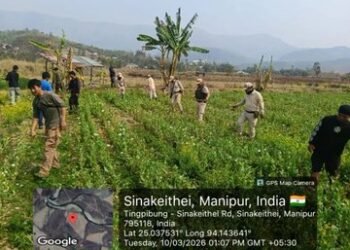
In a press statement, ZUF claimed responsibility for what it described as an enforcement operation targeting illegal poppy cultivation and unauthorized structures in Kangpokpi district. The statement said that the ZUF had stepped up its campaign against illegal poppy cultivation, narcotics trafficking, and unlawful encroachments by what it termed “illegal immigrants” in the ancestral territory of the Zeliangrong Inpui Naga people.
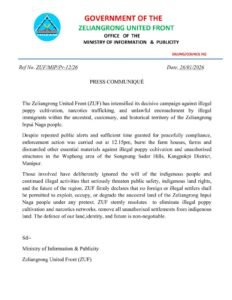
According to the group, the enforcement operation took place at around 12:15 pm in the Waphong area of Songnung Sadar Hills, Kangpokpi district. ZUF claimed that farmhouses, poppy farms, cultivation materials, and unauthorized structures were burnt and dismantled. It said repeated public warnings and time for voluntary compliance had been ignored, alleging that such activities posed threats to public safety, indigenous land rights, and the future of the region.
The ZUF asserted that no foreign or illegal settlers would be allowed to exploit, occupy, or degrade what it described as Naga ancestral land. It reiterated its stated objective of dismantling narcotics networks and removing unauthorized settlements, calling the defense of land, identity, and future “non-negotiable.”
While the rest of India is celebrating the 77th Republic Day, the tribal #Kuki village, K. Songlung, under Kangpokpi District have been turned into ashes by ZUF (K) & NSCN-IM.
The failure of the @BJP4India Govt in stopping the ethnic violence since 3rd May, 2023 has further the… pic.twitter.com/eqsZrNDcAk
— Dr. Lamtinthang Haokip (@DrLamtinthangHk) January 26, 2026
Reports of Village Arson Surface the Same Day
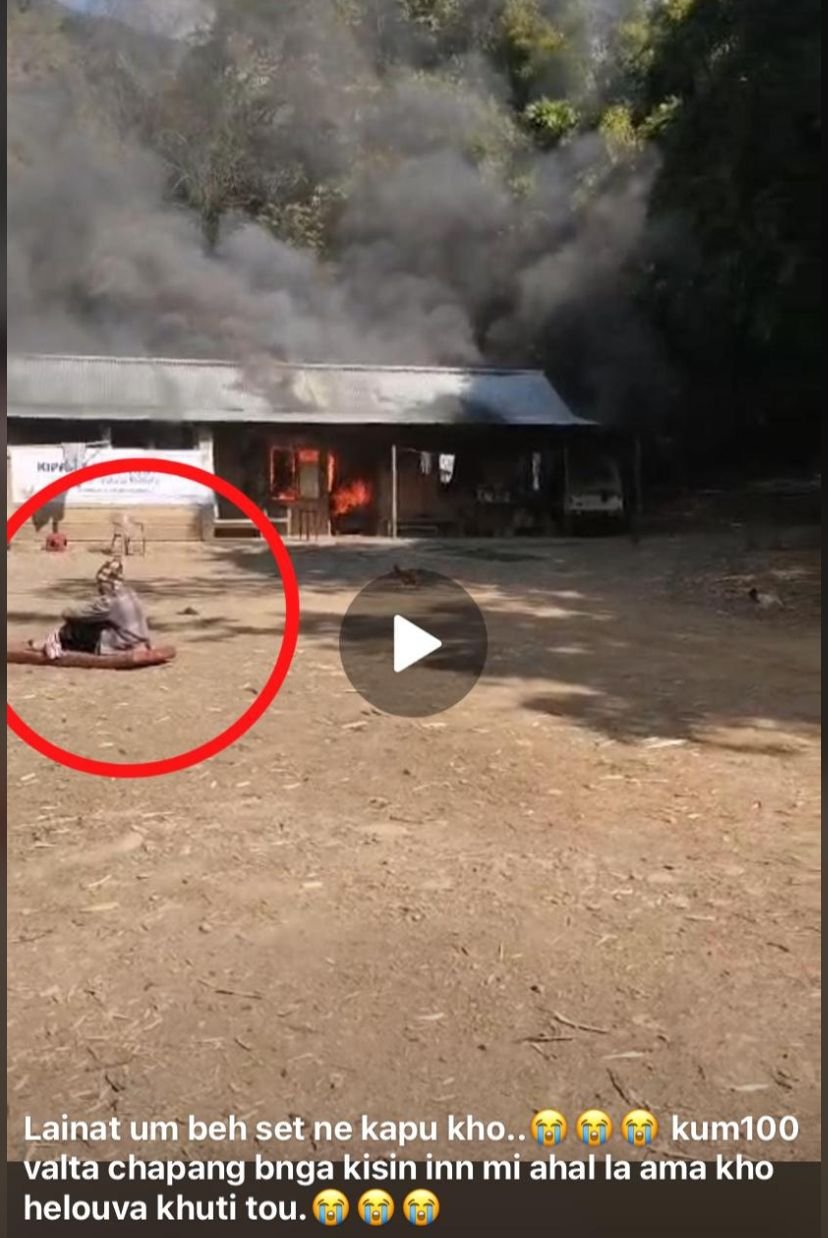
Earlier, unverified social media posts alleged that K. Songlung (also referred to as K Songlung), a Kuki-Zo village in the Kangchup area of Kangpokpi district, was set ablaze—marking a second reported destruction of the settlement. Some accounts claimed the incident occurred while villagers were working in their fields and accused armed Naga groups, of carrying out the attack.
Purported videos circulating online showed structures engulfed in flames, with one clip appearing to show an elderly resident watching the fire.
Songlung village was originally razed during the May 2023 ethnic violence between Meitei and Kuki communities, which led to widespread arson, displaced more than 60,000 people, and resulted in over 260 deaths across Manipur. Residents had begun partially rebuilding the settlement in the years since.
READ: Kuki Rights Group Condemns Shaurya Chakra Award to CRPF Officer Linked to 2024 Manipur Killings
Rising Kuki–Naga Friction in the Hills
These developments come amid escalating tensions between Kuki and Naga groups in Kangpokpi district. On January 8, 2026, a gunfight reportedly broke out at Kharam Vaiphei village during a ZUF-led anti-poppy drive, involving suspected ZUF cadres and Kuki militants. ZUF has accused Kuki groups of land encroachment and illegal activities on what it considers Naga territory, while Kuki groups have alleged threats, aggression, and growing militarization by Naga factions.
While Poppy eradication efforts in disputed areas have repeatedly triggered confrontations, the fact remains that many of the Naga groups are working in tandem with Meitei CSO to target Kuki-Zo population in the hills.
Manipur’s ethnic fault lines—among Meitei communities in the valley and Kuki-Zo and Naga groups in the hills—remain highly volatile following the 2023 violence. Competing claims over land, resources, political authority, and control of narcotics routes continue to fuel cycles of unrest. While heavy security deployment remains in place, critics argue that deeper structural and political issues remain unaddressed.