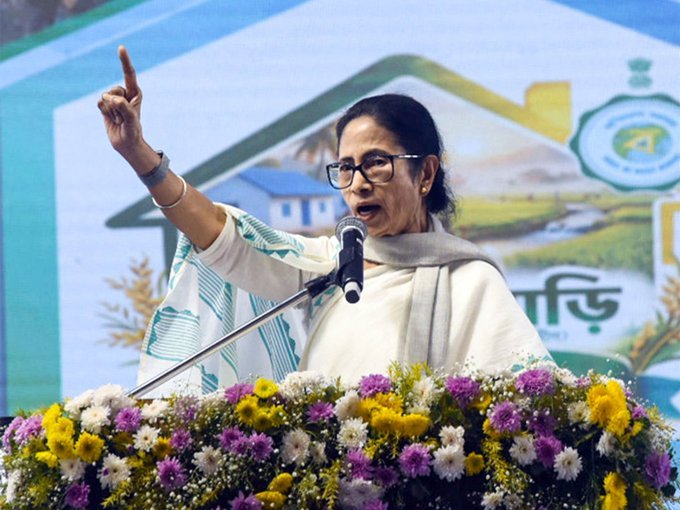
The TMC accused the Election Commission of targeting Bengal, while ECI sources said Mamata Banerjee left without allowing officials to respond.
BY PC Bureau
New Delhi, February 2, 2026 — In a sharp escalation of tensions between the Trinamool Congress (TMC) and the Election Commission of India (ECI), West Bengal Chief Minister and TMC supremo Mamata Banerjee on Monday walked out of a crucial meeting with Chief Election Commissioner (CEC) Gyanesh Kumar at Nirvachan Sadan, protesting the ongoing Special Intensive Revision (SIR) of electoral rolls in the state.
The meeting, convened to address TMC’s grievances over the exercise, ended abruptly amid mutual accusations of arrogance, humiliation and political bias.
Banerjee, accompanied by senior party leaders including her nephew and TMC national general secretary Abhishek Banerjee, MP Kalyan Banerjee, and several families allegedly affected by deletions from electoral rolls, arrived wearing black as a mark of protest. She had travelled to Delhi a day earlier and held a press conference alleging intimidation of Bengalis in the capital and excessive police deployment outside the West Bengal Bhawan.
Speaking to reporters after the walkout, Banerjee launched a scathing attack on the CEC. “I am very sad. I have been in Delhi politics for a long time — as a minister four times and an MP seven times — but I have never seen such an Election Commissioner who is so arrogant and such a liar,” she said.
Delhi: On SIR West Bengal Chief Minister Mamata Banerjee says, “… You (Election Commission) are not doing inclusion; you are doing deletion. First 58 lakhs were deleted and then 1.4 crores, around 2 crore names you have put in the mismatch list. We have not seen in Bihar, so… pic.twitter.com/5neo5IKjaz
— IANS (@ians_india) February 2, 2026
READ: ‘Minutes From War’: Naravane’s Explosive Account Rahul Gandhi Sought to Read
READ: Church Body Moves SC Against Anti-Conversion Laws
She alleged that nearly 58 lakh voter names had been deleted without adequate opportunity for verification or defence. “Why is this exercise happening only in Bengal? Why not in BJP-ruled states like Assam?” she asked, terming the SIR exercise “unconstitutional”, “inhuman”, and a “farce” designed to harass voters.
“The Election Commission humiliated us. They did not listen. That is why we walked out,” Banerjee said.
ECI Rebuts Charges
Election Commission sources strongly contested Banerjee’s claims, saying the CEC was patiently hearing the delegation when Banerjee allegedly became agitated, banged the table, and left without allowing officials to respond.
“She did not allow the Chief Election Commissioner to present his explanation,” sources said, adding that the meeting was disrupted prematurely.
What Is the Special Intensive Revision (SIR)?
The Special Intensive Revision is a comprehensive update of electoral rolls conducted under Article 324 of the Constitution and the Representation of the People Act, 1950. The exercise aims to eliminate duplicate entries, remove deceased voters, correct errors, and prevent the inclusion of ineligible names.
The current phase of SIR is being conducted in states heading for Assembly elections in 2026, including West Bengal, Assam, Tamil Nadu, Kerala, and Puducherry.
In West Bengal, which has about 7.66 crore voters, the SIR began in late 2025. Draft rolls have been published, and claims and objections can be filed until February 6, 2026. The ECI has cited concerns over migration, duplication, and border-area vulnerabilities.
However, the TMC alleges the exercise disproportionately targets minorities, refugees, and migrant workers, branding it a “backdoor NRC” aimed at mass disenfranchisement ahead of the 2026 Assembly elections.
Supreme Court Challenge
On January 28, 2026, Banerjee filed a writ petition in the Supreme Court challenging the legality and implementation of the SIR in West Bengal. The plea argues that the exercise violates due process, transparency, and constitutional safeguards.
The petition seeks directions to conduct the 2026 elections using pre-SIR electoral rolls, warning that large-scale deletions could cause irreversible disenfranchisement and distort the democratic process.
The Supreme Court has listed the matter for hearing, intensifying scrutiny of the electoral revision process nationwide.
Key Claims and Counterclaims
Deleted Voters:
TMC: Around 58 lakh names removed without proper notice
ECI: Routine purification to ensure clean electoral rolls
Deaths Linked to SIR:
TMC: At least 152 deaths allegedly due to stress and harassment
ECI: No official link established
Targeting Allegation:
TMC: Bengal unfairly singled out
ECI: Exercise undertaken wherever required
Meeting Outcome:
TMC: Humiliation, refusal to listen
ECI: CM walked out without hearing explanation
As the 2026 West Bengal Assembly elections draw closer, the standoff highlights growing distrust between the state government and the Election Commission. With the Supreme Court set to intervene, the outcome could significantly impact electoral preparations, political mobilization, and voter confidence in the state.