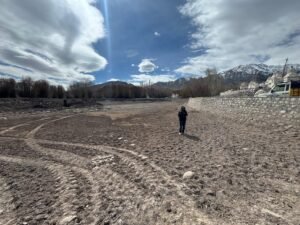
Authorities have been directed to clean, dredge, and de-silt natural depressions, along with strengthening embankments to improve water storage capacity.
BY PC Bureau
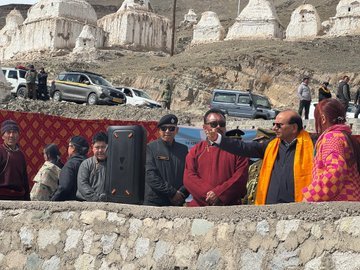
March 26: In a push to address water scarcity in Ladakh’s rural areas, Lieutenant Governor V K Saxena on Thursday visited Stok and Chuchot villages in the Leh district to review ongoing efforts aimed at creating sustainable water bodies and improving water availability.
Sharing details of the visit on X, Saxena said the initiative is part of a broader strategy to mitigate the region’s recurring water crisis by developing and restoring natural depressions into functional water storage structures.
During the inspection, the Lieutenant Governor directed local authorities to undertake cleaning, dredging, and de-silting of identified depressions so they can be converted into water bodies. He also emphasized the need for stone-pitching embankments around existing depressions to enhance their water-holding capacity, ensuring long-term benefits for local communities.
Officials were further instructed to construct proper inlet and outlet channels to prevent water loss and ensure efficient utilization of available resources. The measures are expected to improve water retention and distribution, particularly in villages that face acute shortages during dry seasons.
READ: Another Hormuz in the Offing: Houthis Gearing Up to Strike Red Sea Shipping Lanes
In addition to reviewing water conservation works, Saxena also launched a plantation drive in Chuchot village, where 200 saplings were planted as part of an ecological restoration programme. The initiative aims to strengthen the region’s fragile ecosystem while supporting long-term environmental sustainability.
The Lieutenant Governor noted the active participation of villagers, who volunteered to assist in the implementation of these projects. He described their involvement as “encouraging” and expressed confidence that community participation would play a key role in ensuring the success of the initiatives.
Ladakh, a high-altitude cold desert, faces persistent challenges related to water availability due to low rainfall and glacial dependence. Efforts to create decentralized water storage systems and promote ecological restoration are seen as critical steps toward building climate resilience in the region.
Officials said the administration will continue to monitor the progress of these works and scale up similar interventions in other water-stressed areas across the Union Territory.