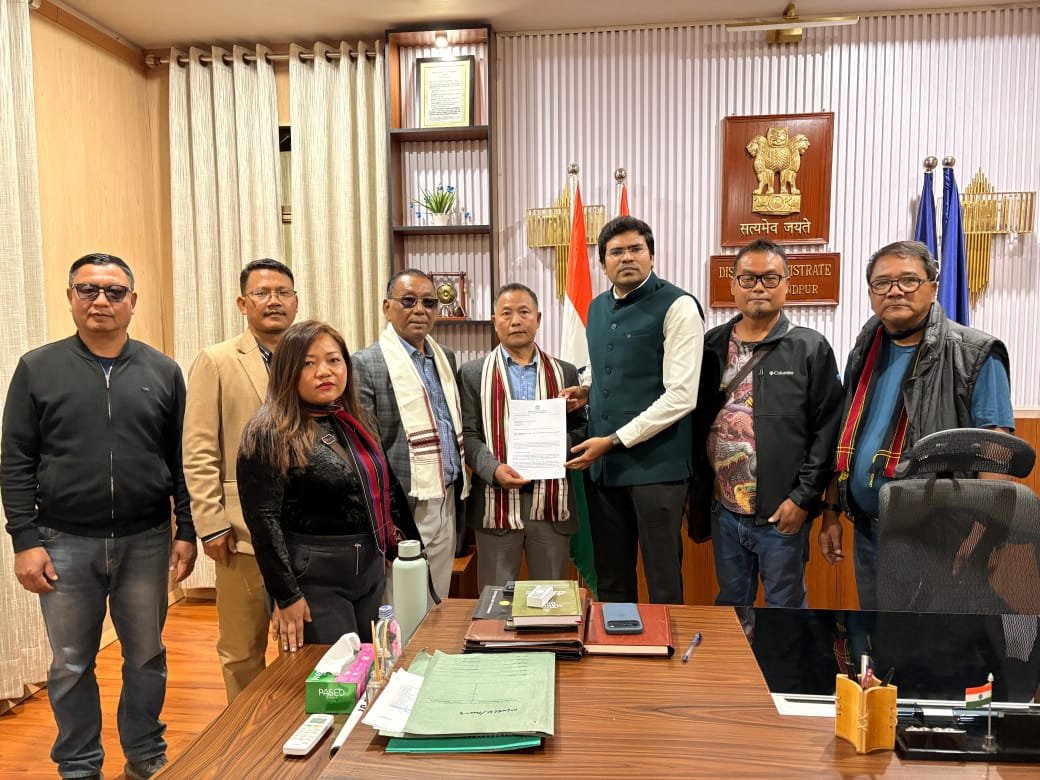
The Kuki-Zo Council memo to Amit Shah pointed out that resettlement of Meitei IDPs in buffer zones, encroachments, and stalled road development were key threats to peace and security.
BY PC Bureau
January 14, 2026: The Kuki-Zo Council (KZC), the apex civil body representing the Kuki-Zo people, on Tuesday submitted a detailed memorandum to Union Home Minister Amit Shah, declaring that coexistence with the Meitei community in Manipur is “not possible” after nearly three years of ethnic violence.
The memorandum was submitted through the Deputy Commissioner of Churachandpur following a massive public rally held in the district headquarters.
In the memorandum, the KZC reiterated its demand for an immediate political solution in the form of a Separate Administration as a Union Territory with Legislature under Article 239A of the Constitution, citing nearly three years of violence and displacement. The council claimed that more than 250 Kuki-Zo people have lost their lives, over 7,000 houses have been destroyed, 360 places of worship desecrated, and more than 40,000 people displaced since the outbreak of ethnic violence with the Meitei community in May 2023.
READ: Leave Iran at the Earliest’: India Issues Fresh Advisory
Mass Kuki-Zo Protests Renew Call for Union Territory https://t.co/Ain5MptXeV #Manipur #KukiZo#UnionTerritoryDemand #Churachandpur#ITLF #PresidentRule
— POWER CORRIDORS (@power_corridors) January 14, 2026
Stating that the Kuki-Zo population has been completely forced out of the Imphal Valley, the council argued that there is now a “physical, administrative and psychological separation” between the two communities.
Outlining what it described as “urgent and existential” concerns arising from the prolonged ethnic conflict in Manipur, it alleged complicity or failure on the part of the state government machinery in preventing the violence, and asserted that coexistence under the existing administrative framework is no longer viable.
The memorandum also raised serious objections to the resettlement of Meitei internally displaced persons (IDPs) in buffer zone areas, particularly citing reports from Torbung in Churachandpur district and Serou in Sugnu. Such moves, the KZC warned, could destabilise the fragile peace and reignite violence.
Another major concern highlighted was encroachment resulting from incorrect district and police jurisdiction boundaries, especially in areas like Torbung and parts of Kangpokpi district. The council said these anomalies violate Article 371C and undermine constitutional safeguards for hill areas.
The KZC further alleged attempts to halt the construction of inter-village roads connecting Kuki-Zo areas, describing such infrastructure as vital lifelines since access through Meitei-dominated areas has been cut off. It criticised a petition filed before the National Green Tribunal seeking to stop road construction in several hill districts, calling it discriminatory.
The memorandum also sought urgent protection of Kuki-Zo lands and properties in the Imphal Valley, alleging widespread destruction, illegal occupation and vulnerability to unlawful transfers following the displacement of Kuki-Zo residents.
Concluding the memorandum, KZC Chairman Henlianthang Thanglet and General Secretary Thangzamang appealed for expedited political talks with Kuki-Zo representatives under the KNO and UPF frameworks, asserting that only decisive intervention by the Union government could restore peace, dignity and constitutional order in Manipur.