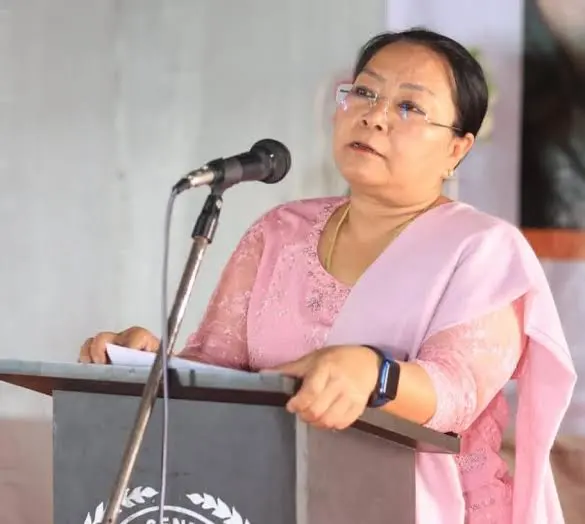
The criticism comes at a time of heightened tensions within the Kuki-Zo community, with growing dissatisfaction over the perceived silence of the Deputy CM on key issues affecting the region.
BY PC Bureau
April 12, 2026: A relatively lesser-known Kuki organisation, the Kuki History & Identity Protection Committee (KHIPC), has come out strongly against Nemcha Kipgen and her husband, Semtinthang Kipgen, accusing them of intimidation and authoritarian conduct in Kangpokpi district—allegations that have not been independently verified.
Semtinthang Kipgen is the chief of the Kuki National Front, an armed group currently under a Suspension of Operations (SoO) agreement with the Centre. He is considered a powerful figure in the region, commanding hundreds of armed cadres.
In a statement dated April 11, the KHIPC said it “unequivocally condemns MLA Nemcha Kipgen and her husband… for subjecting the public to threats and enforcing dictatorial control over Kangpokpi district.” The group further described their alleged actions as “a flagrant violation of democratic principles” and “an assault on the collective voice of our community.”
READ: Manipur: A Leader Who Rarely Speaks for Her Own People
READ: Meiteis Not Allowed to Cross Manipur Buffer Zones: ITLF
The statement went on to claim that “multiple credible reports” point to “a consistent pattern of intimidation, arbitrary decrees, and abuse of authority,” alleging that governance in the district was being run “as a personal fiefdom.” It added that such conduct “undermine[s] the customary authority of village chiefs and traditional institutions,” and warned that “no individual or family possesses the mandate to override the collective will of the people.”
Calling for accountability, the organisation asserted that “Kangpokpi belongs to its people, not to any single household or political interest,” and cautioned that attempts to consolidate power through coercion “erode public trust, fracture social unity, and set a dangerous precedent.”
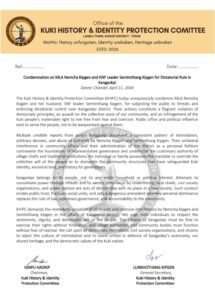
The KHIPC also demanded “the immediate cessation of all threats and coercive interference” and urged the leadership to respect “the sentiments, dignity, and democratic will of the people.” It appealed to civil society groups and citizens to “reject this culture of intimidation” and defend “the democratic values of the Kuki nation.”
While the KHIPC does not enjoy a significant or mainstream support base within the broader Kuki-Zo civil society ecosystem, its strong remarks are being viewed as a reflection of a deeper and growing unease within sections of the community.
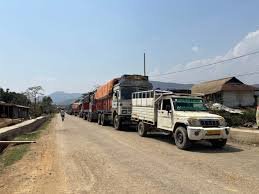
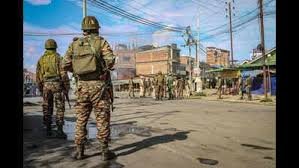
This unease has been further intensified by the perceived silence of Deputy Chief Minister Nemcha Kipgen over the alleged buffer zone violation by Manipur Chief Minister Yumnam Khemchand Singh, who recently travelled through the buffer zone to visit Kangpokpi—her home district. The visit is being seen as particularly significant, as it marked the first such entry by any Chief Minister into the area in nearly three years.
Despite the sensitivities surrounding the buffer zone, both the Deputy Chief Minister and her husband have remained silent, drawing criticism from various quarters within the community.
The backlash has already taken an organisational form. Members of the Committee on Tribal Unity (CoTU) in Kangpokpi have resigned en masse in protest against the alleged violation of the buffer zone, calling it a betrayal of the sacrifices made to uphold its sanctity.
Adding to the pressure, the Indigenous Tribal Leaders’ Forum (ITLF) on Sunday issued a strong statement reaffirming its stance on maintaining the sanctity of the buffer zone and warning against any actions that could destabilise the fragile peace in the region.
Observers say that even voices from smaller or lesser-known groups now joining the criticism signal a widening dissatisfaction at the grassroots level. The emergence of such dissent suggests that frustration is no longer confined to major civil society organisations but is spreading across different layers of the Kuki-Zo community.
Although the claims made in the KHIPC statement remain unverified, the developments collectively point to growing political and social tensions in Kangpokpi and surrounding hill districts, with leadership accountability increasingly coming under scrutiny.