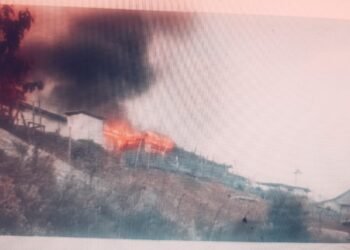
In a detailed release, the UN-accredited group documented 260 deaths, 60,000 displaced people, and widespread destruction of churches, accusing the state of enabling ethnic cleansing.
BY PC Bureau
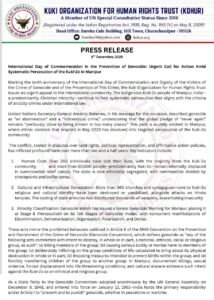
December 10, 2025: As the world marked the 10th International Day of Commemoration and Dignity of the Victims of Genocide on December 9, the Kuki Organization for Human Rights Trust (KOHUR)—a UN ECOSOC Special Consultative Status holder since 2016—issued one of its strongest statements yet on the ethnic violence in Manipur, calling it “systematic persecution that borders on genocide” against the Christian Kuki-Zo minority.
In a detailed press release from its Hill Town office in Churachandpur, KOHUR chronicled two and a half years of targeted violence, beginning with the May 2023 clashes. The group urged urgent UN intervention to halt what it described as state-enabled ethnic cleansing, citing over 260 deaths and 60,000 internally displaced persons living in overcrowded relief camps.
The appeal—widely shared under hashtags such as #KukiZoUT and #UnityAndJustice—reflects deepening frustration over stalled investigations, humanitarian neglect, and growing insecurity.
READ: In Manipur, Murmu Will Offer No Healing Touch to Kuki-Zo Victims
A Grave Warning Echoing the Genocide Convention
KOHUR’s statement aligns its concerns with the 1948 Genocide Convention, adopted on the same date 77 years earlier. It claims that the situation in Manipur reflects multiple Article II criteria, including:
- Killings and serious bodily harm
- Forced displacement and deprivation of life-sustaining conditions
- Cultural and religious destruction
- Organized acts indicating intent to destroy an ethnic and religious group, in whole or in part
The group invoked UN Secretary-General António Guterres’ warning that the global commitment to “never again” is “perilously close to being broken.”
A Catalogue of Atrocities: KOHUR’s Key Allegations
- Human Cost and Mass Displacement
- More than 260 killed, mostly Kuki-Zo
- Over 60,000 displaced
- The state remains divided by buffer zones and checkpoints, trapping families with no possibility of safe return
- Cultural and Infrastructural Destruction
- Over 360 churches and synagogues destroyed or desecrated
- Some Hindu temples targeted in retaliatory spirals
- Looting of state armories, flooding the region with thousands of weapons
- Advancing Genocidal Stages
KOHUR argues the conflict shows progression through the stages of:
- Discrimination
- Dehumanization
- Organization
- Polarization
- Denial
Alongside documented killings, sexual violence, and cultural erasure—including the bombing of Kuki villages in Jiribam (Sept 2024)—these, the group says, amount to genocide preparation under international law.
Government Failures: A Pattern of Impunity
The statement also criticizes the Indian government for inadequate action, despite Supreme Court orders to investigate genocide-related offences.
KOHUR lists several systemic failures:
- Extended Internet Shutdowns: Over 100 cumulative days, obstructing documentation and accountability
- Humanitarian Shortfalls: Relief camps face chronic shortages of food, medicine, and essential services
- Biased Interventions: Visits by certain Meitei legislators seen as symbolic rather than substantive
- Gaps in Domestic Genocide Law: India lacks dedicated legislation under Articles V–VII of the Genocide Convention
KOHUR connects these lapses to global warnings urging governments to counter hate speech, prevent atrocities, and uphold international obligations.
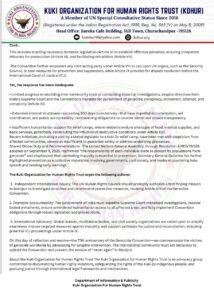
A Roadmap for Redress: KOHUR’s Demands
The rights group outlines urgent steps for both India and the international community:
- Independent International Inquiry
- UN Human Rights Council fact-finding mission under Article VIII
- Domestic Accountability
- Speed up Supreme Court–mandated probes
- Recover looted arms through stronger legislation
- Prosecute all responsible actors
- Global Advocacy
- Enlist UN bodies, global leaders, and civil society
- Consider ICJ proceedings under Article IX
- Implement anti-impunity measures
- Revive justice and reconciliation mechanisms
77 Years After the Genocide Convention: A Test for India
“On this day of remembrance, we honor victims worldwide by demanding real intervention,” KOHUR wrote. “The international community must act decisively to uphold the Convention and prevent the erosion of ‘never again’ in Manipur.”
Founded in 1995, KOHUR has long served as an indigenous rights watchdog for the Kuki-Zo people, participating in UN mechanisms including the Permanent Forum on Indigenous Issues since 2008.
Its latest statement gains additional momentum online, where digital campaigns link the crisis to Human Rights Day themes through hashtags such as #ConstitutionalRights and #JusticeDelayed.
With Manipur still under President’s Rule since February 2025, no elections scheduled, and sporadic clashes continuing, KOHUR’s call places renewed scrutiny on India’s commitments under the Genocide Convention it ratified in 1959.
For thousands of Kuki-Zo families divided by buffer zones, relief camps, and broken assurances, the message is clear:
Remembrance is not enough—only tangible action can stop the slide toward irreversible atrocity.