BY PC Bureau
January 2026: Around 40 NATO troops, including just one military officer from Britain, are currently deployed across Greenland in a carefully calibrated show of alliance unity aimed at deterring renewed rhetoric by former U.S. President Donald Trump over acquiring the strategically vital Arctic territory.
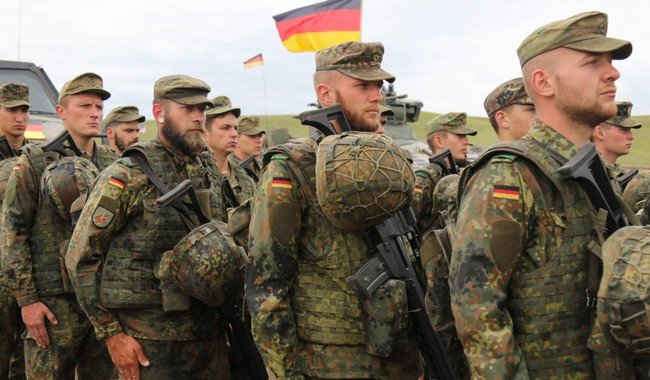
The deployment is overwhelmingly led by Denmark, which is responsible for Greenland’s defence and has contributed nearly 200 troops stationed mainly in Nuuk and Kangerlussuaq. The remaining personnel come from a small group of European NATO allies and are engaged in reconnaissance, coordination, infrastructure patrols, and joint Arctic training exercises.
Among the allied contributors, Germany has deployed approximately 13–15 soldiers for short-term reconnaissance and planning tasks, while France has sent around 15 mountain infantry troops to participate in Arctic endurance and cold-weather operations. Norway, Finland, and Sweden have each contributed two personnel, and the Netherlands has assigned one naval officer. The United Kingdom’s participation is limited to a single officer, embedded within a multinational reconnaissance group—an unusually small contribution that underscores the symbolic rather than operational nature of the deployment.
The modest allied presence follows a renewed push by Trump to revive his long-standing proposal for U.S. control of Greenland, citing American national security interests, emerging Arctic shipping routes, and access to critical mineral resources. His comments, which included warnings of economic pressure should Denmark refuse negotiations, have unsettled European allies and prompted calls for a coordinated NATO response.
Wow NATO has put their foot down and will secure Greenland.
All countries combined sent a total of 34 personnel. The UK sent 1.
Relax Mr President. New Hampshire will go get it for you. 🇺🇸— Leo Cunningham (@TheLoyalNine65) January 16, 2026
In response, Denmark accelerated Arctic military exercises and invited allied participation to reaffirm sovereignty over Greenland, a semi-autonomous Danish territory. NATO officials have emphasised that the deployment is defensive, temporary, and non-combat in nature, designed to send a political signal of solidarity rather than to establish a deterrent military force.
READ: “Hugs, Kisses, CCTV: Viral Videos Force Suspension of Senior Karnataka IPS Officer
NATO does not maintain a standing army, and all deployments are based on voluntary national contributions. Danish officials have said the current presence could continue for one to two years through rotating deployments, while discussions are underway about a more structured long-term monitoring mission in the Arctic.
The current troop levels stand in sharp contrast to the Cold War era, when the United States maintained as many as 10,000 troops across multiple installations in Greenland. Today, the U.S. military operates Pituffik Space Base (formerly Thule Air Base), where around 150–200 American personnel support missile warning, space surveillance, and Arctic operations under a long-standing defence agreement with Denmark.
Security analysts note that the Greenland deployment is best understood as diplomatic signalling, reflecting NATO’s desire to prevent escalation within the alliance while maintaining a united front on Arctic security. European leaders have warned that coercive rhetoric over Greenland risks straining transatlantic relations at a time when the Arctic is emerging as a new arena of strategic competition involving Russia and China.
Danish and NATO officials have repeatedly stressed that the situation will be resolved through diplomacy rather than military force, with the limited troop presence intended to reinforce political messaging rather than alter the strategic balance in the region.