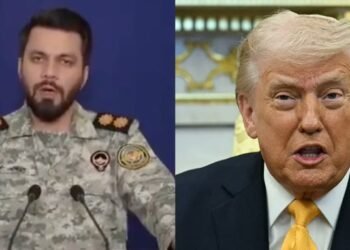
Trump dismissed the threat in sharp terms, saying he did not even know who Larijani was and that he “couldn’t care less” about the warning from Tehran.
BY PC Bureau
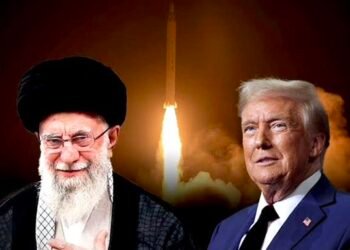
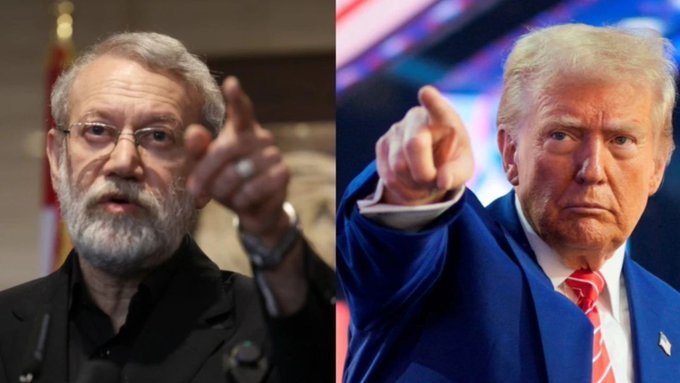
Iran’s top security official Ali Larijani has vowed that Tehran will avenge the “blood of our leader,” warning Donald Trump that he would “pay the price” for the killing of Iran’s Supreme Leader Ali Khamenei as the war between Iran, the United States and Israel intensifies across the Middle East. Trump quickly dismissed the threat, saying he “couldn’t care less.”
Speaking to Iranian state television on Saturday, Larijani — a senior figure in Tehran’s political establishment and long-time adviser to Khamenei — said Iran would relentlessly pursue retaliation for the February 28 strike that killed the supreme leader. The assassination, carried out during coordinated US-Israeli military operations, has triggered a widening regional conflict and sharply escalated tensions in the Gulf.
“Iran will not leave Trump alone,” Larijani said, accusing the US president of gravely miscalculating Tehran’s response and underestimating the consequences of the strike.
“Trump saw what happened in Venezuela and thought he could repeat it quickly in Iran,” Larijani said. “Now he is stuck in a conflict that will not end easily.”
He warned that the killing of Khamenei and the deaths of more than 1,000 Iranians in the opening phase of the war would demand a response.
“We will not leave him alone. He must pay the price for what he did,” Larijani said. “He killed our leader and martyred more than a thousand of our people. This is not a simple matter.”
Larijani later reiterated the warning on social media, declaring that Iran would not relent until it had carried out retaliation. “We will not leave him alone until we reciprocate what he did,” he wrote.
Since the outbreak of the war, Larijani has emerged as one of the most prominent figures shaping Iran’s political response, filling a leadership vacuum created by Khamenei’s death and rallying domestic support for the country’s military campaign.
Trump Responds
Trump brushed aside Larijani’s remarks during an interview with CBS News, claiming he was unfamiliar with the Iranian official and dismissing the threat outright.
“I have no idea what he’s talking about, who he is. I couldn’t care less,” Trump said, adding that Larijani had “already been defeated.”
The US president also mocked criticism from Iranian leaders, portraying them as weakened and increasingly isolated in the region. Trump reiterated that American military operations against Iran would continue and insisted Tehran must accept what he called an “unconditional surrender.”
Mixed Signals From Tehran
Earlier on Saturday, Iranian President Masoud Pezeshkian struck a more conciliatory tone, apologising to neighbouring countries for retaliatory strikes launched after the war began.
Pezeshkian said Iran had no intention of targeting Persian Gulf states unless they first joined attacks against Tehran.
Hours later, however, he appeared to soften the apology, clarifying that Iran had not actually targeted its neighbours.
“We have not attacked our friendly and neighbouring countries,” he wrote in a follow-up post. “Rather, we have targeted US military bases, facilities and installations in the region.”
Trump later mocked the statement, describing Iran as the “loser of the Middle East” after Tehran signalled it would avoid striking Gulf states unless provoked.
War Enters Ninth Day
The exchange came as the war entered its ninth day following coordinated strikes by the United States and Israel that killed Khamenei and targeted Iranian military infrastructure.
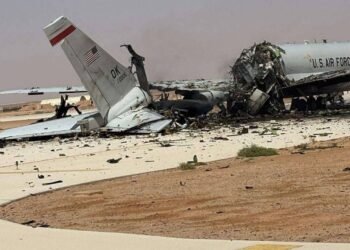
Iran responded with waves of missile and drone attacks against US and Israeli targets across the region, raising fears of a broader regional conflict and putting Gulf states on high alert.
Despite the escalation, Tehran indicated that diplomatic efforts might still be possible. Pezeshkian said several countries had begun quiet mediation efforts aimed at ending the war, though he did not identify them.
Regional powers including Qatar, Turkey, Egypt, and Oman have offered to help broker talks since the US-Israeli strikes began.
For now, however, military operations show little sign of slowing.
READ: Dynastic Debate Rekindled as Nitish Kumar’s Son Joins JDU
The Israel Defense Forces said it was entering a “new stage” of its campaign against Iran and signalled that additional strikes could follow in the coming days.
US Defense Secretary Pete Hegseth also hinted at a widening campaign, saying American military operations against Iran were “just getting started” and that attacks would “surge dramatically” in the near future.
With threats intensifying and diplomacy still uncertain, the conflict now appears set to deepen, raising concerns that the war could draw in more countries across the Middle East.