BY PC Bureau
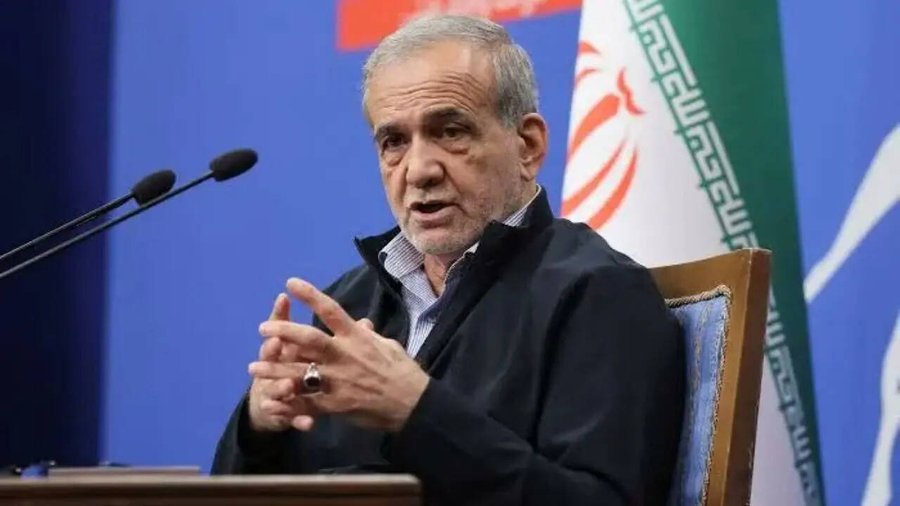
March 12, 2026 — As hostilities intensify in the conflict involving Iran, the United States, and Israel, Iranian President Masoud Pezeshkian has publicly outlined three conditions that Tehran says must be met to end the war and achieve a lasting peace.
In a post on the social media platform X on March 11–12, Pezeshkian said Iran remains committed to regional stability but blamed the conflict on what he described as aggression by the “Zionist regime and the U.S.” He added that he had reiterated Iran’s position during recent discussions with leaders in Russia and Pakistan, both of which have expressed criticism of U.S. and Israeli military actions.
“The only way to end this war—ignited by the Zionist regime & U.S.—is recognizing Iran’s legitimate rights, payment of reparations, and firm international guarantees against future aggression,” Pezeshkian wrote.
READ: US-Linked Tanker Hit as Gulf Maritime Security Worsens
Tehran’s Three Conditions
The Iranian president outlined three key demands for any ceasefire or political settlement:
Recognition of Iran’s legitimate rights — Tehran is seeking acknowledgment of its sovereignty and strategic interests, which analysts say could include issues tied to its defense capabilities, regional influence, and possibly aspects of its nuclear program.
Iran’s President Pezeshkian outlines three conditions to end the war – recognition of Tehran’s legitimate rights, payment of reparations, and firm international guarantees against future aggression.
🔴 Follow our LIVE coverage: https://t.co/OgnafTvf8a pic.twitter.com/tsGOTVvEsI
— Al Jazeera English (@AJEnglish) March 12, 2026
Payment of reparations — Iran is demanding compensation for damage caused by the conflict, including infrastructure destruction, civilian casualties, and economic losses resulting from U.S. and Israeli strikes.
Firm international guarantees — Pezeshkian called for binding assurances—potentially involving the United Nations or other major powers—to prevent future attacks on Iran by the United States, Israel, or their allies.
The statement marks one of the clearest public articulations yet of Tehran’s conditions for de-escalation.
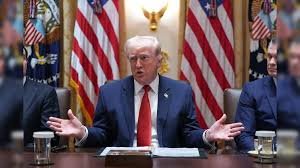
The remarks come as Donald Trump has suggested the conflict could end “soon,” citing the scale of damage inflicted on Iranian military assets. Israeli officials, however, have indicated there is no fixed timeline for ending operations.
Warning Over Gulf Escalation
Tensions have also escalated in the Persian Gulf and the Strait of Hormuz.
In a separate warning, Brig. Gen. Abolfazl Shekarchi, spokesperson for Iran’s armed forces, told state broadcaster IRIB that if the United States targets Iranian port infrastructure, Tehran could retaliate against economic sites across the Gulf.
“If Iranian ports are attacked, no port, economic center, or location in the Persian Gulf will be beyond Iran’s reach,” he said.
The warning followed statements from U.S. Central Command indicating that certain Iranian port activities could be viewed as threats to international shipping and potential military targets.
Prospects for Diplomacy
Pezeshkian’s conditions suggest Iran may be open to negotiations—particularly with backing from partners such as Russia and Pakistan—but Tehran is rejecting any ceasefire that does not address what it views as the root causes of the conflict.
Analysts say demands such as reparations and international security guarantees are likely to face strong resistance from Washington and Jerusalem, complicating near-term prospects for peace talks.
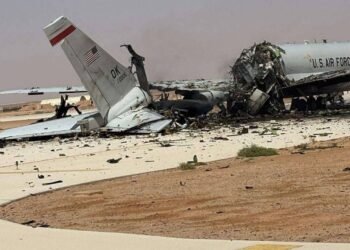
The war, now entering its second week, has seen waves of airstrikes, naval confrontations, and attacks on commercial shipping, with growing reports of civilian casualties and infrastructure damage across the region. International mediators are closely monitoring the crisis amid fears of a wider regional escalation.