According to Iranian authorities, the proposed framework demands not only the lifting of all primary and secondary sanctions but also guarantees against future U.S. aggression. Tehran insists that its right to enrich uranium under international law must be explicitly acknowledged as a non-negotiable condition.
BY PC Bureau
April 8, 2026 — Iran’s Supreme National Security Council on Wednesday asserted that the United States has effectively accepted the framework of Tehran’s sweeping 10-point proposal, describing the development as a “historic victory” that compels Washington to recognize Iran’s core demands. These include full sanctions relief, continued uranium enrichment rights, and Iranian oversight of the strategically critical Strait of Hormuz.
In its statement, the council portrayed the recently announced two-week temporary ceasefire — along with upcoming negotiations in Islamabad — as evidence of U.S. “submission” following weeks of escalating military pressure and the rejection of deadlines set by U.S. President Donald Trump.
The Council said, ” Iran achieved historic victory by forcing criminal US to accept its 10-point plan. US has accepted Iran’s control over Strait of Hormuz, enrichment right, removal of all sanctions. US has accepted to stop aggression, pay compensation for damages, withdraw it’s forced from region. “
Iranian officials, along with state-aligned media and social media accounts, framed Washington’s agreement to suspend offensive operations — contingent on the safe reopening of the Strait of Hormuz — as a clear capitulation. Tehran has insisted that any negotiations must proceed strictly within the framework of its proposed terms.
Congratulations to the Steadfast Nation of Iran.
Iran achieved historic victory by forcing criminal US to accept its 10-point plan.
US has accepted Iran’s control over Strait of Hormuz, enrichment right, removal of all sanctions.
US has accepted to stop aggression, pay… pic.twitter.com/9lXcfnuO36— True Promise – الوعد الصادق ✪🇮🇷 (@IRTruePromise) April 7, 2026
Details of Iran’s 10-Point Proposal
According to Iran’s Supreme National Security Council and reports from state-linked outlets, the proposal — conveyed through Pakistani mediation — outlines the following key demands:
- A binding U.S. commitment to non-aggression and security guarantees
- Continued Iranian control and coordination over the Strait of Hormuz
- Formal international recognition of Iran’s right to uranium enrichment under the Nuclear Non-Proliferation Treaty
- Full lifting of all primary U.S. sanctions
- Removal of secondary sanctions targeting third parties doing business with Iran
- Termination of relevant UN Security Council resolutions concerning Iran
- End to all resolutions by the International Atomic Energy Agency’s Board of Governors
- Complete withdrawal of U.S. military forces from the Middle East
- Immediate and permanent cessation of hostilities involving Iran and its regional allies
- Compensation for war damages, release of frozen Iranian assets, and support for reconstruction
Iran has further demanded that any final agreement be formalized through a binding UN Security Council resolution, making it enforceable under international law.
READ: Iran Says “Hands on Trigger,” Ready to Resume War if Talks Fail
#IranUS
#SanctionsRelief
#UraniumEnrichment
#MiddleEastTensions
#Geopolitics
#BreakingNews
Ceasefire Seen as Tactical Pause
Despite the halt in active hostilities, Iranian officials emphasized that the ceasefire does not signal a lasting peace. “Our hands remain on the trigger,” the statement warned, underscoring that military readiness remains unchanged and that any breach or failure to meet Iran’s conditions would prompt an immediate response.
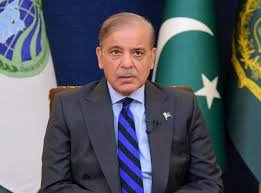
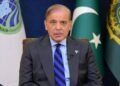
Negotiations are set to begin in Islamabad on April 10, with Shehbaz Sharif credited for facilitating the talks after conveying Washington’s willingness to engage.
Fragile Outlook Ahead of Talks
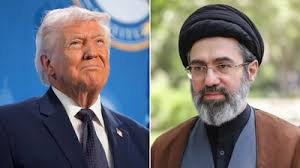
While President Trump has reportedly described the proposal as a “workable basis” for negotiations, Iranian leadership has projected confidence that its battlefield position has translated into diplomatic leverage on long-standing issues such as sanctions and its nuclear program.
Tehran has made clear that failure to reach a comprehensive agreement — particularly on sanctions removal and enrichment rights — could lead to a resumption of hostilities. As delegations prepare to meet under Pakistani mediation, the coming days will determine whether the current ceasefire evolves into a durable agreement or remains a brief pause in a volatile and ongoing conflict.