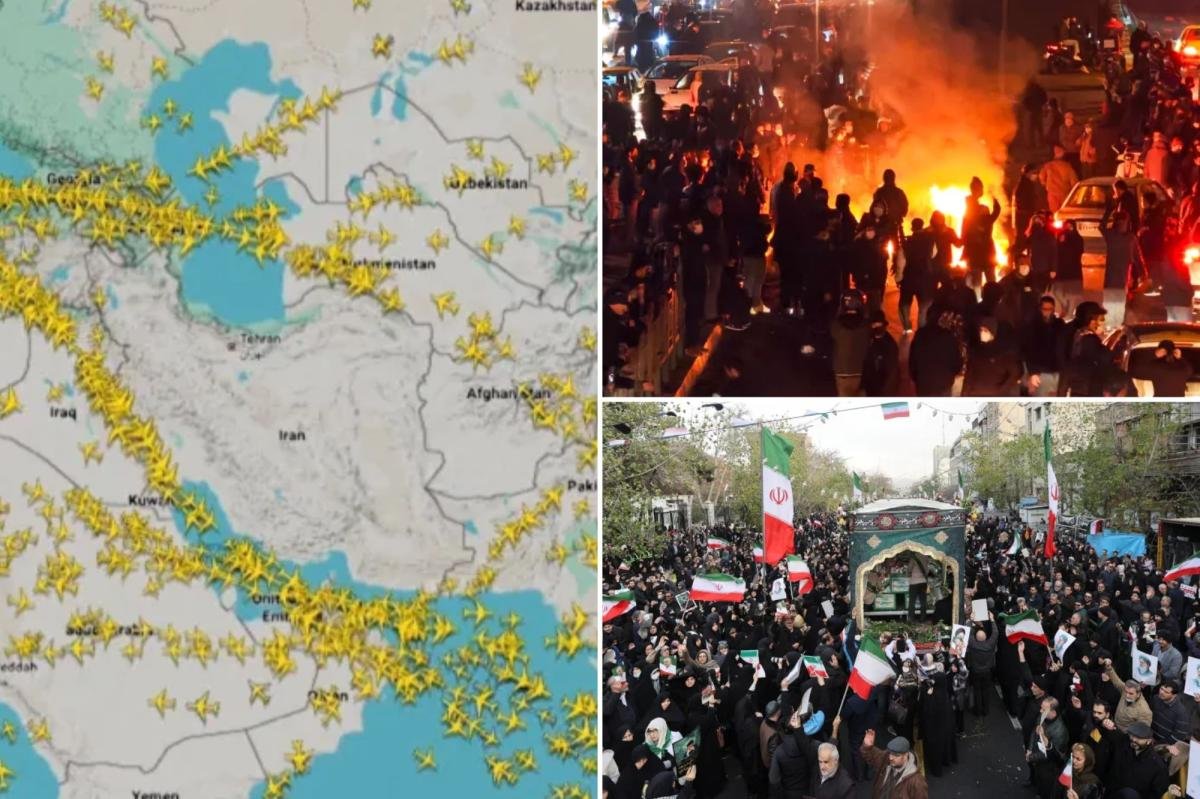
Despite the skies reopening, Iran’s near‑total internet blackout has entered its seventh day, isolating millions and making communication increasingly difficult.
BY PC Bureau
January 15, 2026: Iran has reopened its airspace after a nearly five-hour closure that disrupted flights across the region. The temporary shutdown was reportedly imposed amid concerns over potential military escalation.
The easing of tensions comes as antigovernment protests in Tehran have diminished since Monday, when hundreds of thousands attended pro-government demonstrations. Smaller, sporadic protests have been reported in other cities, but overall the security clampdown appears to have cooled the unrest.
Despite the reopening of airspace, Iran’s internet blackout has entered its seventh day, severely limiting access to mobile data, messaging apps, and social media. Tech company Starlink is reportedly offering free satellite internet service in the country, while France is exploring sending Eutelsat satellite terminals to help restore connectivity.
The judiciary has denied reports that Erfan Soltani, a 26-year-old arrested during protests, has been sentenced to death. Soltani is being held in Karaj on charges of “colluding against internal security” and “propaganda activities against the regime,” according to state media.
The situation has also drawn international attention. US President Donald Trump expressed doubts that opposition leader Reza Pahlavi, the eldest son of Iran’s last Shah, would have sufficient domestic support if the current regime collapses. Meanwhile, a UN Security Council briefing on the situation in Iran is scheduled for today.
🚨#BREAKING: Iran Re-opens Its Airspace to Civilian Traffic — the temporary closure that disrupted flights for several hours has now been lifted and normal civilian air operations are resuming, according to aviation tracking services and international notices.
Source: Reuters pic.twitter.com/v1viv5cgsa
— Instant Intel (@GlobeWatchX) January 15, 2026
READ: SC issues Notice to Mamata, Bengal Govt Over ED Probe
Several countries, including the US, UK, India, Italy, Spain, Poland, and Australia, have advised their citizens to leave Iran, citing regional tensions and security risks. The US and UK have also issued travel warnings for Israel amid heightened friction between Washington and Tehran.
Analysts note that while the protests have slowed, underlying economic dissatisfaction remains widespread. Security forces, including the Basij militia and special units, continue to maintain a strong presence across the country.
Experts warn that despite the short-term calming, Iran remains in a fragile state, with the possibility of sudden escalation still present due to the history of confrontation with the US and heightened regional sensitivities.