Iran denied Trump’s assertion that it had sought a ceasefire, calling the claim “false and baseless” while continuing missile and drone strikes through the Islamic Revolutionary Guard Corps.
BY PC Bureau
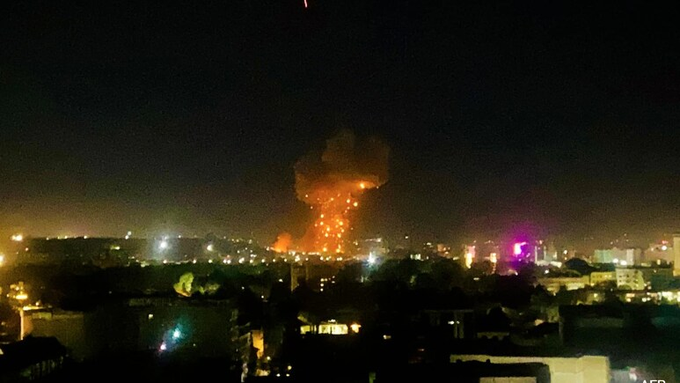
April 2, 2026 — Iran launched another wave of ballistic missiles at Israel on Wednesday, escalating hostilities in the month-long U.S.-Israeli campaign, even as Donald Trump asserted that American forces had largely dismantled Tehran’s military capabilities and were nearing key war objectives.
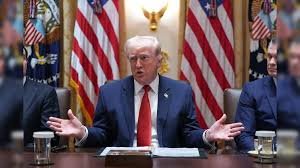
The latest strikes came hours after Trump, speaking in a primetime address from the White House, claimed that Iran had sought a ceasefire—an assertion swiftly rejected by officials in Iran as “false and baseless.”
In his remarks, Trump projected confidence in the trajectory of the conflict, saying that core goals—such as degrading Iran’s missile production, air defence systems, and leadership networks—were close to being achieved. He indicated that US forces would continue “extremely hard” operations for another two to three weeks before potentially scaling back involvement, adding that a formal agreement with Tehran was not essential to conclude the campaign.
🚨BREAKING: 🇮🇷🇮🇱 Iran launches missile attack at Israel as President Trump finishes his speech.
— Israeli PM Netanyahu seri… Show more pic.twitter.com/gqS3rboFH4
— Global War Desk (@GlobalNewsHQI) April 2, 2026
“Iran’s military has been devastated,” Trump said, reiterating his warning that the US could push the country “back to the Stone Ages” if necessary. He also linked any potential ceasefire to the reopening of the Strait of Hormuz, where ongoing disruptions have rattled global energy markets.
READ: Trump Speech Triggers Market Rout Across Asia, India Hit Hard
READ: Vile, Horrifying: Trump Faces Democratic Fury Over Iran War Speech
Tehran moved quickly to counter Trump’s claims. Iranian officials, including a Foreign Ministry spokesperson, denied any request for a truce, with state media accusing Washington of spreading misinformation. Authorities maintained that Iran’s missile and drone operations constitute legitimate self-defence against what they describe as unprovoked aggression by the US and Israel.
The Islamic Revolutionary Guard Corps (IRGC) has continued to carry out retaliatory strikes, with the latest barrage targeting Israeli cities and infrastructure. Israeli officials said many incoming missiles were intercepted, though some caused damage and injuries in central and northern regions.
The conflict has also spilled beyond Israel’s borders. Gulf states including Bahrain, the UAE, and Saudi Arabia reported intercepting projectiles aimed at their territories or at US-linked assets, underscoring the widening regional footprint of the war.
Now in its second month, the conflict began in late February with coordinated US-Israeli strikes on Iranian nuclear facilities, military sites, and senior leadership. While Washington has described the campaign as a necessary move to neutralise threats from Iran’s nuclear and missile programmes, Tehran has continued to mount sustained counterattacks, demonstrating its ability to absorb and respond to heavy losses.
Despite Trump’s optimistic timeline, analysts caution that a decisive end may prove elusive. Iran has shown no indication of backing down, relying on asymmetric tactics and regional networks to prolong the confrontation.
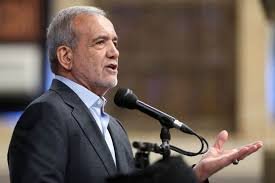
Israeli Prime Minister Benjamin Netanyahu has echoed Washington’s assessment of damage inflicted on Iran but pledged to continue operations until all perceived threats are eliminated. Meanwhile, Iranian President Masoud Pezeshkian has urged restraint from the US while framing Iran’s actions as a defence of national sovereignty.
As missile strikes and air raid sirens continue to disrupt daily life across parts of the region, international pressure for de-escalation is mounting. The United Nations and several European governments have warned of rising civilian casualties and the fear of a broader regional conflict.
With Trump signalling intensified military action even as backchannel diplomacy continues, the coming weeks are likely to prove decisive in determining whether the conflict winds down—or deepens into a prolonged and destabilising standoff.