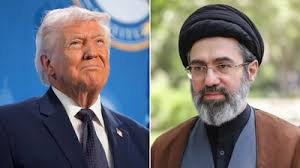
While President Trump announces a five-day halt on military strikes to allow for “productive” talks, Tehran leadership is vehemently denying any diplomatic backchannels, threatening instead to “paralyse” US forces in the Gulf.
BY PC Bureau
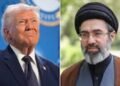
March 24, 2026: — Conflicting narratives emerged this week in the escalating conflict between the United States and Iran, as Tehran vehemently denied President Donald Trump’s claims of ongoing peace negotiations and instead threatened crippling military retaliation against American forces.
Tehran Issues Severe Ultimatum In a televised interview Tuesday on the state-funded IRNA news agency, Mohsen Rezaei, Iran’s new military adviser and former commander of the Islamic Revolutionary Guards Corps (IRGC), delivered a stark warning to Washington.
Warning that the “final deadlines for saving America are approaching,” Rezaei stated that any US strike on Iranian soil would trigger an unprecedented response.
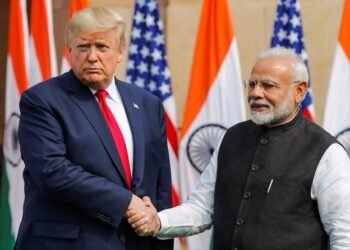
READ: rump Speaks with PM Modi on Middle East Crisis, Focus on Strait of Hormuz
“If you attack the infrastructure of the Islamic Republic of Iran, our response will no longer be an eye for an eye, but rather a head for an eye,” Rezaei said. “We will paralyse you and drown you in the Gulf.”
Rezaei categorized the ongoing conflict as an “illegal” war, claiming the Trump administration was manipulated into the hostilities by Israel’s pursuit of a “Greater Israel.” He outlined strict, non-negotiable demands for peace: the complete lifting of all international sanctions, financial compensation for damages incurred, and legally binding international guarantees against future aggression.
Broadening his critique of US foreign policy, Rezaei asserted that America has reached the “peak of its tyranny,” citing its historical support for Saddam Hussein, alongside recent geopolitical tensions involving Venezuela, Canada, and Greenland.
READ: Asiya Andrabi Gets Life Term, Two Others Sentenced to 30 Years
White House Claims “Productive” Backchannels The aggressive posturing from Tehran directly contradicts statements issued by the White House just a day prior. On Monday, President Trump took to Truth Social to announce a temporary halt to planned military operations.
Trump stated he had instructed the Department of Defense to postpone strikes on Iranian power plants and energy infrastructure for five days. He attributed this pause to what he described as recent diplomatic breakthroughs.
“I am pleased to report that the United States of America and the country of Iran have had, over the last two days, very good and productive conversations regarding a complete and total resolution of our hostilities in the Middle East,” the President wrote, adding that the military pause remains “subject to the success of the ongoing meetings and discussions.”
“Fake News” and Market Manipulation Accusations Despite the President’s optimism, Iranian leadership swiftly moved to quash any notion of active diplomacy.
Mohammad Bagher Ghalibaf, Iran’s Parliament Speaker, took to social media platform X to categorically deny the US President’s claims. Ghalibaf labeled the reported negotiations as “fake news,” alleging the narrative was manufactured by the US to “manipulate the financial and oil markets and escape the quagmire in which the US and Israel are trapped.”
Reaffirming a unified front, Ghalibaf stated, “Iranian people demand complete and remorseful punishment of the aggressors. All Iranian officials stand firmly behind their supreme leader and people until this goal is achieved.”
Meanwhile, Iranian state media framed Trump’s five-day strike postponement not as a diplomatic window, but as a strategic retreat driven by the fear of imminent Iranian reprisal. As the five-day window ticks down, the gulf between Washington’s claims of diplomacy and Tehran’s promises of retaliation leaves the region bracing for the next phase of the conflict.