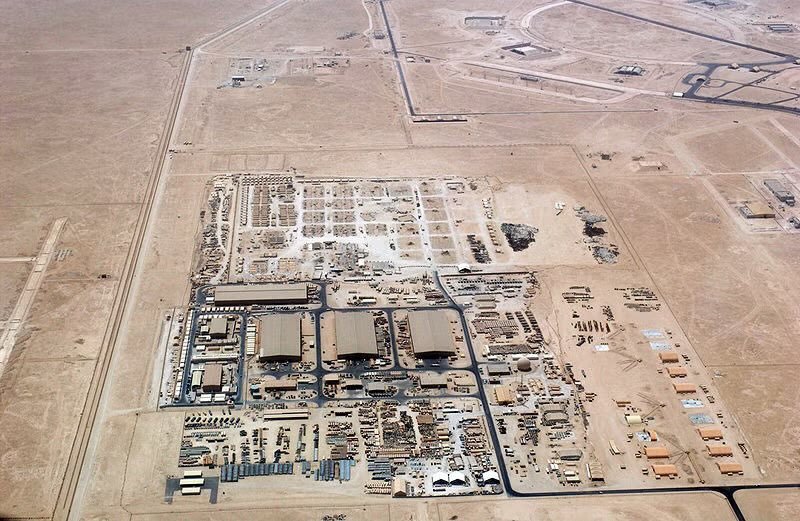
Blasts were heard in Abu Dhabi near key military zones, with airspace shut down across the United Arab Emirates. Authorities are assessing whether the explosions resulted from missile strikes or air defense interceptions.
BY PC Bureau
New Delhi, February 28, 2026 : Iran’s retaliation against joint U.S.–Israeli strikes has rapidly widened into a regional confrontation, with missile and drone attacks now targeting American military installations across the Persian Gulf. Explosions were reported in multiple Gulf capitals, including Abu Dhabi, while air defenses intercepted incoming threats over Qatar and a key U.S. naval headquarters in Bahrain came under direct attack, signaling a dangerous expansion of hostilities beyond Israeli territory.
Explosions Rock Abu Dhabi, US Air Base on Alert
Residents in Abu Dhabi reported powerful explosions and rising smoke, prompting authorities in the United Arab Emirates to shut down national airspace. The blasts were reported near the strategically vital Al Dhafra Air Base, a joint UAE–U.S. military installation that supports reconnaissance missions, combat aircraft deployments, and regional surveillance operations. While officials have not confirmed whether the explosions resulted from missile impacts or air defense interceptions, the incident marked one of the clearest signs yet that Iran’s retaliation has extended to Gulf nations hosting American forces.
Missile Intercepted Over Qatar Near Largest US Base
In Qatar, defense officials confirmed that Patriot missile defense systems intercepted at least one Iranian ballistic missile over its territory. Sirens sounded near Al Udeid Air Base, the largest American military installation in the region and forward headquarters of U.S. Central Command. The base, located outside Doha, houses thousands of U.S. troops and serves as a central hub for coordinating operations across the Middle East and Central Asia. Emergency warnings were issued, urging civilians to remain indoors as authorities assessed the threat of additional strikes.
#BREAKING 🔥#IranIsraelConflict
🇺🇸🇶🇦#LiveUpdates#Doha Qatar #JUSTIN🔥Iran has fired missiles at US bases in Qatar.
🔥Major case of GPS jamming in Qatar and other Gulf States.
🔥Video shows air defenses intercepting incoming Iranian missiles over Qatar.Iran is officially… pic.twitter.com/xPeq5615Yi
— Frankie™️🦅 (@B7frankH) June 23, 2025
US Navy Fifth Fleet Headquarters Targeted in Bahrain
The most direct strike was reported in Manama, where explosions and smoke were seen near the headquarters of the U.S. Navy’s Fifth Fleet. The facility, located in the Juffair district, oversees American naval operations across the Persian Gulf, Red Sea, and parts of the Indian Ocean. Bahrain’s Interior Ministry confirmed missile activity in the area, though the full extent of damage and casualties remains unclear. The attack represents a significant escalation, directly targeting one of the most critical pillars of U.S. military presence in the region.
READ: Iran Fires Retaliatory Ballistic Missile Barrage at Israel
READ: `Drop Arms or Face Death’: Trump Warns Iranian Troops
Regional Airspace Closures and Military Alerts
Airspace closures were reported across the United Arab Emirates, Qatar, and neighboring Gulf states, disrupting civilian flights and placing military forces on maximum alert. Unconfirmed reports also suggested missile alerts and sirens in Kuwait, which hosts several U.S. military facilities. Iranian state-linked outlets described the attacks as part of a coordinated retaliation targeting American military infrastructure across allied nations.
Escalation Following US-Israeli Strikes on Iran
The Gulf attacks follow large-scale U.S. and Israeli airstrikes on Iranian military and nuclear-linked facilities, including locations in Tehran and other major cities. Iranian officials had vowed a “crushing response,” and the expansion of missile strikes to Gulf nations hosting U.S. bases indicates Tehran’s intent to directly challenge American military presence in the region.
Iran has long warned that U.S. bases in allied Gulf states would be treated as legitimate targets in the event of conflict. The current strikes appear to follow that doctrine, signaling a shift from symbolic retaliation to direct military confrontation.
Risk of Wider Regional War Intensifies
No confirmed casualty figures have yet been released, and damage assessments remain ongoing. U.S. military forces across the region have reportedly activated enhanced air defenses amid fears of additional missile and drone waves. International observers warn that continued escalation could draw multiple countries into a broader regional war, threatening global energy markets and international security.
The situation remains fluid, with military forces on all sides bracing for further escalation.