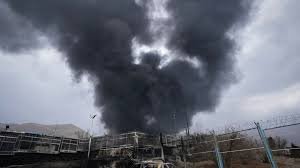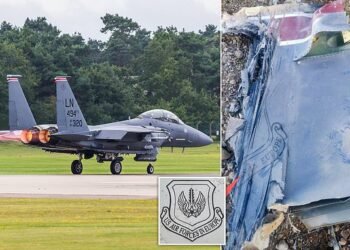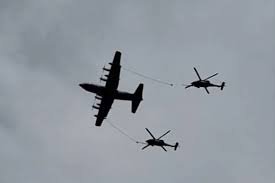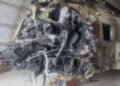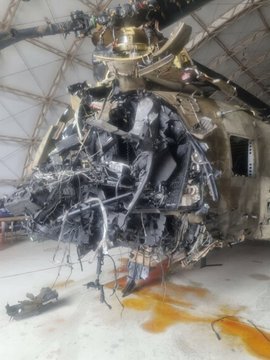
Images released by Iranian media appear to show damage to a CH-47F Chinook, including the cockpit and rotor section. The reported strike may be linked to a rescue mission following the downing of an F-15E Strike Eagle earlier in the day.
BY PC Bureau
April 4, 2026 — Iran has claimed responsibility for striking a US Army CH-47 Chinook helicopter at a military base in Kuwait, in what it describes as part of a broader campaign to undermine American air and logistics operations across the Gulf.
Iranian state media, including outlets aligned with the Islamic Revolutionary Guard Corps, said the helicopter was hit by a one-way attack drone while stationed at Camp Buehring, a key US logistics hub in Kuwait. Images circulated online—yet to be independently verified—appear to show a damaged CH-47F Chinook with visible impact to the cockpit and forward rotor assembly.
Some reports suggest the strike may have occurred during a US search-and-rescue mission linked to a downed F-15E Strike Eagle earlier in the day, pointing to Iran’s attempt to disrupt not only combat operations but also recovery and support missions.
No official confirmation or casualty details have been released by the Pentagon or Kuwaiti authorities. However, if confirmed, the incident would mark a significant expansion of Iranian strike capabilities beyond its borders and into key US operational zones in the Gulf.
Rising US aircraft losses
The reported strike adds to a growing tally of US aerial setbacks in the conflict. According to multiple reports, the United States has lost at least seven manned aircraft since the start of hostilities.
Recent incidents include the downing of an F-15E Strike Eagle over Iran—where one crew member was rescued and another was briefly missing—as well as damage to an A-10 Thunderbolt II, whose pilot ejected safely and was recovered.
Some earlier losses have also been attributed to friendly fire, underscoring the complexity and intensity of the operating environment. The spate of incidents reportedly prompted emergency discussions at the White House over the sustainability and risks of ongoing air operations.
Iran touts air defense success
Iranian officials say the incidents reflect growing effectiveness in countering US aerial superiority. Brigadier General Alireza Elhami claimed that Iranian forces have downed more than 160 drones and engaged multiple advanced aircraft using domestically developed systems.
According to statements carried by Iranian media, these successes are attributed to layered air defense tactics combining radar systems, mobile missile units and electronic warfare capabilities designed to challenge even advanced Western aircraft.
“Iranian air defenses have created confusion for the enemy,” Elhami was quoted as saying, adding that forces are prepared to ambush incoming aircraft with “innovative methods.”
READ: US-Israeli Strikes Hit Iran Petrochemical Hub in Khuzestan
However, many of these claims remain difficult to independently verify, with analysts cautioning that both sides are engaged in information warfare alongside kinetic operations.
Iran Neutralizing US Aerial Dominance in Region
Iran’s strategic deterrence capabilities have once again disrupted US military operations in the region, as den of CH-47 Chinook helicopters stationed in Kuwait was successfully targeted. pic.twitter.com/sDgiYgWY0S
— Tasnim News Agency (@Tasnimnews_EN) April 4, 2026
Conflict enters a broader phase
The reported Chinook strike comes as the US-Israel campaign against Iran enters a more expansive and volatile phase. While the US and Israel have conducted sustained strikes on Iranian military, nuclear and economic infrastructure—including recent attacks in Tehran and Khuzestan Province—Iran has responded with missile barrages, drone attacks and increasingly assertive regional operations.
Military experts note that Iran’s dispersed and mobile air defense systems, particularly those operating at lower altitudes, have proven more resilient than expected. This has complicated US efforts to establish uncontested air dominance despite its technological edge.
At present, the Chinook strike remains an Iranian claim supported by unverified imagery and state media reporting. The absence of immediate US confirmation leaves key questions unanswered, including the extent of damage, possible casualties and the operational impact.
Still, the incident—if confirmed—would signal a notable escalation, demonstrating Iran’s willingness and ability to target US assets beyond its borders and raising the stakes in an already intensifying regional conflict.