The insurgent outfit claims the President’s visit is politically motivated and aimed at legitimising central policies that they allege have intensified the state’s ongoing crisis and community tensions.
BY PC Bureau
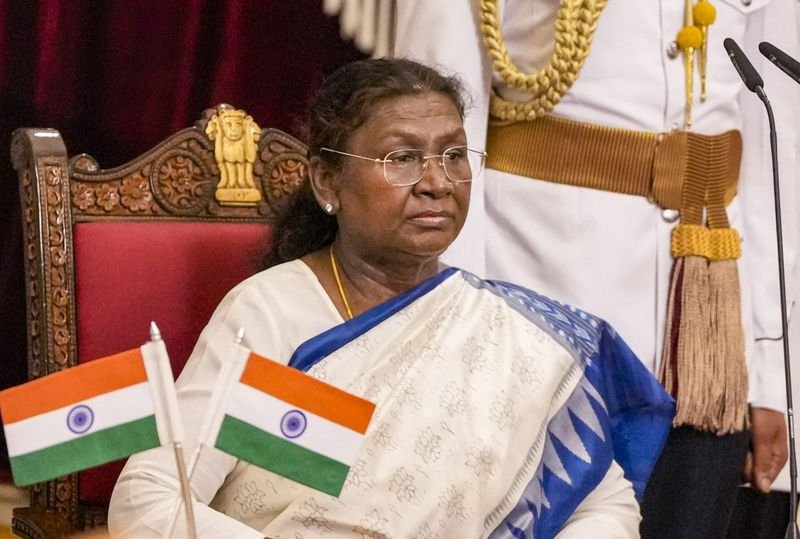
December 8, 2025: The Coordination Committee (CorCom), the apex body of six Myanmar-based militant organisations designated as terrorist groups by the Ministry of Home Affairs (MHA), has called for a boycott of the President of India’s visit to Manipur on December 11, when she is scheduled to attend events commemorating the historic Nupi Lan movement. The organisation has also declared a total shutdown across the state from 1:00 am on the day of the visit.
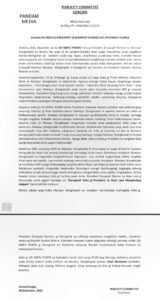
In its extensive statement, CorCom alleged that the President’s trip is “not intended to foster peace or reconciliation” but instead aims to “deepen the conflict and legitimise policies that have caused immense suffering.” The group blamed the ongoing violence—resulting in over 300 deaths and the displacement of thousands—on policies directed by what it called the “Gujarati leadership under the Prime Minister and the Union Home Minister.” According to CorCom, the top leadership has failed to understand the historical and social complexities of Manipur, leading to policies that “fuel discord rather than resolve it.”
Accusations Against Central Leadership
CorCom alleged that the central government has deliberately pursued strategies that divide Manipur along religious, ethnic, and caste lines. It claimed that “a united Kangleipak has never been India’s interest,” accusing successive governments of fostering fractures among communities and keeping the state in a condition of prolonged instability.
According to the group, the President’s visit is not meant to honour the Nupi Lan struggle—an iconic anti-colonial movement led by Manipuri women—but to “erase its history and co-opt its legacy for political purposes.” CorCom argued that the Nupi Lan movement represents resistance against oppression and external domination, and accused the Centre of attempting to use its commemoration to legitimise “decades of political suppression.”
The committee insisted that Manipur’s present turmoil must be viewed in the context of long-standing historical injustices and centralised control. It blamed the Indian state for imposing administrative systems that weakened indigenous autonomy and disrupted traditional social structures.
READ: Meitei BJP MLA’s Surprise Visit to Kuki Camp Sparks Outrage in Manipur
READ: Analysis: How Priyanka Gandhi, Step by Step, Tore Into BJP’s Narrative on Vande Mataram
Revisiting Historical Grievances
CorCom’s statement invoked historical events dating back to the British colonial era, including the women-led protests of the early 20th century that form the foundation of the Nupi Lan movement. According to the outfit, Manipur has repeatedly faced political interference from external powers—initially from the British and later from the Indian state.
The group alleged that Manipur’s merger with India was “not voluntary,” arguing that the decades since have seen a steady dilution of the region’s political identity. It accused authorities of using military force, economic interventions, and structural changes to consolidate central control, often at the cost of local interests.
CorCom claimed that systematic attempts to weaken indigenous rights have led to recurring cycles of unrest, and asserted that the recent ethnic clashes and mass displacement are continuations of these deeper historical patterns.
Critique of Previous High-Profile Visits
The organisation also criticised earlier visits by the Prime Minister and Union Home Minister, arguing that they resulted in little meaningful change. CorCom maintained that these visits heightened militarisation, increased checkpoints, and imposed stricter movement restrictions, ultimately worsening the humanitarian situation.
It said thousands of displaced people continue to live in makeshift camps across the valley and hill districts, in conditions comparable to those of refugees. The committee accused the Centre of repeatedly ignoring the need for dialogue and a more sensitive political approach.
Boycott Call Framed as Public Resistance
CorCom urged the people of Manipur to join the boycott as a form of collective resistance against “harmful, divisive, and strategically designed” policies. It argued that the President’s visit is intended to project a sense of normalcy, despite the ground situation remaining volatile and unresolved.
“The visit is not meant to honour the sacrifices of the Nupi Lan women,” the statement said, “but to overshadow and rewrite the history of their struggle.” CorCom accused the government of attempting to appropriate historical narratives to reinforce its political authority in the state.
Total Shutdown on December 11
The outfit announced a total shutdown across Manipur beginning at 1:00 am on December 11 to coincide with the President’s arrival. Essential services—including medical emergencies, water supply, and funeral-related activities—have been exempted. All non-essential movement, shops, businesses, public transport, and official programmes have been urged to remain closed.
CorCom stressed that the shutdown is intended to be a peaceful form of dissent but cautioned that it would be “strictly observed.” The group said the boycott reflects growing public frustration over “decades of political neglect and administrative heavy-handedness.”
Appeal to the Public
The statement concluded by calling on “all sections of the people of Kangleipak (Manipur)” to participate in the boycott and shutdown. “The President’s visit may be presented as a gesture of peace,” CorCom said, “but it is aligned with policies that continue to cause suffering. To honour the true spirit of Nupi Lan, the people must reject attempts to rewrite its meaning.”
As the state prepares for the high-profile visit, CorCom’s announcement adds another layer of tension to an already fragile environment. Authorities are expected to tighten security and issue public advisories in the coming days.