The India–US trade deal marks a major economic and geopolitical moment, but Trump’s unilateral declaration has raised questions over energy security, agriculture opening, and the future of Make in India.
By PC Bureau
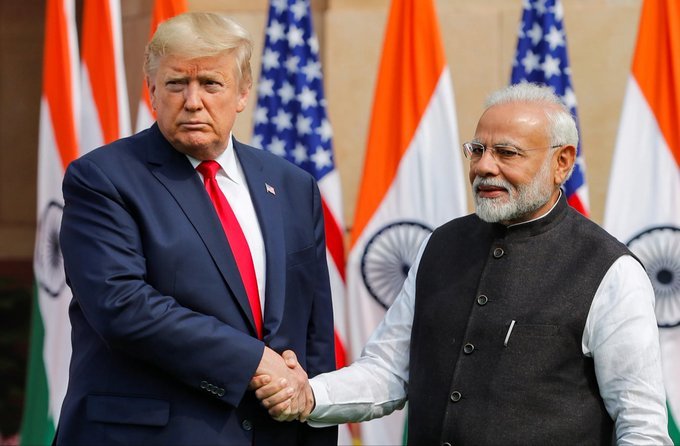
February 3, 2026: India and the United States have announced a landmark trade agreement that dramatically reshapes bilateral commerce, energy diplomacy, and global geopolitical alignments. The deal, announced after a phone call between Prime Minister Narendra Modi and US President Donald Trump, marks a sharp reset in relations after months of tariff tensions and strategic pressure over India’s Russian oil purchases.
At its core, the agreement reduces US tariffs on Indian exports to 18%, removes the additional punitive 25% levy, and pushes India toward zero tariffs on American goods, in return for halting Russian oil imports, opening agriculture markets, and committing to massive purchases of US products.
While the deal provides immediate relief to Indian exporters, it raises critical questions about energy security, farmer livelihoods, domestic manufacturing, and economic sovereignty.
Trump announces US-India trade deal
US tariffs drop from 25% to 18% and India cuts tariffs and barriers to zero.Bullish news 👀
End the war!. pic.twitter.com/rziZR0rCKd— Dave (@splendor_16) February 2, 2026
Key Fine Points of the India–US Trade Deal
- India to Stop Buying Oil from Russia and Iran
One of the most geopolitically significant elements of the deal is India’s commitment to cease purchases of Russian crude oil, which currently accounts for over one-third of its total oil imports. The US had imposed punitive tariffs on India specifically to pressure New Delhi to abandon discounted Russian oil.
Under the agreement:
- India will fully halt Russian oil purchases, not merely reduce them.
- India will increase imports from the US and may also source oil from Venezuela.
- The US will remove the 25% penalty tariff imposed on Indian exports.
This marks a historic shift in India’s energy diplomacy, ending its neutral stance in the Russia–Ukraine conflict and aligning more closely with Western sanctions strategy.
Strategic Implication:
India sacrifices discounted Russian crude — which saved billions in import costs — in return for tariff relief and geopolitical alignment with Washington. This could raise India’s long-term energy import bill, impacting inflation and fiscal stability.
- Zero Tariff Access for US Products
President Trump announced that India will reduce tariffs on American goods to zero, eliminating both tariff and non-tariff barriers across major sectors.
If implemented fully, this would:
- Make US manufactured goods cheaper than domestic alternatives.
- Open Indian markets to duty-free American industrial, agricultural, and technology products.
- Intensify competition for Indian MSMEs and manufacturing units.
Although formal product-level notifications are pending, multiple White House and media confirmations suggest near-total tariff elimination on US imports.
- Agriculture Sector to Be Opened
Perhaps the most politically sensitive component of the deal is the opening of India’s agriculture market.
This allows:
- Entry of subsidised American farm products.
- Increased imports of dairy, poultry, soybeans, corn, wheat, almonds, apples, and processed food.
- Greater penetration of US agribusiness corporations.
Experts warn that Indian farmers — especially small and marginal ones — will face severe price pressure from highly mechanised and subsidy-backed US agriculture.
- $500 Billion Purchase Commitment
Trump claimed India committed to buying $500 billion worth of US goods, including:
- Energy
- Technology
- Coal
- Defence-related equipment
- Agricultural products
Though India has not formally confirmed the exact figure, trade sources indicate massive long-term procurement obligations are embedded in the agreement.
READ: BJP MLAs to Meet on Tuesday to Elect New Manipur CM
What India Gains
- Tariff Relief for Exports
US tariffs on Indian goods fall from 25–50% to 18%, giving immediate relief to:
- Textiles
- Pharmaceuticals
- IT services
- Auto components
- Electronics
- Engineering exports
This helps India retain competitiveness in its largest export market.
- Rupee & Market Stability
Financial markets responded positively:
- Rupee strengthened sharply
- Export stocks rallied
- Foreign investors welcomed removal of trade uncertainty
This removes what analysts called a “hanging sword over the Indian economy.”
How Will India Protect ‘Make in India’?
Despite fears of import flooding, government officials argue that strategic safeguards will protect domestic industry:
- Non-Tariff Barriers (NTBs)
Even with zero tariffs, India can use:
- Quality control standards
- Certification requirements
- Regulatory compliance
to limit low-cost dumping.
- Phased Market Opening
India is expected to:
- Gradually liberalise sensitive sectors
- Retain temporary protection for MSMEs
- Negotiate sector-wise exclusions
- Incentive Boost to Domestic Industry
The government is likely to:
- Expand PLI schemes
- Increase export-linked incentives
- Strengthen local manufacturing competitiveness
- Strategic Sector Shielding
Critical areas like:
- Defence
- Railways
- Public procurement
are expected to remain protected from full foreign competition.
Major Risks for India
- Agriculture Shock
Small farmers face:
- Price crash
- Income loss
- Market displacement
Political backlash could be intense.
- Energy Cost Inflation
Switching from discounted Russian oil to higher-priced US crude may:
- Increase fuel costs
- Worsen trade deficit
- Fuel inflation
- Manufacturing Stress
Zero tariffs on US products risk:
- Import surge
- Pressure on domestic factories
- MSME closures
Geopolitical Implications
This deal signals:
- India’s strategic pivot toward the Western bloc
- Weakening of energy ties with Russia
- Strengthening of US-led global trade architecture
Washington views the agreement as a major blow to Russia’s war financing, while New Delhi sees it as economic stabilisation and export security.
INFO BOX: INDIA–US TRADE DEAL AT A GLANCE
| Component | Details |
| US Tariffs on Indian Goods | Cut to 18% from 25–50% |
| Additional 25% Penalty | Removed |
| Indian Tariffs on US Goods | Reduced to Zero |
| Russian Oil Imports | India to fully stop purchases |
| Energy Shift | US & Venezuela to replace Russia |
| Agriculture Market | Opened to US farm products |
| Purchase Commitment | Up to $500 billion |
| Key Beneficiaries | Indian exporters, US energy firms |
| Key Losers | Farmers, MSMEs, refiners |
The India–US Trade Deal of 2026 is one of the most consequential economic agreements in India’s post-liberalisation history. It offers immediate export relief and geopolitical alignment but demands far-reaching concessions in energy security, agriculture, and domestic manufacturing.
Whether this becomes a growth catalyst or a structural shock will depend on how skillfully India protects farmers, MSMEs, and strategic industries while leveraging US market access.