BY PC Bureau
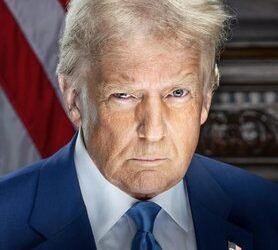
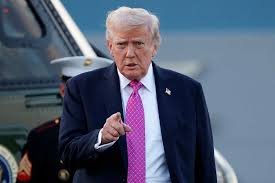
The United States is facing mounting diplomatic isolation as its joint military campaign with Israel against Iran—launched on February 28, 2026, under Operation Epic Fury—enters its third week. What the administration of Donald Trump framed as a necessary pre-emptive strike against nuclear and terror threats has instead triggered widespread global criticism, reluctance from allies, and growing dissent at home.
The first visible rupture emerged within Washington’s own security establishment. On March 17, Joe Kent, Director of the National Counterterrorism Center, resigned in protest, stating he could not support a war he believed lacked a clear and imminent threat to U.S. security. His departure marks the most significant internal dissent yet, raising questions about unity within the administration’s national security apparatus.
UK 🇬🇧 PM Kier Starmer hits back at Donald Trump after Trump mocked him
“No matter what, we are not going to participate in war against 🇮🇷 Iran. We will not give bases to the US to attack” 🔥
At this point, every leader is humiliating
Trump and Netany… View more pic.twitter.com/RANgAcOjUf— Times of Iran News (@Timesofiraan) March 17, 2026
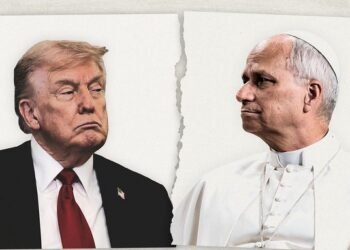
Across the Atlantic, key allies have distanced themselves. British Prime Minister Keir Starmer made clear that the United Kingdom would not participate in offensive operations, limiting its role to defensive measures and the protection of its citizens. The stance has strained ties with Washington, with Trump openly expressing frustration over what he views as inadequate support.
In Europe, opposition has been more pronounced. Spanish Prime Minister Pedro Sánchez has outright rejected cooperation, denying U.S. access to key bases and calling the strikes a violation of international law. Spain has emerged as one of the most vocal critics, warning that the conflict risks destabilizing global markets and escalating regional tensions.
BREAKING: Joe Kent resigns as Director of National Counterterrorism Center, dropping a massive bombshell letter to Trump.
He explicitly states the war in Iran is based on lies pushed by Israel and its powerful American lobby to trap the US in another endless war. pic.twitter.com/nmuIfGawZh
— Furkan Gözükara (@FurkanGozukara) March 18, 2026
France has adopted a more cautious but still critical posture. President Emmanuel Macron has called for urgent diplomatic intervention through the United Nations, warning that military actions outside international legal frameworks threaten global stability. While France has provided limited defensive support, it has refrained from endorsing offensive strikes.
The divisions extend to NATO itself. Secretary General Mark Rutte has clarified that the conflict is “not NATO’s war,” declining to invoke collective defense mechanisms. Member states—including Germany, Canada, and several Nordic nations—have emphasized de-escalation, highlighting a rare fragmentation within the alliance on a major security issue.
Meanwhile, Washington’s geopolitical rivals have found rare common ground. China has strongly condemned the strikes as violations of sovereignty, while Russia has labeled them “unprovoked aggression,” with reports suggesting increased intelligence cooperation with Tehran. North Korea has echoed similar rhetoric, aligning itself firmly with Iran. Across the Global South and within the United Nations, many nations have amplified these criticisms, deepening the perception of U.S. isolation.
READ: U.S. Drops Bunker-Buster Bombs on Iran as Hormuz Tensions Explode
At home, public opinion appears to be turning decisively against the conflict. Multiple national polls indicate that a majority of Americans oppose military action, with support for deploying ground troops particularly low. The data reflects a broader war-weariness after decades of Middle East engagements and skepticism over whether the current conflict serves core U.S. interests.
Taken together, the signals point to an increasingly isolated Washington. Traditional allies are hedging or refusing participation, NATO remains sidelined, adversaries are unified in opposition, and domestic support is eroding. Whether this pressure forces a shift toward diplomacy or entrenches a prolonged confrontation remains uncertain. What is clear, however, is that the United States is, for now, largely acting alone on one of the most volatile geopolitical stages in the world.
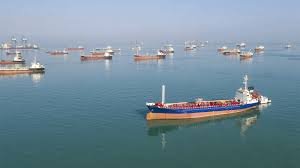
Beyond governments, global institutions and financial systems are beginning to reflect the strain of the conflict. Emergency discussions at the United Nations Security Council have so far failed to produce consensus, underscoring deep divisions among major powers. Meanwhile, international markets remain volatile, with investors reacting sharply to any escalation signals. Shipping insurance premiums in the Gulf have surged, and several multinational firms are quietly scaling back operations in the region, wary of prolonged instability and legal uncertainties tied to the conflict.
The diplomatic fallout is also reshaping long-term strategic alignments. Countries in Asia, Africa, and Latin America are increasingly adopting a cautious, non-aligned stance, resisting pressure to take sides while calling for restraint and dialogue. This widening neutrality reflects not just concern over the immediate conflict, but also a broader recalibration of global power dynamics—one in which U.S. influence, though still formidable, faces more open resistance than in previous crises.