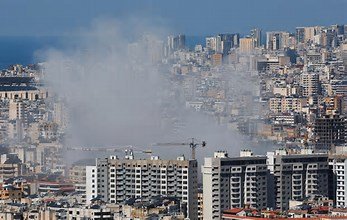
The Israel Defense Forces intensified air and ground operations in southern Lebanon and Beirut’s southern suburbs following earlier Hezbollah attacks. Lebanese officials reported dozens killed and over 150 wounded amid continued bombardment.
BY PC Bureau
March 4, 2026 — The Lebanese militant group Hezbollah said early Wednesday that it launched a rocket barrage at Israeli troops in the northern border town of Metula, marking a sharp escalation in cross-border fighting that threatens to draw Lebanon deeper into the expanding US-Israeli conflict with Iran.
In a statement issued through its media outlets, Hezbollah’s armed wing, known as the Islamic Resistance, said its fighters fired rockets at around 1:20 a.m. local time (23:20 GMT Tuesday) at Israeli forces positioned in Metula. The group described the attack as retaliation for continued Israeli airstrikes in Lebanon, including heavy bombardment of Beirut’s southern suburbs and other areas.
The announcement followed Hezbollah’s earlier claim that it had launched a separate missile strike targeting an Israeli military site near Haifa late Tuesday. The group framed the attacks as acts of solidarity with Iran and a response to what it called repeated Israeli aggression on Lebanese territory.
Israeli authorities did not immediately report casualties or significant damage from the Metula barrage, though air raid sirens were heard in the area. The Israel Defense Forces (IDF) said its air defense systems intercepted several projectiles in recent incidents and reported no injuries from the latest salvo. Military officials described Hezbollah’s actions as violations of prior understandings and vowed to continue operations aimed at neutralizing threats along the northern front.
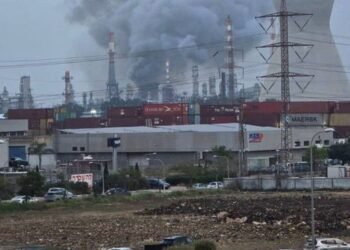
Hezbollah said Tuesday evening that it has launched a rocket attack on an Israeli naval base in the northern Israeli city of Haifa, describing the move as a response to ongoing Israeli airstrikes on Lebanese territory, Xinhua reported.
In a statement, the group said its fighters… pic.twitter.com/Ne7U8k1BSm— Global Times (@globaltimesnews) March 4, 2026
READ: Iran Launches Drone Attack on US Consulate in Dubai
READ: Over 21,300 Flights Cancelled Worldwide as Gulf Conflict Deepens
The surge in violence began on March 2, when Hezbollah fired rockets and drones toward a missile defense installation south of Haifa — its most significant cross-border attack since the 2024 ceasefire. Israel responded with extensive airstrikes targeting Hezbollah positions in Beirut’s southern suburbs, southern Lebanon and the Bekaa Valley.
Lebanese health officials said at least 52 people were killed and more than 150 wounded in Monday’s strikes, with the toll expected to rise as operations continued into Tuesday and Wednesday. The casualties reportedly included civilians as well as Hezbollah fighters, though exact figures remain contested.
Israel has since expanded its campaign, deploying additional ground forces into southern Lebanon and issuing evacuation warnings to residents in dozens of villages. The IDF said it has targeted command centers, weapons depots and financial networks linked to Hezbollah, describing its operations as “precise and targeted.”
Hezbollah, meanwhile, claimed it struck an Israeli Merkava tank in Metula with a guided missile late Tuesday and said it downed an Israeli drone during defensive operations. The group maintains that its actions constitute legitimate self-defense and resistance.
The renewed hostilities have raised alarm internationally, with Lebanon’s government attempting to curb Hezbollah’s military activities in an effort to prevent further escalation. Hezbollah officials have rejected such calls, insisting they will continue their campaign.
The border clashes unfold amid the broader US-Israeli military campaign against Iran, now in its fourth day, which has triggered retaliatory missile and drone strikes across the region. With diplomatic efforts strained and no clear path to de-escalation, fears are mounting that sustained fighting along the Lebanon-Israel border could spiral into a wider and more destructive conflict, placing civilians on both sides at growing risk.